In short
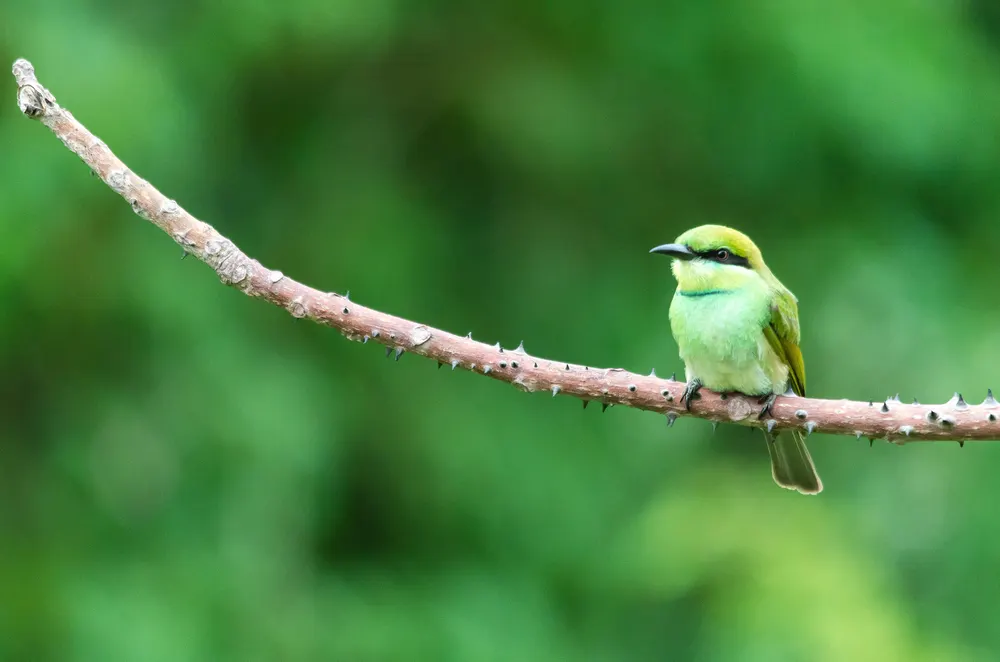
- Bandipur records more than 40 mammal species, about 290 birds, 34 reptiles and 21 amphibians, according to the Wildlife Institute of India's assessment quoted by the reserve.
- Karnataka's 2023 elephant count estimated 1,116 Asian elephants in Bandipur, the highest of any reserve in the state; Karnataka holds more wild elephants than any other Indian state.
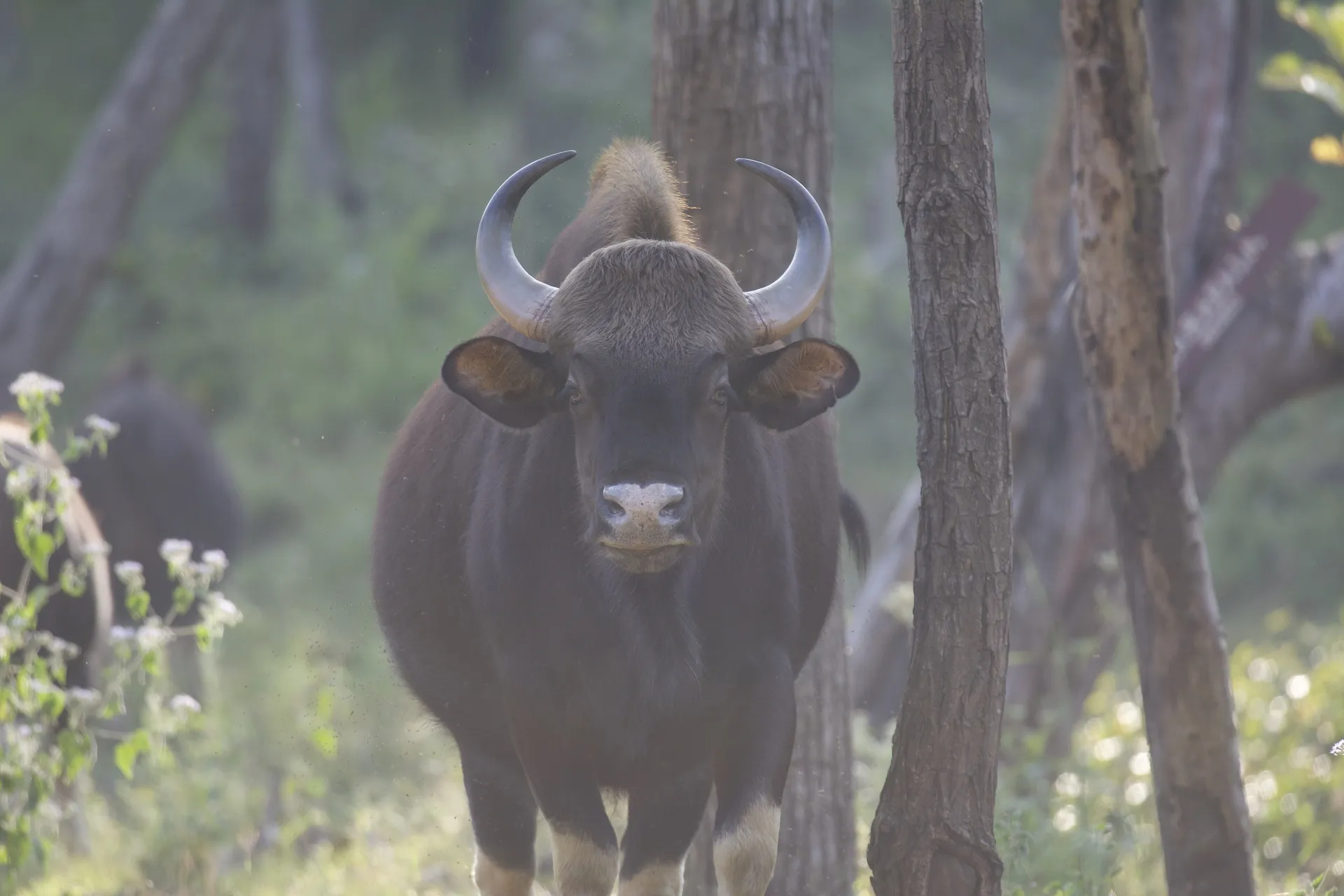
- Elephants, gaur, chital, sambar, grey langurs, wild boar and peafowl are seen on almost every safari; dholes and leopards are regular; sloth bears and the smaller cats are harder.
- Bandipur is one of the classic places to watch dholes, the Asiatic wild dog, which was studied here in the 1970s.
- Wildlife viewing is only on official safaris and from the highways; never stop, feed or approach animals on the road.
A forest built for big mammals
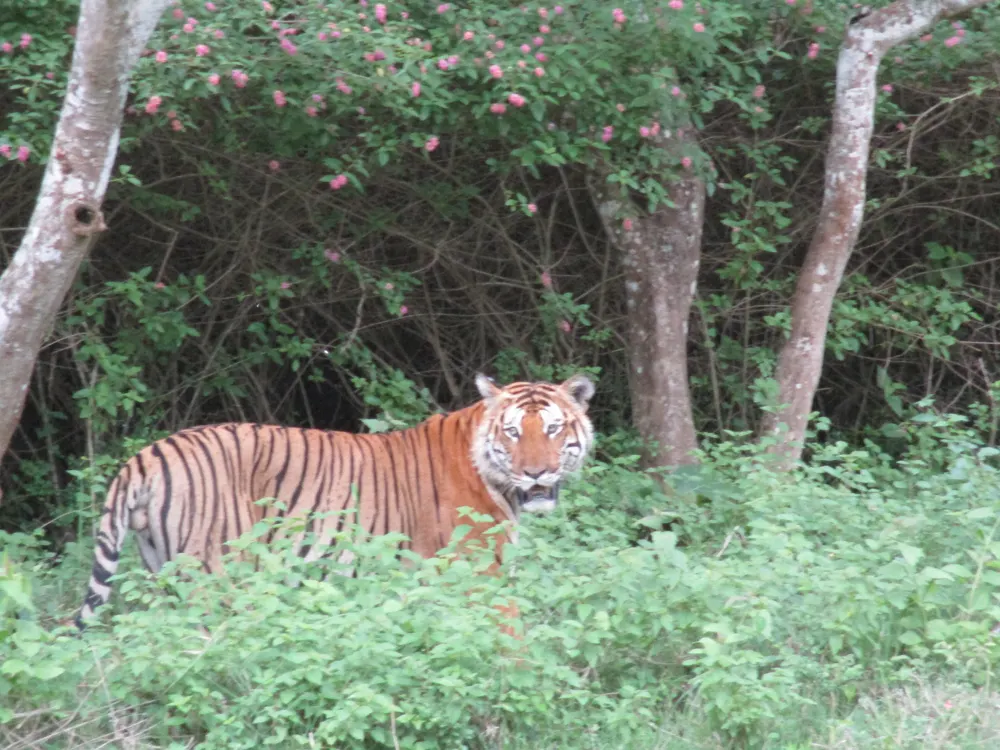
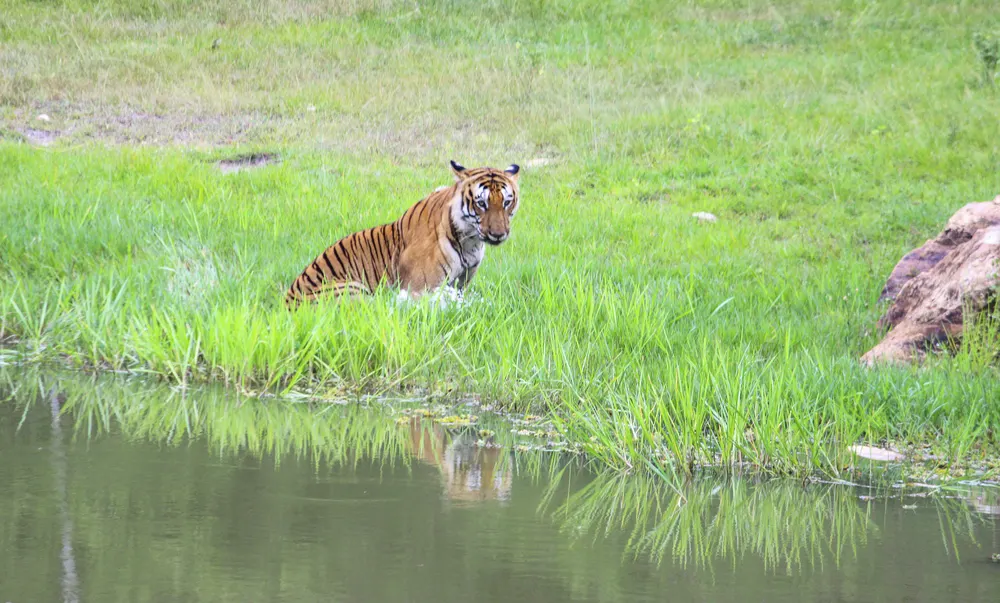
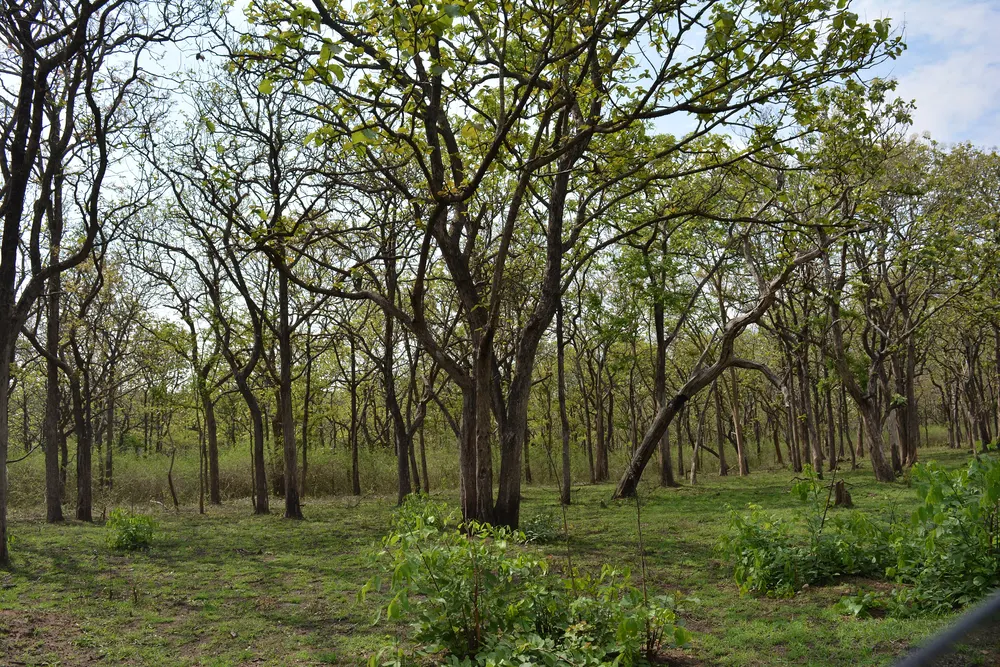
Bandipur's open deciduous forest, with grassy clearings, bamboo, water in the rivers and reservoirs on its edges and a network of waterholes, supports a very high density of large herbivores, and they in turn support tigers, leopards and dholes. On a good safari you can see elephants, gaur and three species of deer within an hour. The reserve lists the notable mammals as the Bengal tiger, Asian elephant, Indian leopard, gaur, sloth bear, dhole, sambar, spotted deer (chital), barking deer (Indian muntjac), mouse deer and four-horned antelope.
The table below gives an honest idea of your chances on two or three safaris in the dry season. It is our editorial judgement from the reserve's species lists and the regularity of reported sightings, not a statistic.
| Species | Where and how | Chance on 2–3 safaris |
|---|---|---|
| Asian elephant | Herds in clearings, bamboo and at water; also on the highways | ●●●●● |
| Gaur (Indian bison) | Herds in forest and grassy openings, mornings and evenings | ●●●●● |
| Chital (spotted deer) | Large herds everywhere, especially in open areas | ●●●●● |
| Sambar | Forest edges and near water; often alone or in small groups | ●●●●○ |
| Grey (Hanuman) langur | Troops in trees and on the ground near roads | ●●●●● |
| Wild boar | Sounders in clearings | ●●●●○ |
| Bonnet macaque | Troops, often near roads and campuses | ●●●○○ |
| Dhole (Asiatic wild dog) | Packs on roads and in open forest, mostly early morning | ●●●○○ |
| Leopard | Trees, rocks and road edges; shy | ●●○○○ |
| Tiger | Waterholes, roads, stream beds | ●●○○○ |
| Indian muntjac (barking deer) | Thick forest; often heard before seen | ●●○○○ |
| Indian giant squirrel | Tall trees in moister forest | ●●○○○ |
| Sloth bear | Rocky, scrubby areas; mostly dusk and night | ●○○○○ |
| Four-horned antelope, mouse deer | Dense cover; rarely seen | ●○○○○ |
| Mugger crocodile | Rivers and reservoirs on the edges of the reserve | ●○○○○ |
Asian elephants
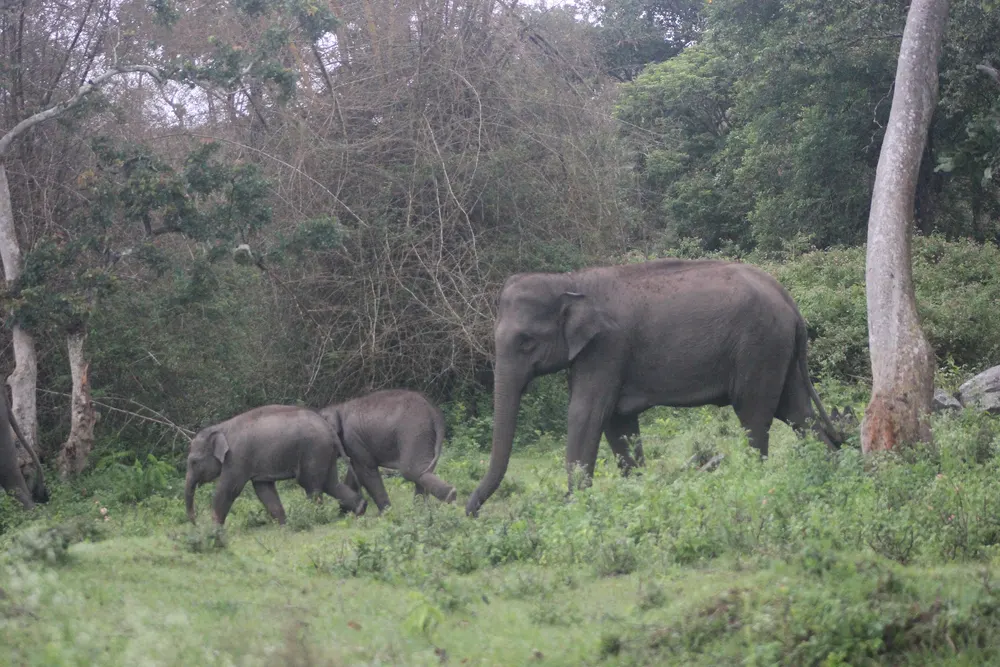
Elephants are the animals you are most likely to remember. In the synchronised elephant estimation carried out by Karnataka, Kerala and Tamil Nadu in May 2023, Karnataka's Forest Department estimated 1,116 elephants in Bandipur, the most of any reserve in the state, ahead of Nagarhole's 831, and 6,395 for Karnataka as a whole. The newer DNA-based national estimate published by the Wildlife Institute of India in October 2025 put India's wild elephant population at 22,446, with Karnataka, at 6,013, the largest of any state.
Family herds of related females and their calves are seen throughout the year; adult bulls usually travel alone or in small bachelor groups, and a bull in musth, with a dark secretion running from the temple gland, is unpredictable and best left with plenty of room. In the dry months many elephants move towards permanent water, including the Kabini backwaters on the northern edge of the forest.
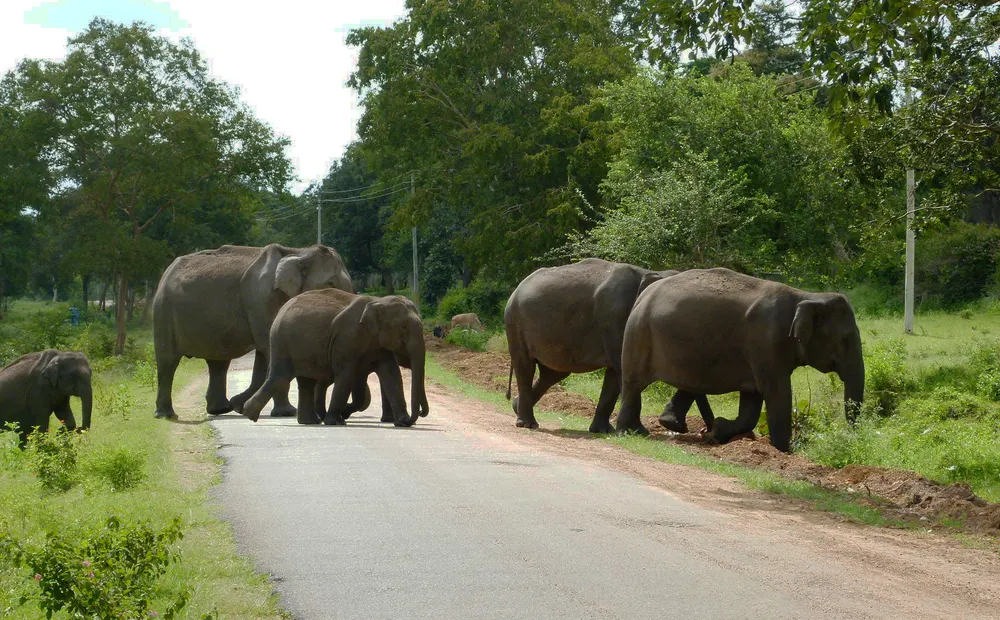
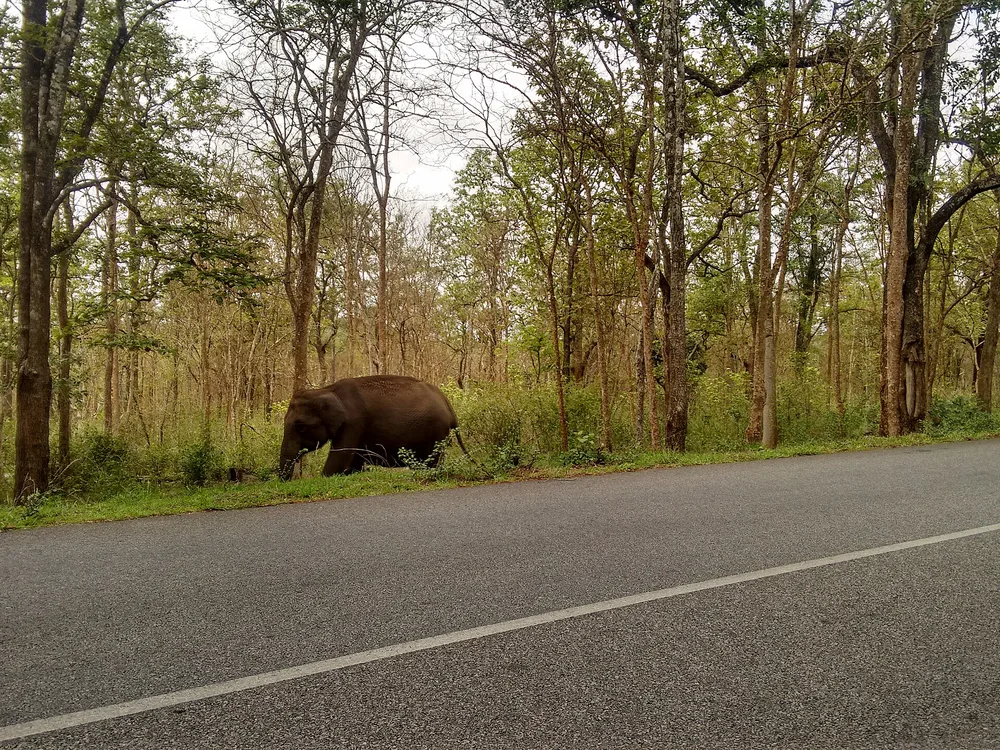
The same elephants use the highways. Herds crossing NH 181 and NH 766 are a daily sight, and a moment's impatience by a driver is the commonest cause of dangerous encounters. Keep well back, stay in your vehicle and never get out for a photograph.
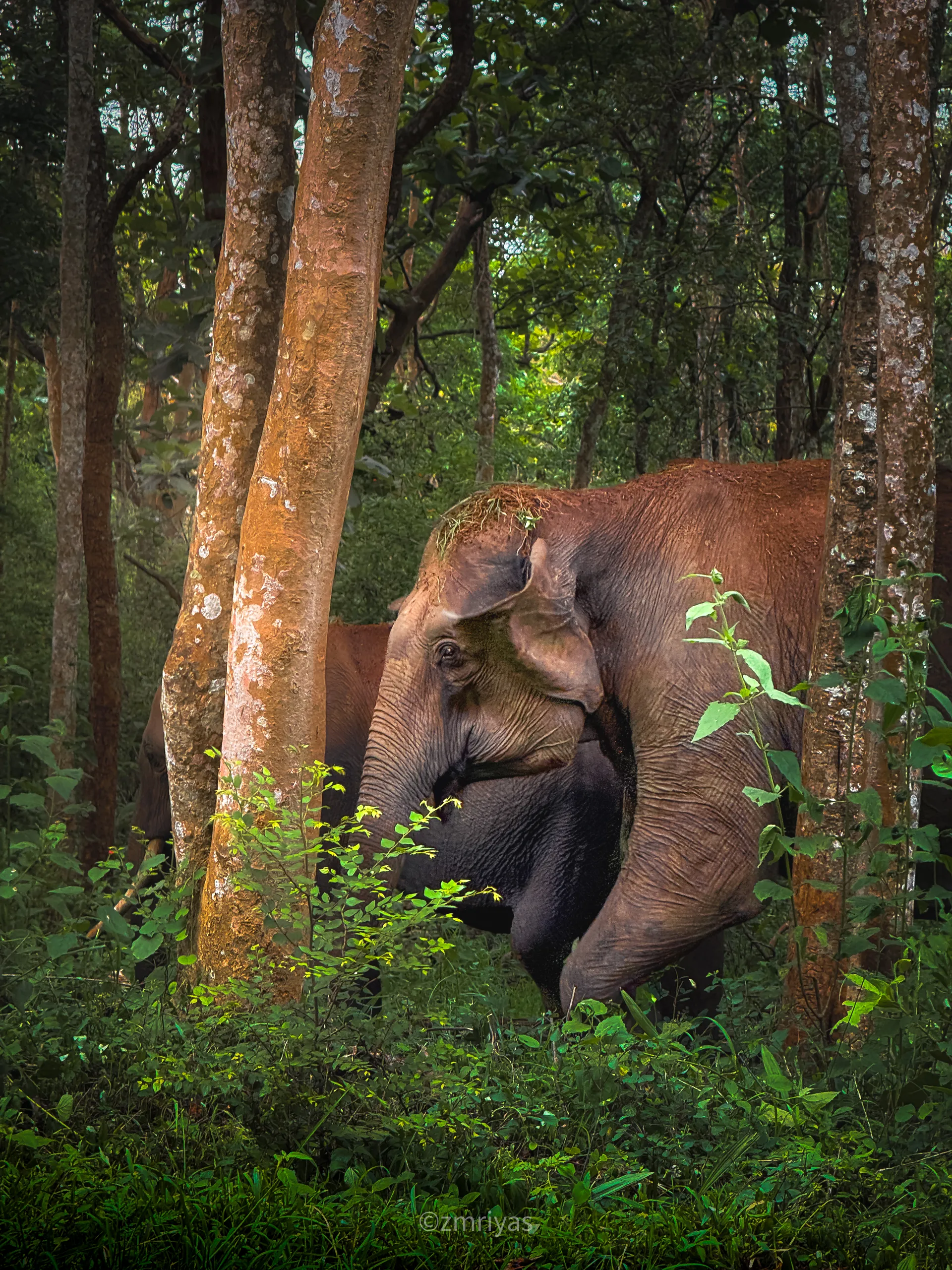
An Asian elephant in moist forest in Bandipur, May 2026.
Gaur, deer and the other grazers
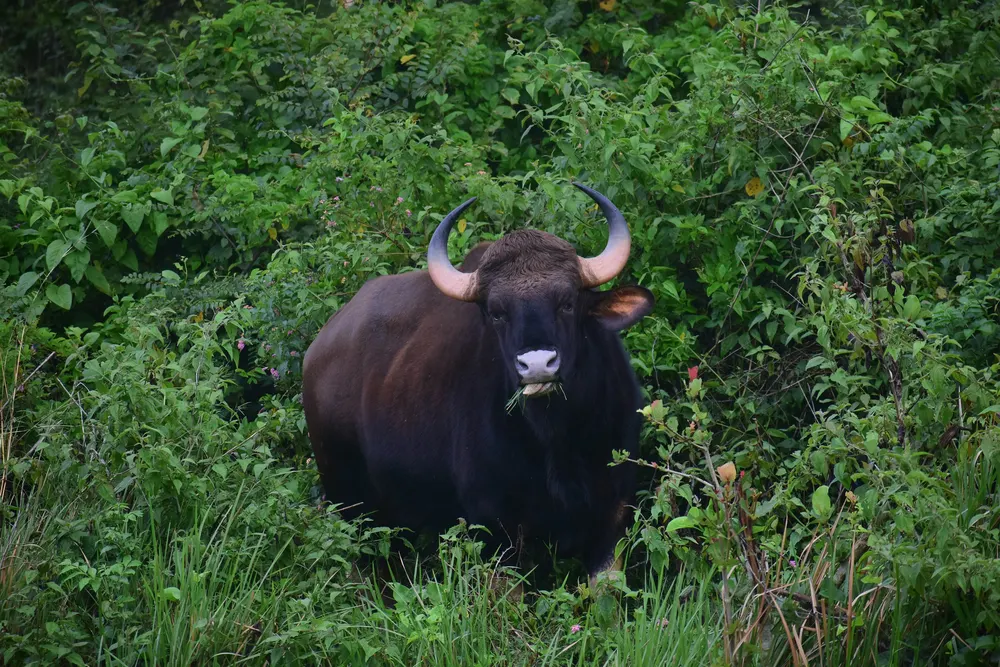
Gaur, often called the Indian bison, is the largest wild cattle in the world: a big bull is a dark, heavily muscled animal with white 'stockings' and a high ridge over the shoulders. Bandipur's herds graze in clearings and forest edges in the mornings and evenings and are generally calm around safari vehicles.
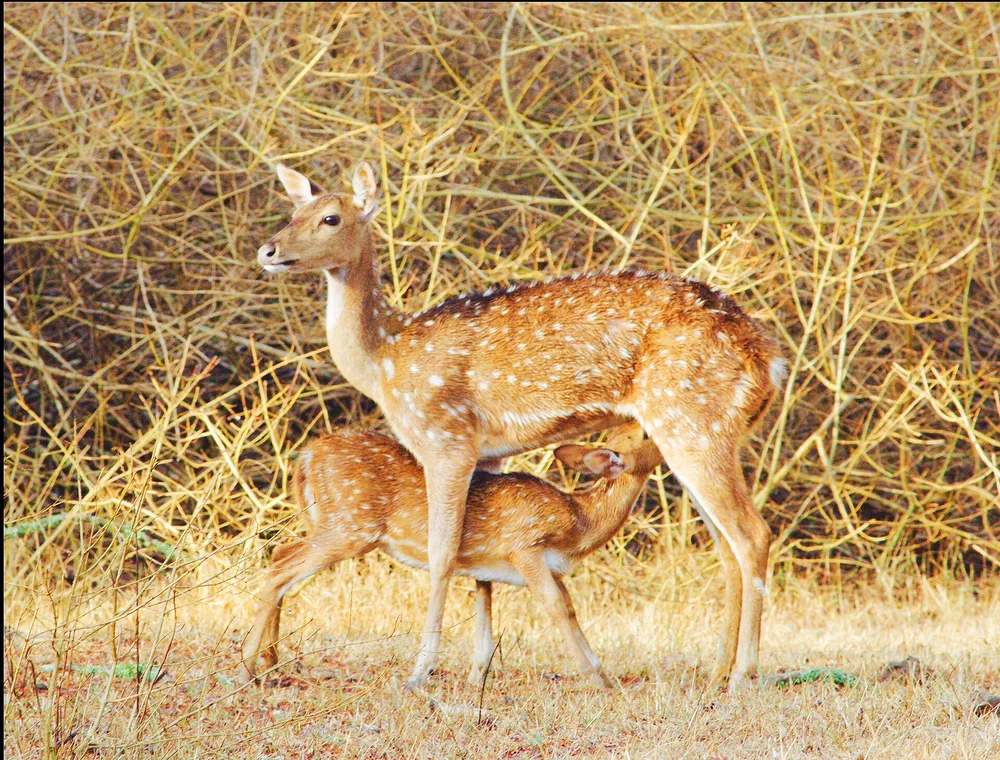
Chital (spotted deer) are the most numerous large animal in the park and the main prey of every predator. Sambar, India's largest deer, are darker and more solitary; their sharp alarm 'dhonk' often signals a tiger or leopard nearby. The small Indian muntjac barks like a dog when alarmed. The four-horned antelope and the tiny Indian spotted chevrotain (mouse deer) live in dense cover and are rarely seen.
Wild boar root in the clearings, and the grey langur, the long-tailed, black-faced monkey of the deciduous forest, works as the forest's watchman: langurs in the trees and chital on the ground warn each other, and every predator, with loud alarm calls.
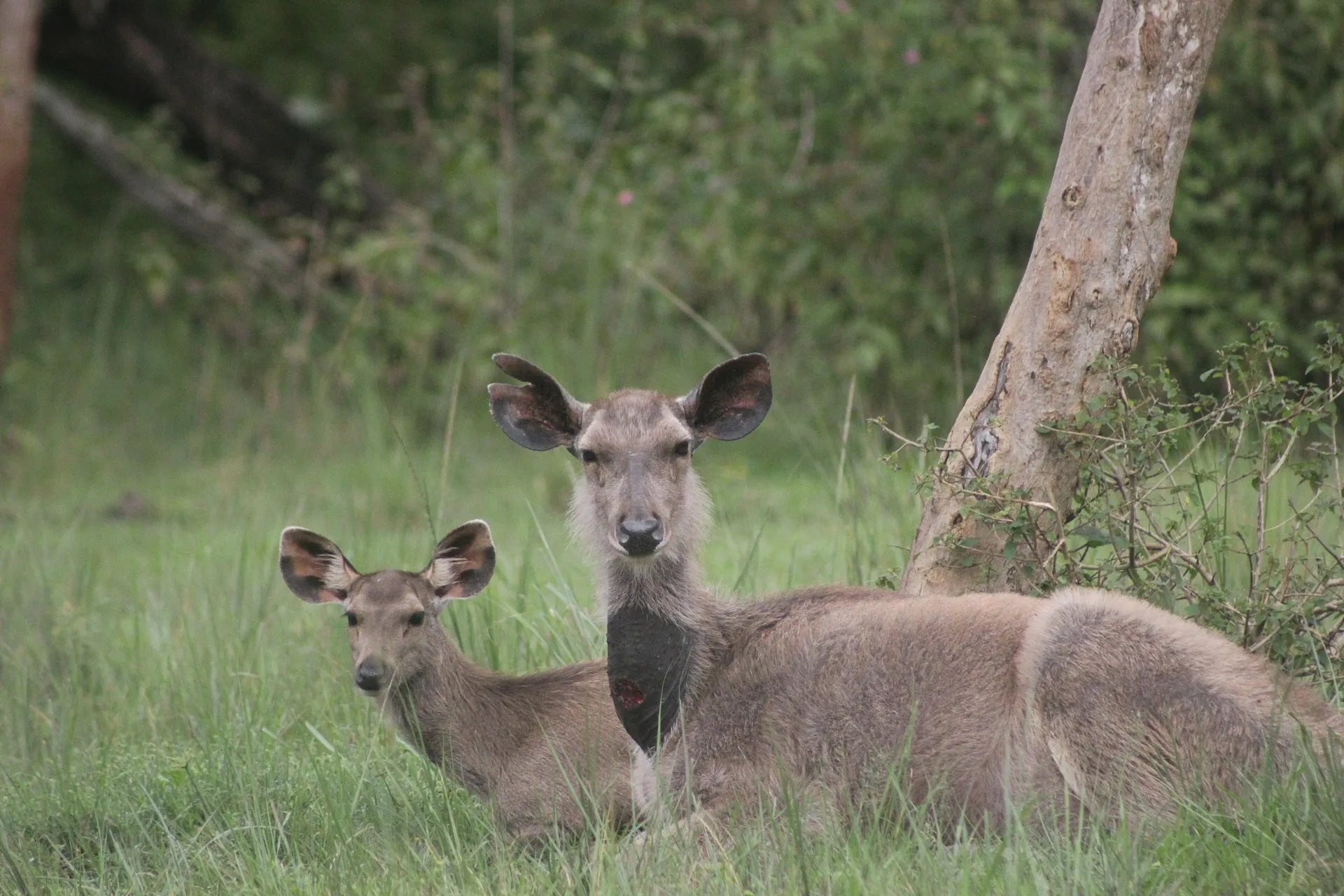
A sambar doe and fawn. Sambar alarm calls are one of the best clues that a tiger or leopard is close.
Dholes: Bandipur's wild dogs
The dhole, or Asiatic wild dog, is a rust-red, fox-sized canid that lives and hunts in packs. It is endangered across its range, and Bandipur is one of the best places in India to see it. It was here, between 1976 and 1978, that the wildlife biologist A. J. T. Johnsingh carried out one of the first detailed field studies of dholes, following packs and their kills over 32 km² around Bandipur.
Packs typically hunt in the early morning and late afternoon, often running chital down along forest roads, so dholes are often seen on the safari tracks themselves. A pack at rest, with pups playing, is one of the great Bandipur sights.
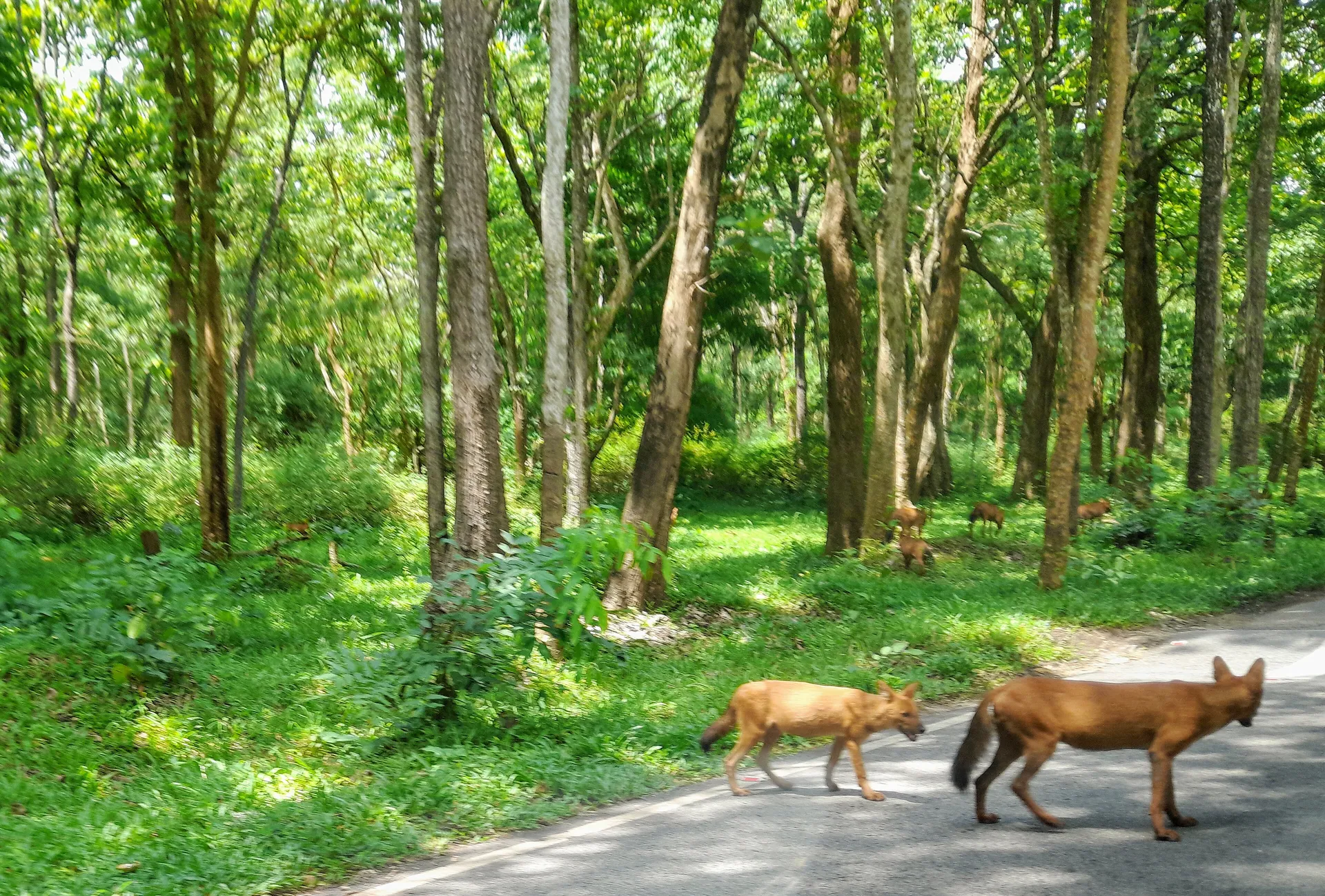
Dholes crossing a forest road in Bandipur. Packs often use roads and tracks to move and hunt.
Leopards and the other predators
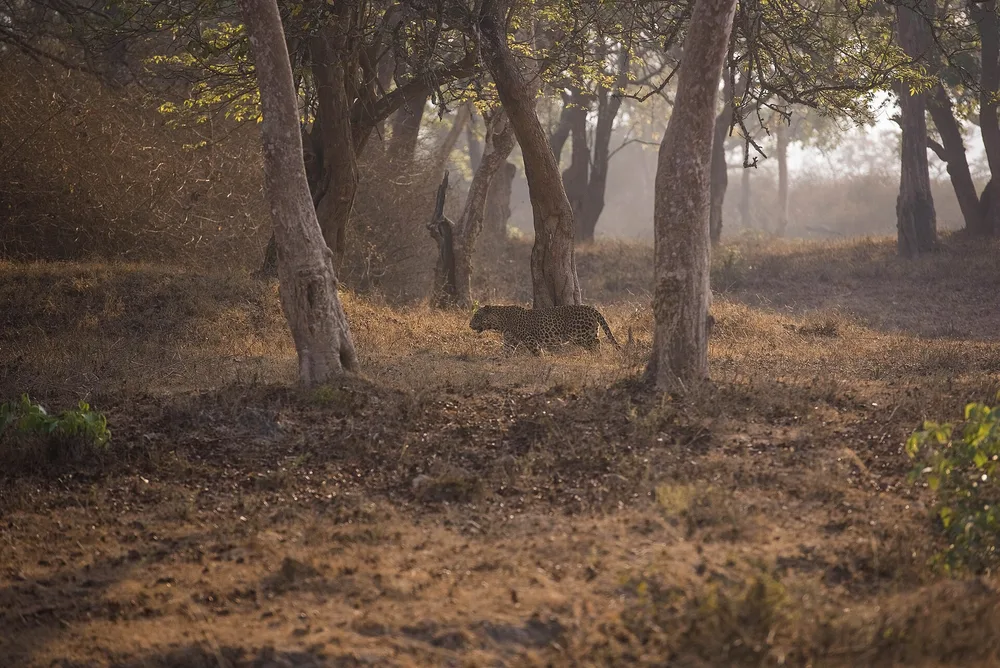
Leopards share the forest with tigers and dholes by being flexible: they hunt smaller prey, take to trees, and use rocky outcrops and the scrub on the edges of the reserve. Bandipur's leopards are seen regularly, often draped on a branch or crossing a road at dusk, but they are shyer than the tigers.
Sloth bears live in the rockier, scrubby parts of the reserve and feed mainly on termites, ants, fruit and honey. They are mostly active at dusk and at night, so sightings on safari are uncommon; on foot they are among the most dangerous animals in India, which is one reason walking in the forest is not permitted.
Smaller carnivores include the golden jackal, which is seen along the Kabini shore, and mongooses. Most of the small cats and civets are nocturnal and rarely seen on safari.
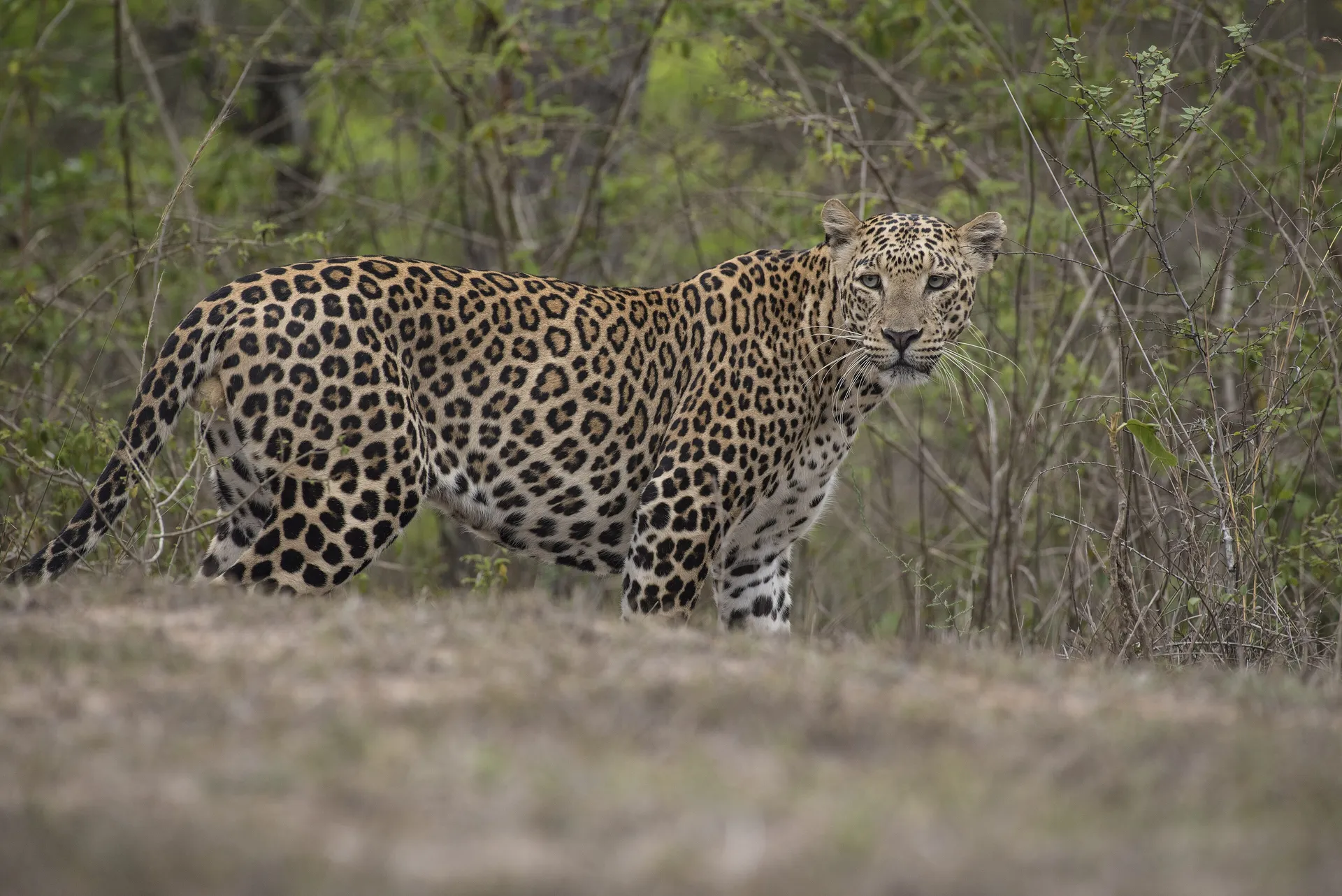
A male leopard in Bandipur. Leopards are seen regularly but are more secretive than the reserve's tigers.
Primates and squirrels
Two monkeys are common: the grey (Hanuman) langur, which you will see on every safari, and the bonnet macaque, which hangs around roadsides and campuses. Both are wild animals; feeding them is illegal in the reserve and makes them aggressive. The Indian giant squirrel, a big, maroon-and-cream tree squirrel, lives in the taller trees and is sometimes seen from the roads.
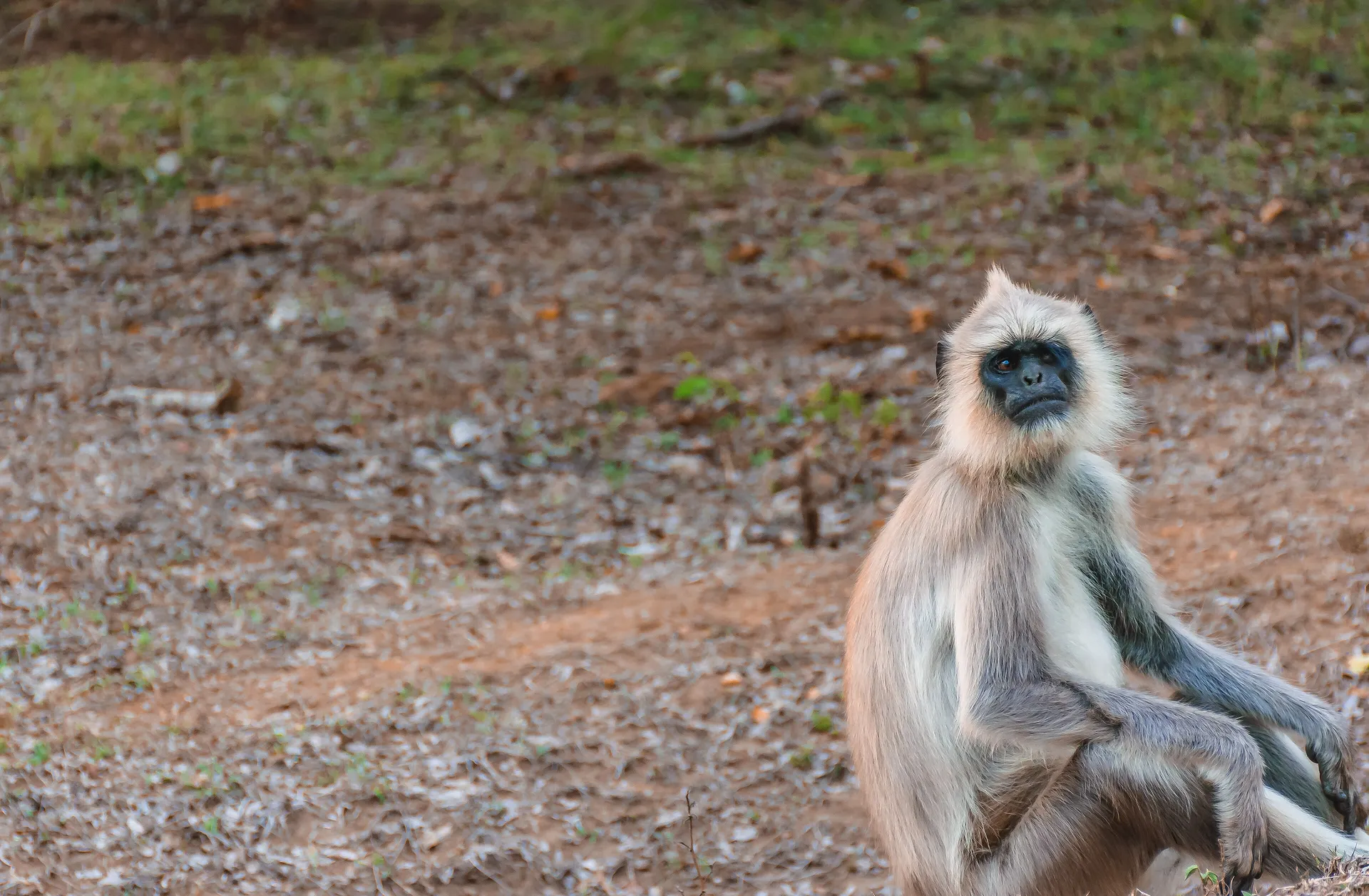
A grey langur in Bandipur. Langur alarm calls from the treetops often give away a hidden predator.
Reptiles and amphibians
The reserve records 34 species of reptiles and 21 amphibians. Among those you might see: the Bengal monitor lizard on roads and rocks, the mugger crocodile in the rivers and reservoirs on the reserve's edges, and, with luck, the Indian rock python. Venomous snakes include Russell's viper and the spectacled cobra; the ornate flying snake glides between trees. Frogs and toads come alive with the monsoon rains.
Wildlife rules
- Do not feed any animal, anywhere in the reserve, including monkeys and deer by the highway. It is illegal and dangerous.
- Do not stop, get out of your vehicle or approach animals on the highways.
- On safari, stay seated and quiet, use no flash and follow the staff's instructions.
- Do not use drones, calls or playback to attract animals or birds.
- Report injured animals or anyone harassing wildlife to the reserve (contact details on bandipurtr.in).
See it with a guide
A safari is the only way to see this wildlife inside the reserve. If you are based in Mysuru, the private wildlife day tour from Mysore to Bandipur takes care of transport and timing; from Coimbatore or Ooty, the Ooty and Bandipur safari day tour combines the park with the Nilgiris. To compare Bandipur with its neighbours, see compare parks and our safari guide.
Wildlife private day tour: Mysore to Bandipur National Park
A private day from Mysuru to Bandipur and back, built around wildlife viewing, as the listing title describes. The simplest way to reach the safari counter without your own car. Check whether a Forest Department safari seat is included and the pick-up time.
Check availabilityBook via GetYourGuide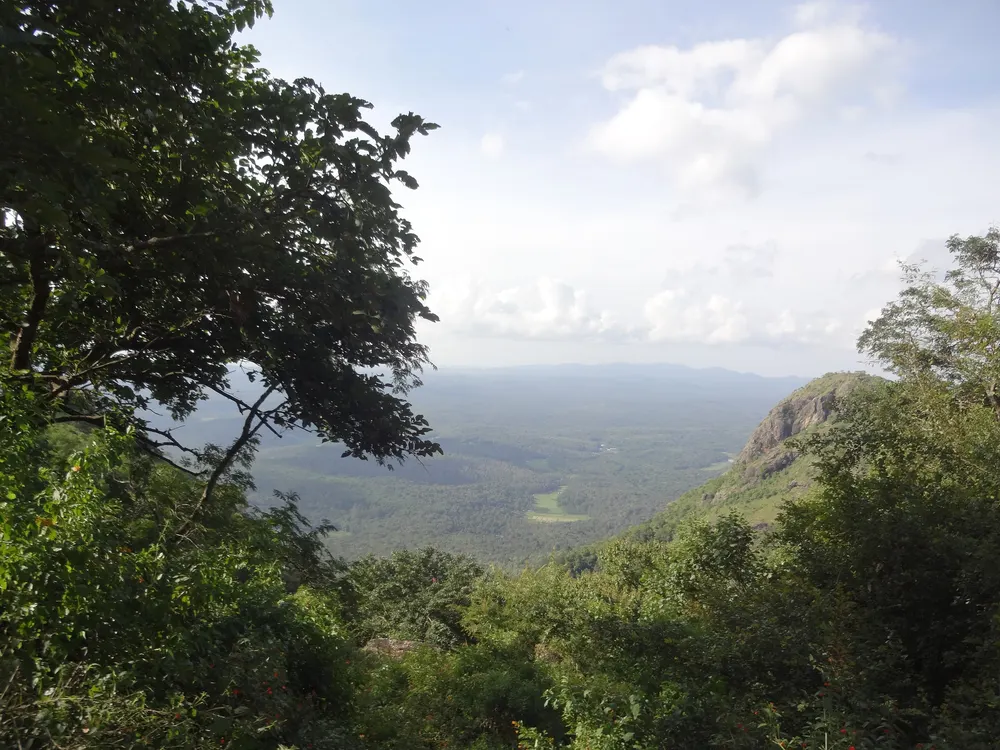
Ooty and Bandipur safari day tour from Coimbatore
One long day from Coimbatore: up to Ooty in the Nilgiris and a safari in the Bandipur forest, according to the title. Check the order of the day, the safari arrangements and the return time; the forest highway closes at 9 pm.
Check availabilityBook via GetYourGuide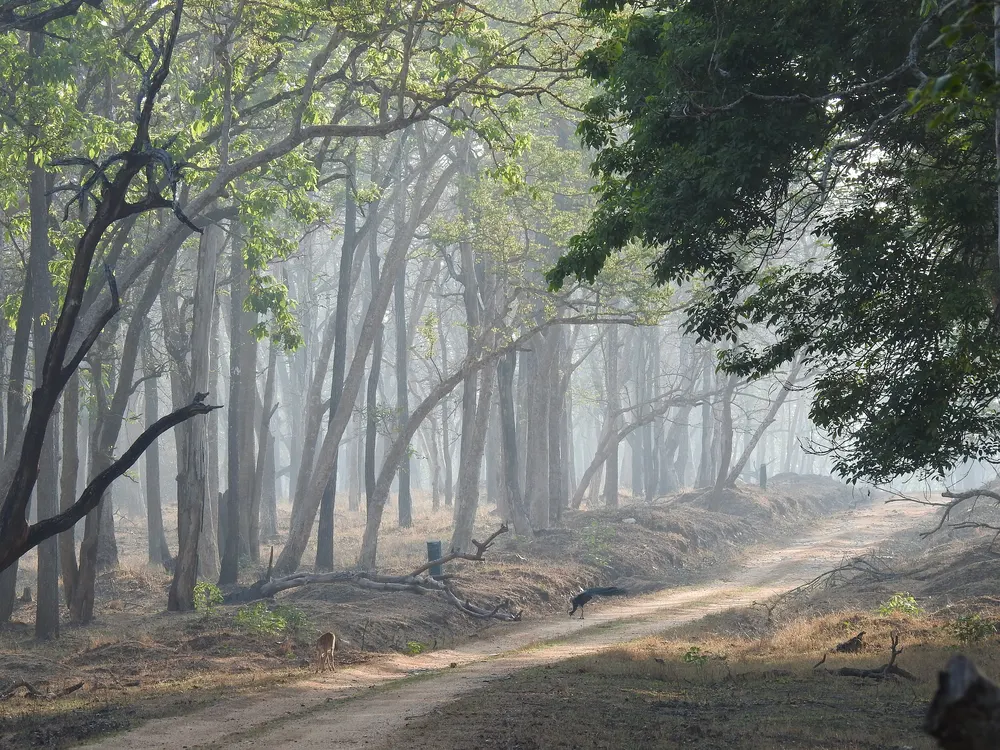
Bangalore to Kabini safari and Mysore heritage: 2-day tour
Two days from Bengaluru combining a safari at Kabini, on the Nagarhole side of the same forest, with Mysuru's sights, as the title states. The overnight gives you an evening and a morning. Check which safari is included and where you stay.
Check availabilityBook via GetYourGuideTour listings are on GetYourGuide. Prices, dates and cancellation terms are shown live on each listing and can change; BandipurNationalPark.com may earn a commission at no extra cost to you.
Frequently asked questions
What animals can I see in Bandipur?
On most safaris: Asian elephants, gaur, chital, sambar, grey langurs, wild boar and peafowl. Dholes, leopards and tigers are seen regularly; sloth bears, muntjac and the smaller cats less often.
How many elephants are there in Bandipur?
Karnataka's 2023 synchronised elephant estimation put Bandipur at an estimated 1,116 elephants, the highest of any reserve in the state.
Are there leopards in Bandipur?
Yes. Leopards are seen regularly on safari, often in trees or crossing roads near dusk, though they are shyer than the tigers.
What is a dhole?
The dhole, or Asiatic wild dog, is a rust-red pack-hunting canid. It is endangered, and Bandipur is one of the best places in India to see it.
Is it safe to see elephants on the highway?
Only if you keep your distance and stay in your vehicle. Stop well back, do not honk or get out, and wait for the herd to cross and move off.
Sources and official information
Facts were checked against these official and scholarly sources in November 2026. Opening hours, ticket prices, park fees and timetables change, so confirm before you go.
- bandipurtr.in
- bandipurtr.in
- starofmysore.com
- deccanherald.com
- ruralindiaonline.org
- reflectionsonpaperspast.com
- en.wikipedia.org
- en.wikipedia.org
- en.wikipedia.org
- unesco.org
- bandipurtr.in
BandipurNationalPark.com is an independent guide. It is not the official website of Bandipur National Park or Tiger Reserve and is not affiliated with the Karnataka Forest Department, any government body, tour operator or resort; official safari bookings are made on the government's own portal. Some links are affiliate links: tours go to GetYourGuide and accommodation goes to Booking.com, and we may earn a commission at no extra cost to you.