In short
- Coorg (Kodagu) is Karnataka's coffee district, a hilly 4,102 km² on the eastern slopes of the Western Ghats, with its main town Madikeri about three hours' drive west of Mysuru. Nagarhole's Nanachi gate is on its southern edge.
- It is green, wet and cool compared with Bandipur: the south-west monsoon (June to September) brings heavy rain, the falls are at their best from July, and the estates flower in the dry months.
- The essentials: a coffee estate walk with a tasting, Abbey Falls and Raja's Seat at Madikeri, Talakaveri (the source of the Kaveri), and the Tibetan settlements and Golden Temple at Bylakuppe on the road from Mysuru.
- Dubare on the Kaveri is a Forest Department elephant camp. Watching the morning bath is fine; skip anything that involves riding or scrubbing the elephants.
- Bylakuppe: foreign visitors can visit by day, but staying overnight in the Tibetan settlements requires a Protected Area Permit from India's Ministry of Home Affairs.
Coorg in brief
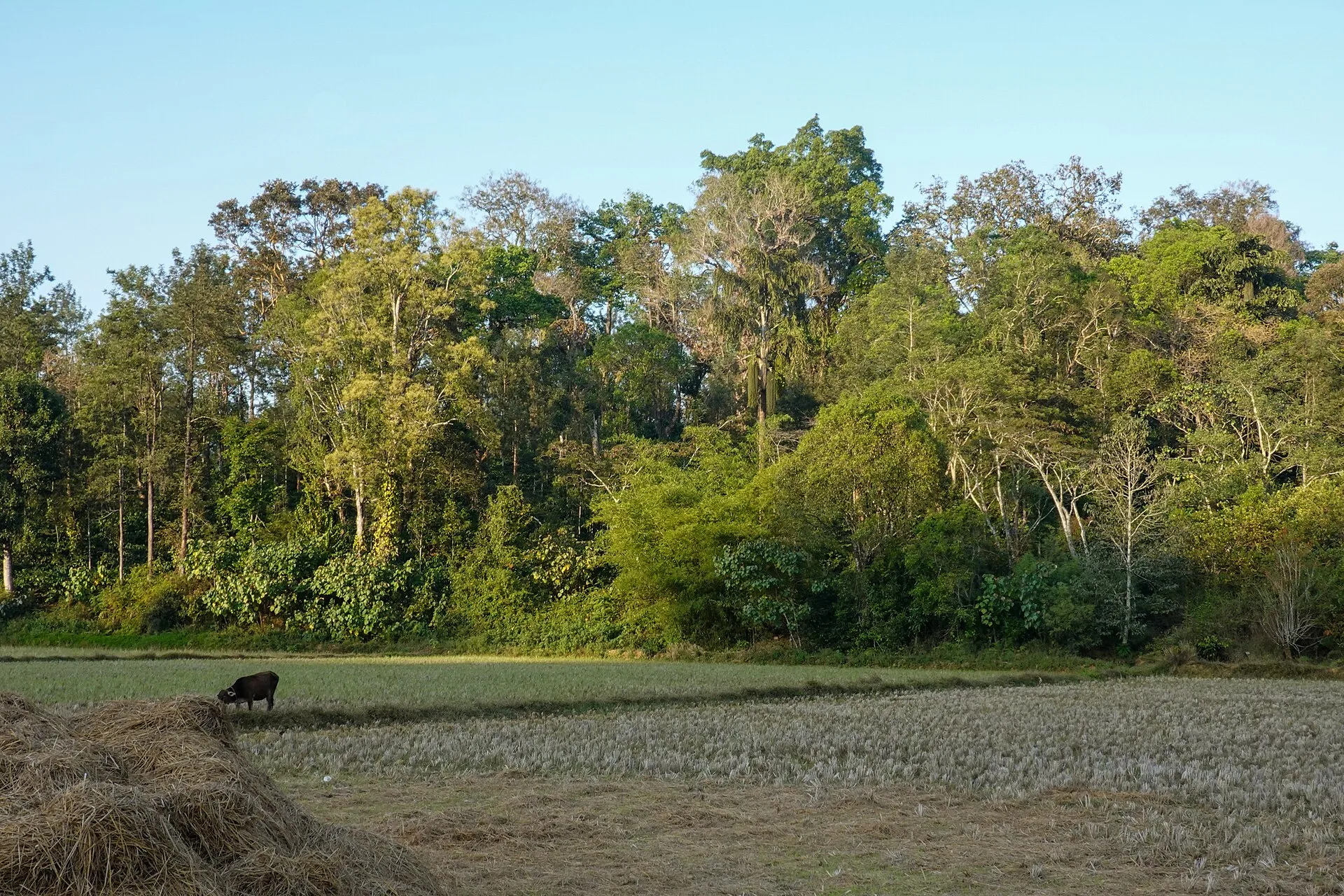
Coorg is the old English name for Kodagu, a small hill district of Karnataka north-west of Nagarhole. It covers 4,102 km² of forest, coffee estates, paddy valleys and grassy ridges on the eastern side of the Western Ghats, rising to Tadiandamol (about 1,750 m), the district's highest peak. The Kaveri river rises here at Talakaveri and flows east past Kushalnagar towards Mysuru.
Kodagu has a strong identity of its own. The Kodava people, the district's earliest settled agriculturists and a martial community, have their own language, dress, festivals and ancestral houses, and their warrior tradition is famous: the district has given India's armed forces a remarkable number of officers. Coorg was ruled by its own rajas until 1834, then by the British, and was a separate state until it merged into Mysore State in 1956.
For a Bandipur trip, Coorg is the cool, green contrast: three or four hours from the park, with estates to stay on, short walks and waterfalls. It is not a wildlife destination in the same sense, but Nagarhole's western gate at Nanachi is on its southern edge, and the forests and birdlife of the estates are rich.
- District
- Kodagu, Karnataka; headquarters Madikeri
- Area
- 4,102 km²
- Highest peak
- Tadiandamol, about 1,750 m
- From Mysuru
- About 3 hours to Madikeri by road, via Hunsur and Kushalnagar
- From Bandipur
- About 4 hours via Mysuru or Hunsur
- Rain
- Heavy south-west monsoon, roughly June to September
Coffee
Coffee is Coorg's landscape. The estates are not open plantations but forest gardens: coffee bushes grow in the shade of tall native trees and silver oaks, often with pepper vines climbing the trunks and cardamom or areca nut alongside, which is why the district still looks wooded from above and why it is so good for birds.
Karnataka grows around 70 percent of India's coffee, according to Coffee Board projections reported in 2025, and Kodagu is its biggest coffee district and its largest producer of robusta; estimates of Kodagu's share of the national crop vary widely between sources, so treat any single figure with caution. Arabica is grown on the higher, cooler slopes.
The best way to understand it is an estate walk with someone who grows it: how the cherries are picked, pulped, dried and graded, and why robusta and arabica need different heights and shade. The coffee year runs to the seasons: white blossom with the first showers in roughly March or April, ripe red cherries and the main harvest in the cool months from about December to February, when beans are spread to dry in estate yards.
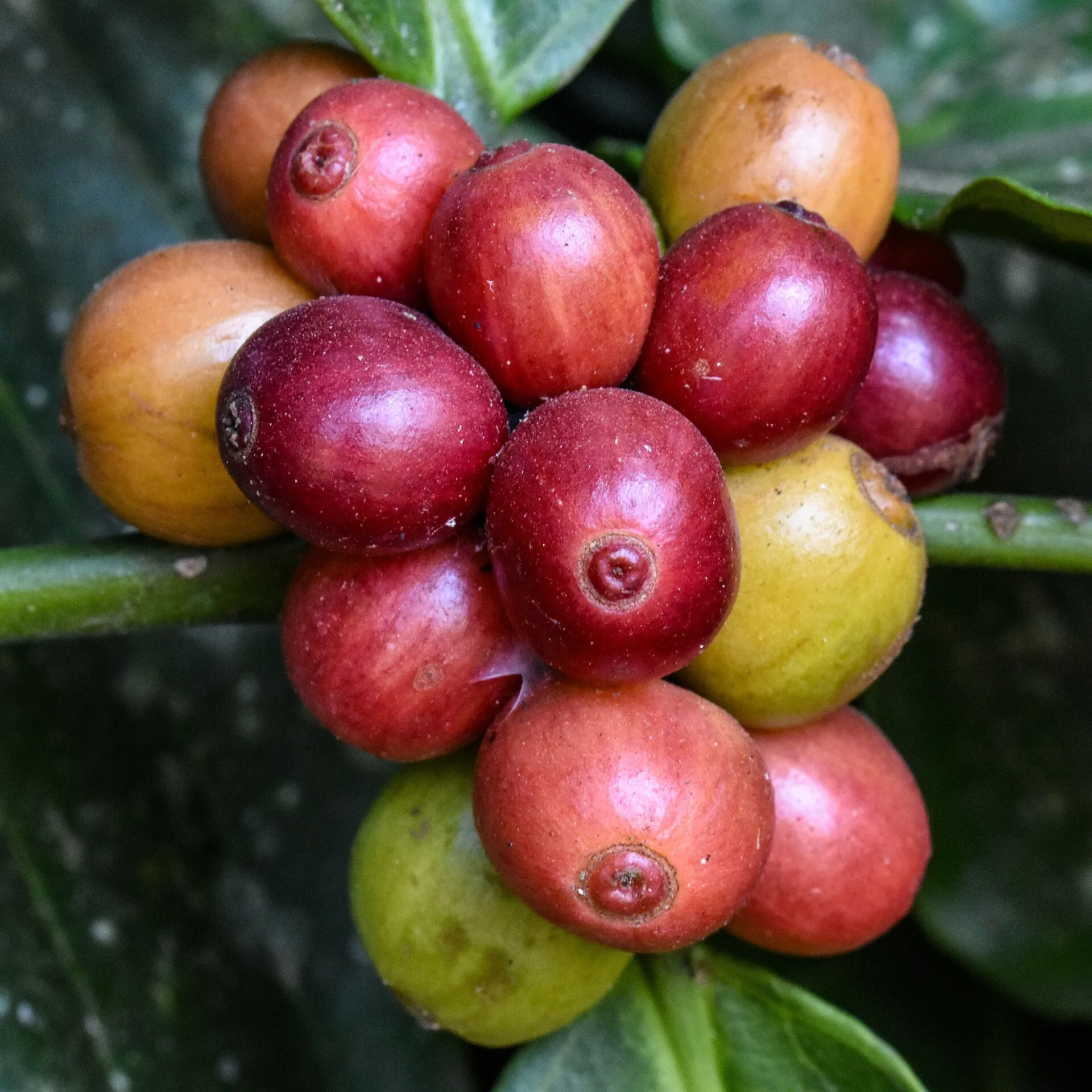
Ripe robusta cherries on a Coorg estate in February, harvest time.
Madikeri, Abbey Falls and Talakaveri
Madikeri (Mercara), the district town, sits on a ridge with a small fort built by the Kodagu rajas and later rebuilt, the domed Omkareshwara temple, and Raja's Seat, a garden on the edge of the ridge where the rajas are said to have watched the sunset over the hills. Go at dawn or at dusk; the view across ridge after ridge is the classic image of Coorg.
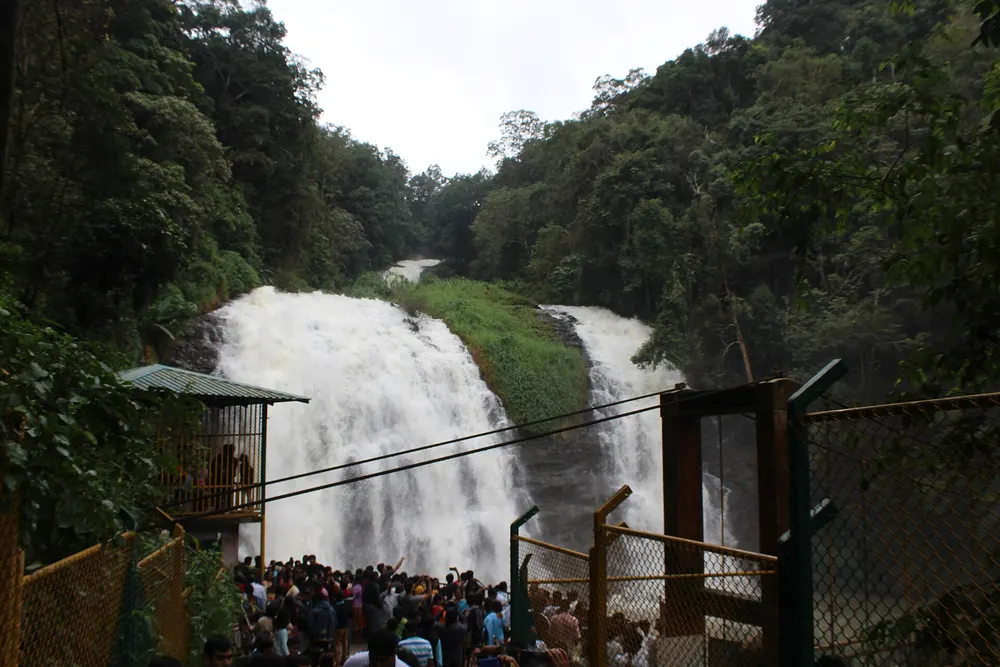
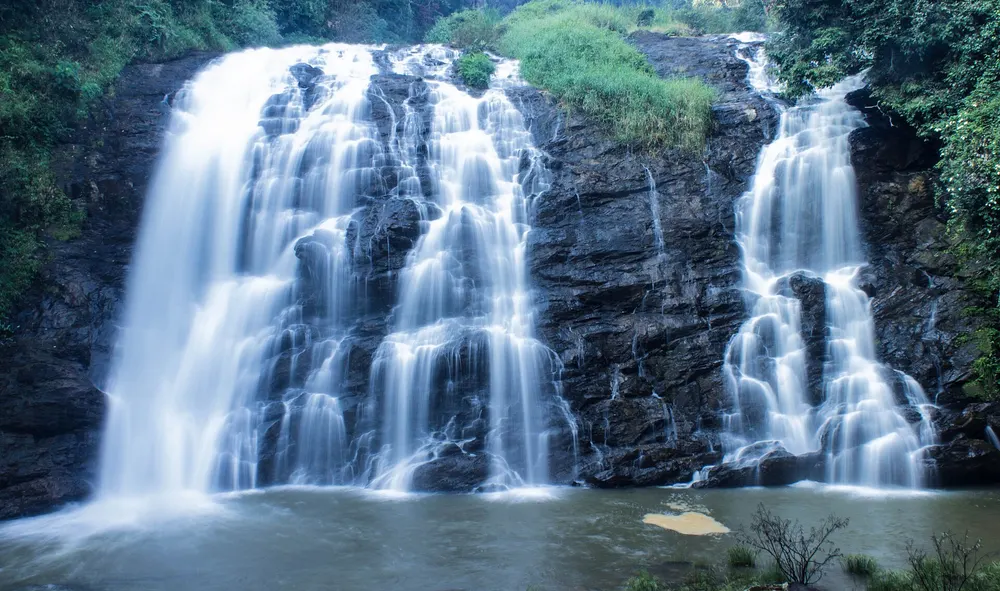
Abbey Falls, about 5 km from Madikeri down a road through coffee estates, is a broad fall over dark rock, at its best in the monsoon and the months after it. A path with steps leads down to a viewing area opposite the falls; do not climb on the rocks or go into the water, which is dangerous.
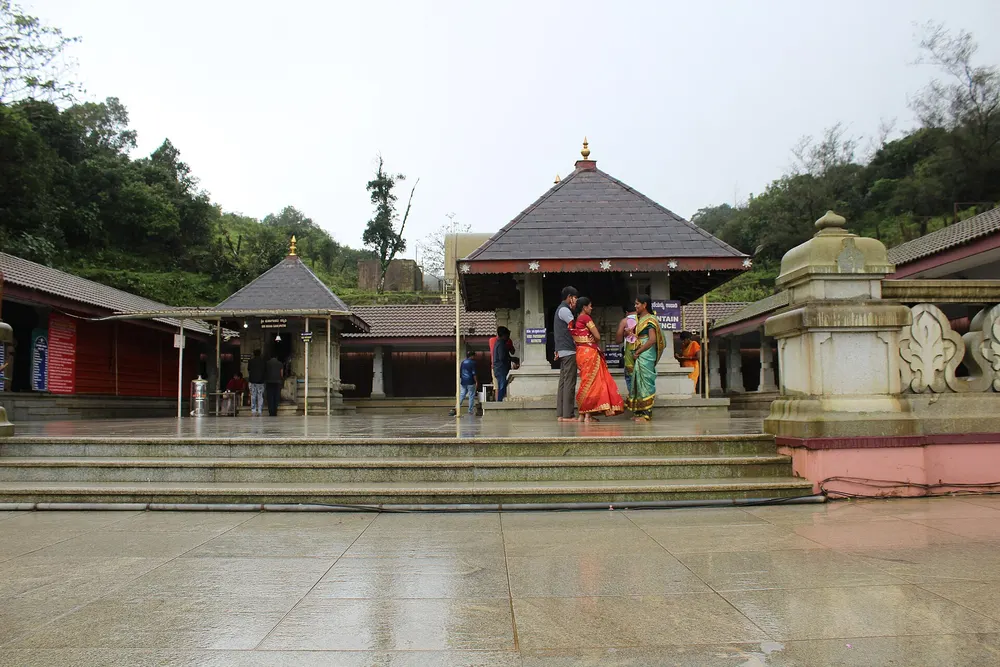
Talakaveri, on the Brahmagiri hills in the south-west of the district, is where the Kaveri rises: a small tank in a temple courtyard high on the hillside, one of the most sacred places in South India for followers of the river. Below it, Bhagamandala has an old temple at the confluence of the Kaveri with two streams. The drive up from Madikeri takes about an hour and a half; mist often closes in by midday.
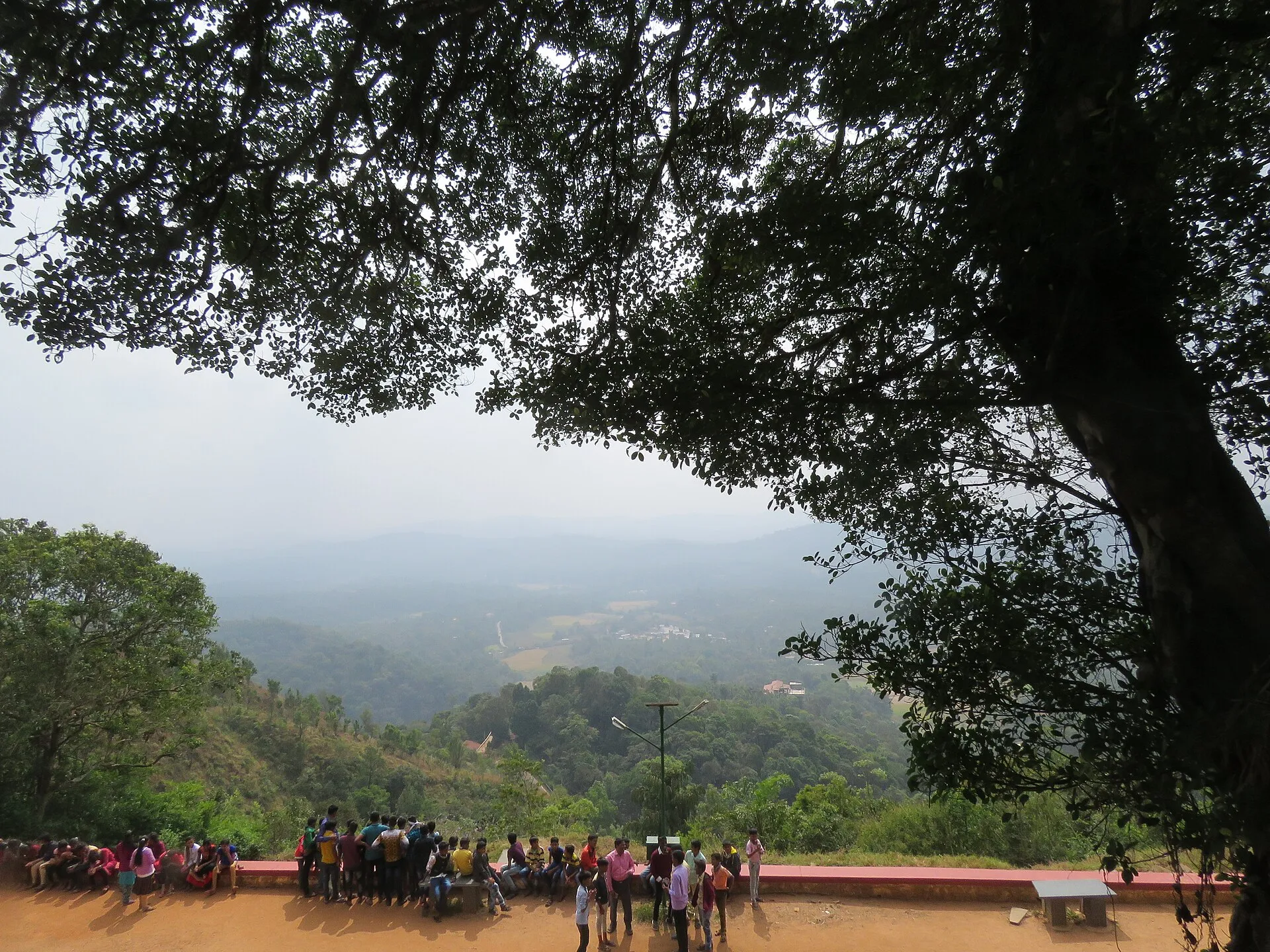
The view from Raja's Seat, Madikeri, across the Kodagu hills.
Dubare: watch, do not ride
On the bank of the Kaveri on the road from Kushalnagar to Siddapura, Dubare is a Karnataka Forest Department elephant camp, originally a capture and training camp for working elephants; Jungle Lodges & Resorts, the state's eco-tourism company, also runs a lodge at Dubare. Visitors cross the river by boat to the camp. The camp elephants are taken down to the river for a bath in the morning, roughly between 08:30 and 11:00 local time depending on the source, and fed afterwards.
Watching the bath from the bank and talking to the mahouts is a real insight into how captive elephants are cared for. What this guide does not recommend is paying to scrub, feed by hand or ride the elephants, which some packages offer. Close handling stresses the animals, puts visitors at real risk from a several-tonne animal, and keeps alive a demand for elephants as entertainment. Watch from where the staff place you.
Opening times and charges are posted at the camp and change with the season and the river level; in heavy monsoon the crossing may stop. Ask locally the day before.
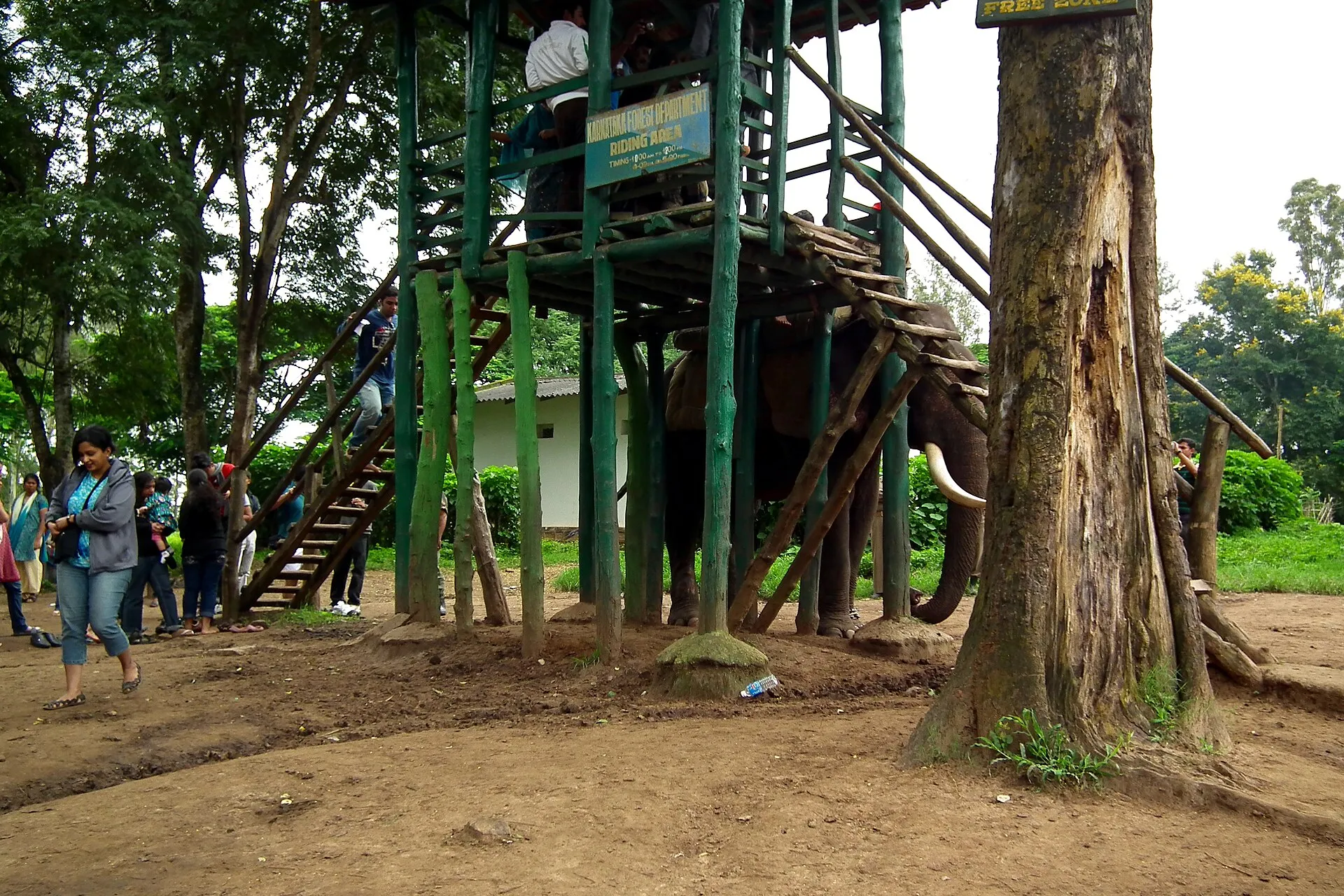
The forest camp at Dubare, on the bank of the Kaveri.
Bylakuppe and the Golden Temple
Between Mysuru and Kushalnagar, the road passes through Bylakuppe, one of the largest Tibetan settlements in India. Tibetan refugees were resettled here on land granted by the Mysore government from 1961, and the settlements now have monasteries, schools, farms and markets. The best-known monastery is Namdroling, founded in 1963 by Penor Rinpoche as the seat of the Palyul lineage in exile; its main hall, the Golden Temple, has three huge gilded images of the Buddha, Padmasambhava and Amitayus, and is open to visitors by day.
Visit quietly: dress modestly, walk clockwise around shrines and stupas, ask before photographing monks, and do not enter assembly halls during prayers unless invited. The cafés and shops in the settlement serve momos and Tibetan bread.
A permit rule for foreign visitors. Day visits to the Golden Temple are routine. But the Tibetan settlements at Bylakuppe are a protected area for foreign nationals, and staying overnight inside them requires a Protected Area Permit (PAP) from India's Ministry of Home Affairs, applied for well in advance. Indian citizens do not need one. If you are not Indian and want to stay nearby, sleep in Kushalnagar or Madikeri instead.
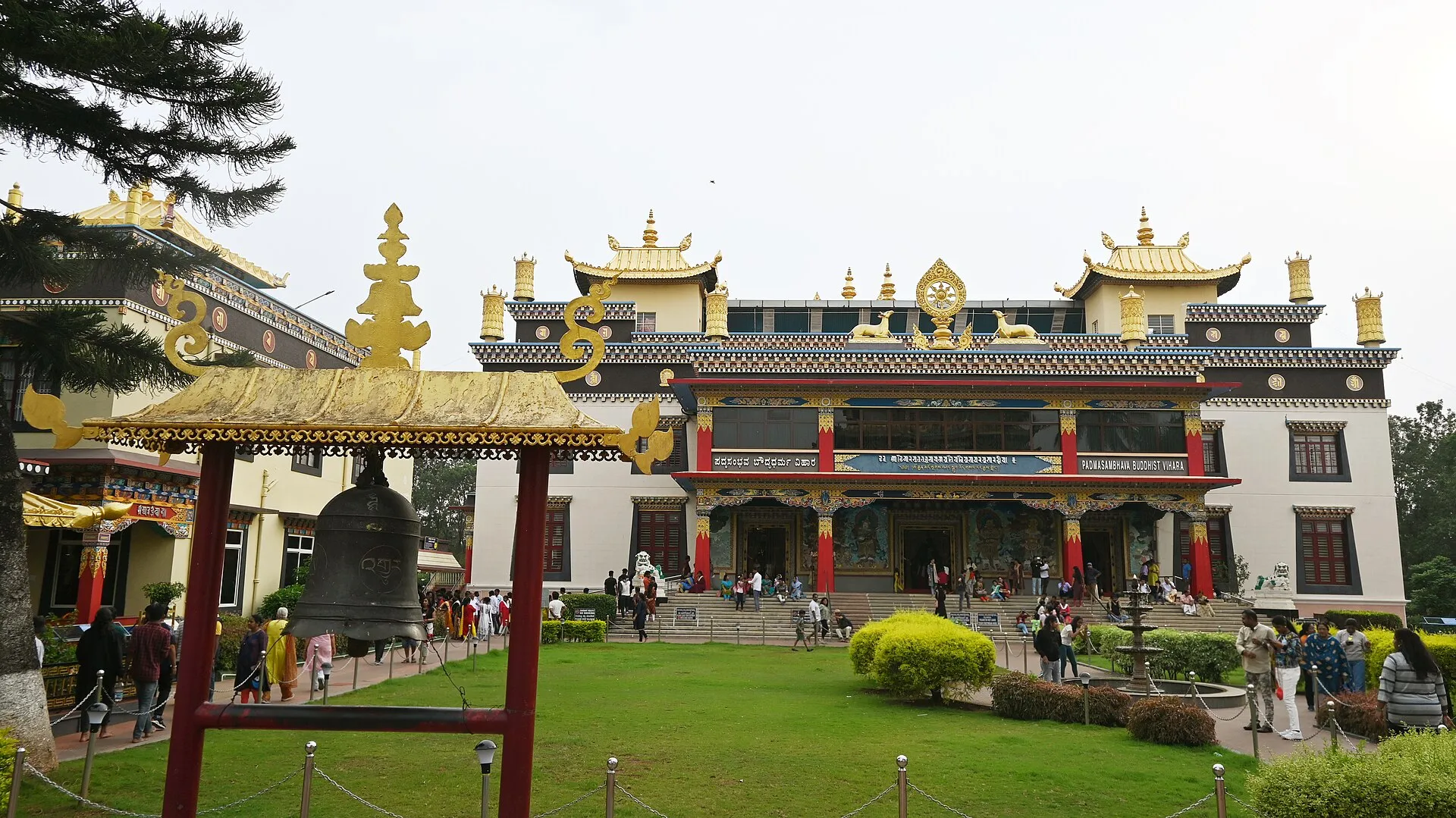
The Golden Temple of Namdroling Monastery at Bylakuppe.
When to go and how to fit it in
October to March is the main season: dry, clear and cool at night, with coffee harvest from about December. April and May are warmer, with coffee blossom after the first showers. June to September is the monsoon: Coorg is one of the wettest parts of Karnataka, roads and treks can close and leeches are everywhere, but the falls and the green are spectacular. In August 2018 and 2019 the district suffered severe floods and landslides; in a heavy monsoon follow local advice.
Coorg combines naturally with Kabini: the two are linked by road through the Nagarhole area via Gonikoppal, and Nagarhole's Nanachi safari gate is on the Coorg side. A sensible loop from Bengaluru is Mysuru – Coorg (two nights) – Kabini (two nights) – Bandipur (one or two nights) – Ooty, or the reverse. The itineraries page has day-by-day versions; day trips covers Coorg in a day from Mysuru, which is possible but long.
Where to stay
Coorg's character is in its estate homestays, where you stay on a working coffee estate with the family that runs it; Madikeri has hotels if you want a town base, and Kushalnagar is the most convenient for Dubare and Bylakuppe. In south Coorg near Nagarhole, Booking.com lists stays around Gonikoppal and Srimangala. The search below shows current Coorg availability on Booking.com; for the region as a whole see where to stay.
Coorg tours
Two listings below are full days from Mysuru; the others start in Coorg itself. Each is described from its GetYourGuide title. For a walk through the old town, there is also a guided walking tour of old Madikeri.
Exploring Coorg: guided full-day tour by car from Mysore
A full day from Mysuru to Coorg by car with a guide. Check the listing for the stops, usually a mix of falls, viewpoints and estates.
Check availabilityBook via GetYourGuide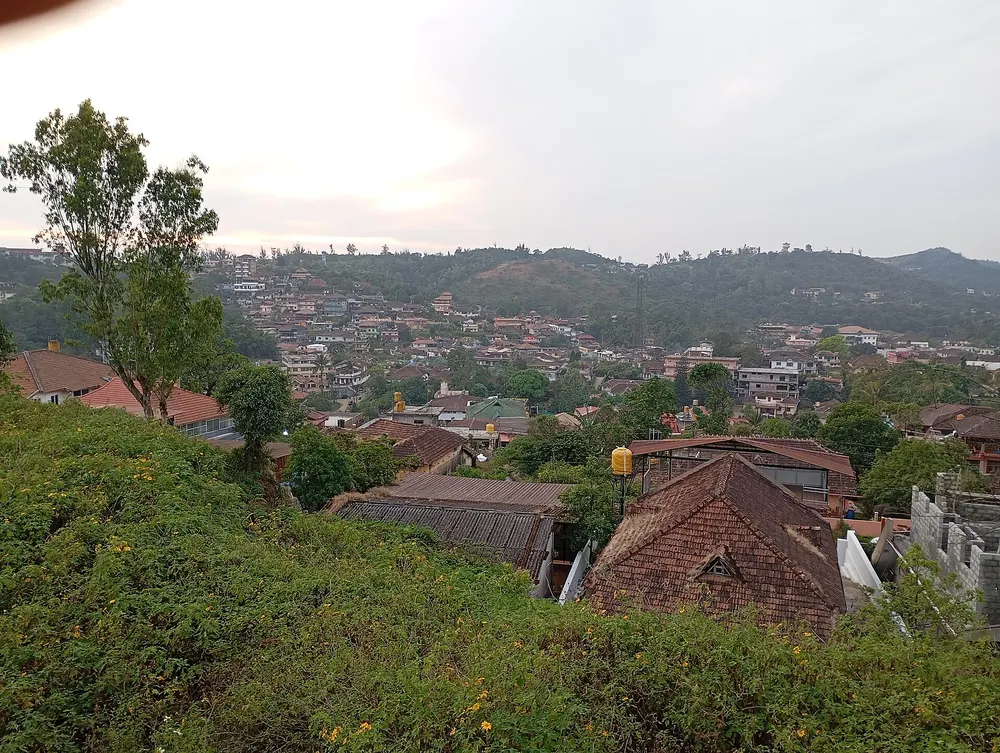
Mysore: guided day trip to Coorg by car with scenic stops
A guided car day from Mysuru to Coorg with stops along the way. See the listing for the itinerary and timings.
Check availabilityBook via GetYourGuide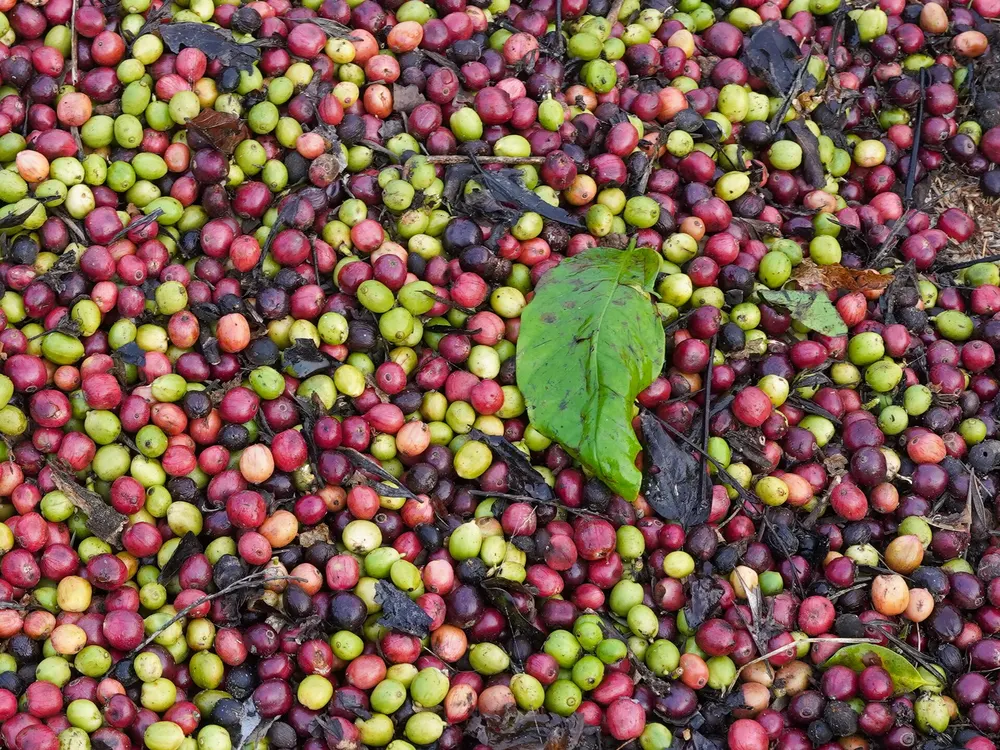
Coorg: guided coffee plantation tour with tastings
A guided visit to a Coorg coffee estate with tastings, according to the listing title. Check where it starts and how long it lasts.
Check availabilityBook via GetYourGuide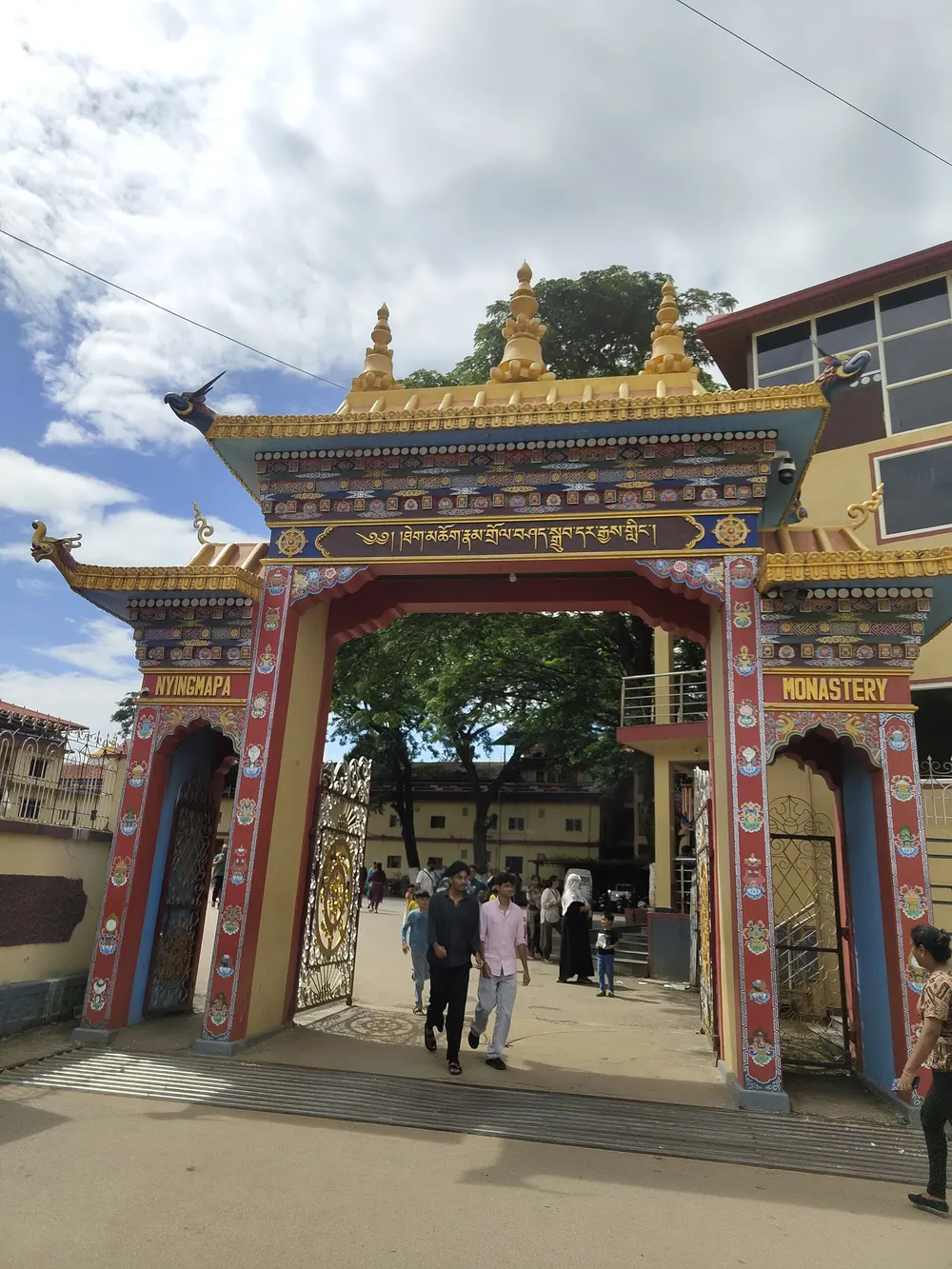
Mysore, Bylakuppe and Nisargadhama private day trip
A private day from Mysuru to the Tibetan settlement at Bylakuppe and the Nisargadhama river island near Kushalnagar. Read the listing for timing.
Check availabilityBook via GetYourGuide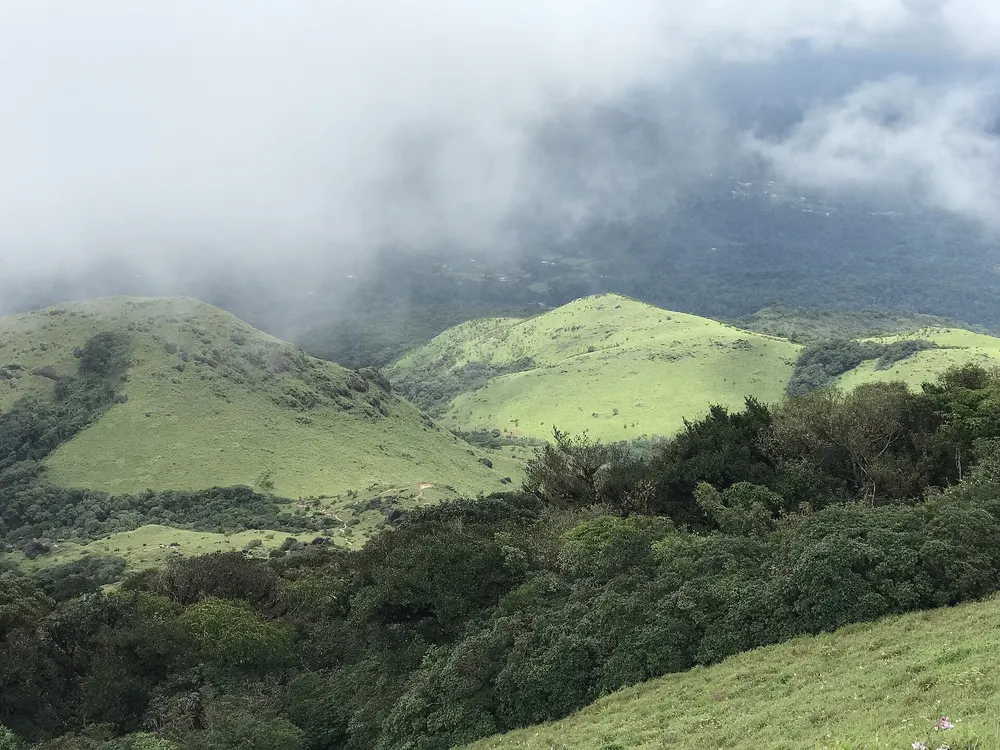
Coorg: Tadiandamol trek guided tour
A guided trek up Tadiandamol, Kodagu's highest peak. Check the listing for the start point, fitness level and season.
Check availabilityBook via GetYourGuideTour listings are on GetYourGuide. Prices, dates and cancellation terms are shown live on each listing and can change; BandipurNationalPark.com may earn a commission at no extra cost to you.
Coorg on a longer South India trip
If Coorg is one stop on a longer route, the multi-day tours below combine Mysuru, the wildlife reserves and the hills.
Frequently asked questions
How far is Coorg from Bandipur?
Madikeri is about four hours' drive from Bandipur via Mysuru or Hunsur. From Mysuru it is about three hours.
Is Dubare elephant camp ethical?
Watching the morning bath from the bank is fine. Avoid paid rides, hand-feeding and scrubbing the elephants: close handling stresses the animals and is risky for visitors.
Do foreigners need a permit for Bylakuppe?
Not for a day visit to the Golden Temple. Staying overnight inside the Tibetan settlements requires a Protected Area Permit from the Ministry of Home Affairs; stay in Kushalnagar or Madikeri instead.
When is the coffee harvest in Coorg?
Mainly in the cool, dry months from about December to February. Coffee blossom follows the first showers in about March or April.
Can I do Coorg as a day trip from Mysuru?
Yes, on a long day by car with Bylakuppe, Dubare or Abbey Falls; guided day tours from Mysuru exist. Two nights is much better.
Sources and official information
Facts were checked against these official and scholarly sources in November 2026. Opening hours, ticket prices, park fees and timetables change, so confirm before you go.
- en.wikipedia.org
- deccanherald.com
- statista.com
- coffeeboard.gov.in
- en.wikipedia.org
- palyul.org
- mha.gov.in
- archive.jangchuplamrim.org
- karnataka.com
- nagaraholetigerreserve.com
BandipurNationalPark.com is an independent guide. It is not the official website of Bandipur National Park or Tiger Reserve and is not affiliated with the Karnataka Forest Department, any government body, tour operator or resort; official safari bookings are made on the government's own portal. Some links are affiliate links: tours go to GetYourGuide and accommodation goes to Booking.com, and we may earn a commission at no extra cost to you.