In short
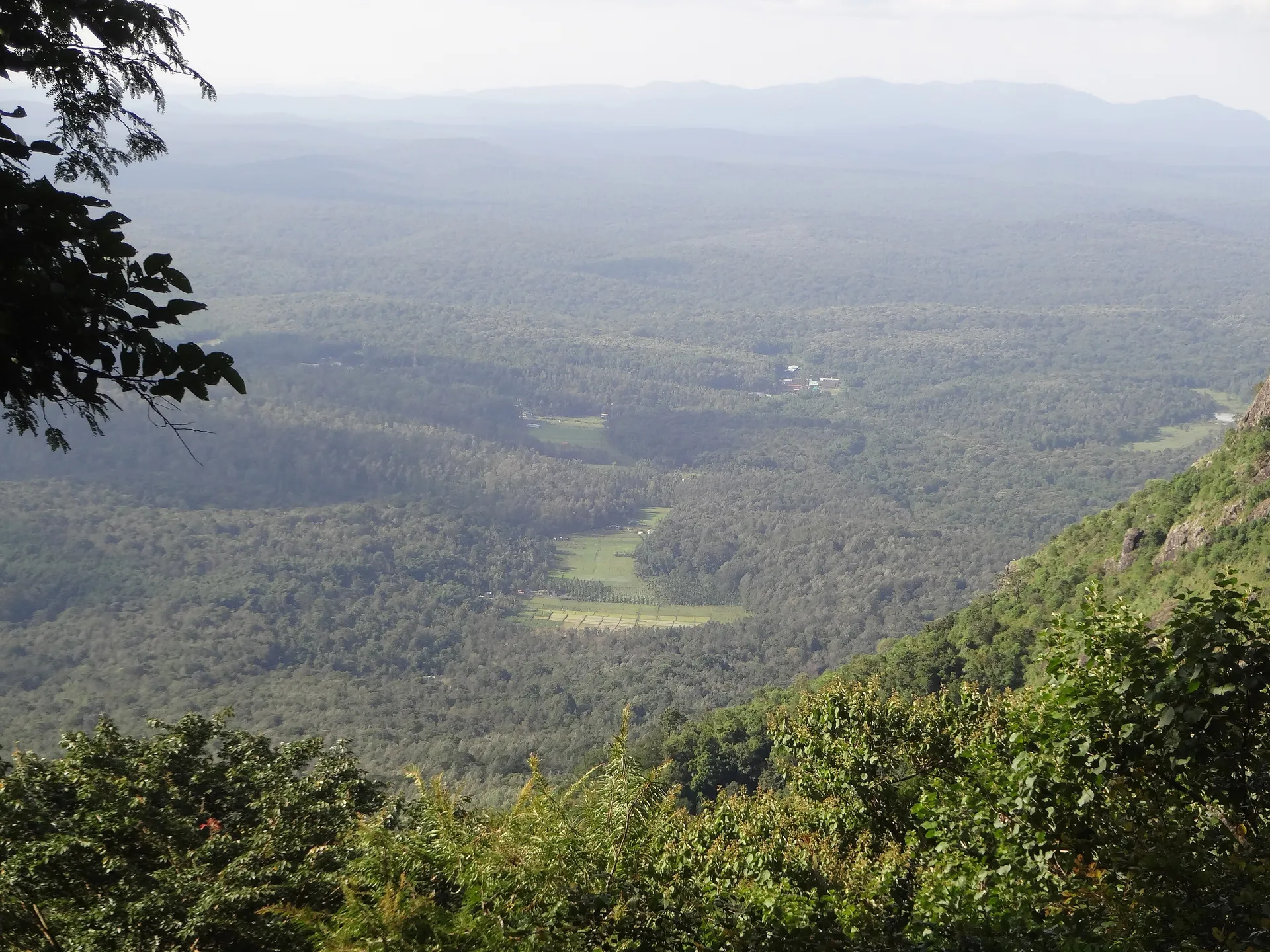
- The Nilgiri Biosphere Reserve was India's first biosphere reserve, created in 1986 and added to UNESCO's World Network of Biosphere Reserves in 2000. It covers 5,520 km² across Karnataka, Kerala and Tamil Nadu.
- Bandipur sits at its centre, joined without a break to Nagarhole, Wayanad, Mudumalai and, across the Moyar, Sathyamangalam.
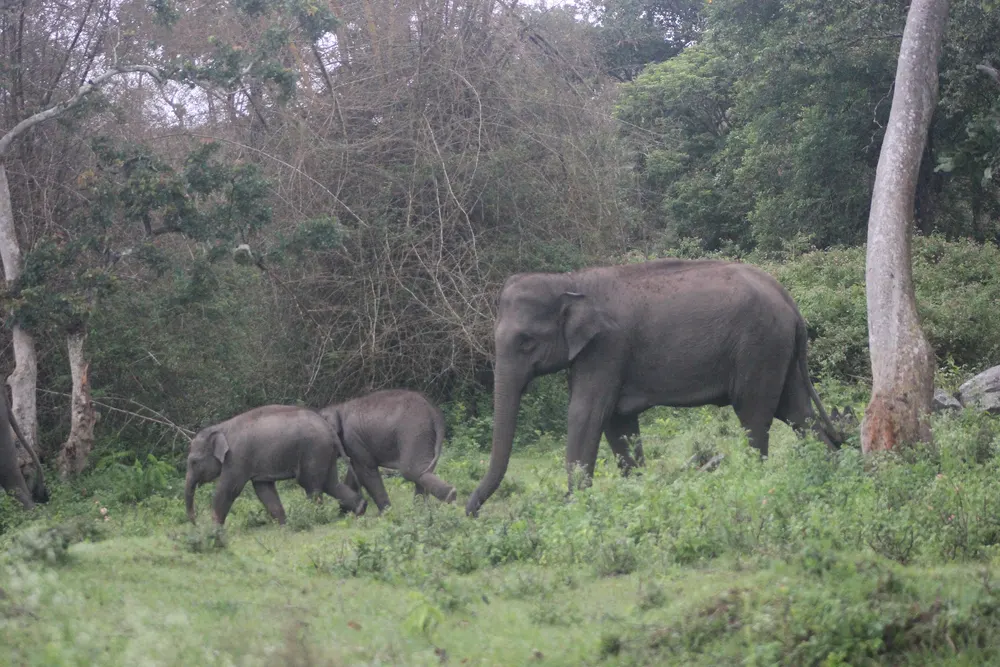
- The landscape holds what Bandipur Tiger Reserve describes as the world's largest contiguous populations of wild tigers and Asian elephants.
- It ranges from dry thorn forest at about 300 m to montane grassland and shola at 2,670 m, with about 3,500 species of flowering plants.
- Its weak points are the corridors between reserves, cut by roads, farms, resorts and settlements; the Sigur plateau elephant corridor near Masinagudi went to the Supreme Court.
What a biosphere reserve is
A biosphere reserve is not a park with a fence. Under UNESCO's Man and the Biosphere (MAB) programme it is a landscape managed in zones: strictly protected core areas (in the Nilgiris, mostly existing national parks and sanctuaries), a buffer where limited use continues, and, in principle, a transition area of farms and towns where people and conservation are meant to live together. The designation adds international recognition and a framework for research and cooperation; the legal protection on the ground still comes from Indian wildlife and forest law.
India notified the Nilgiri Biosphere Reserve in 1986, its first, and UNESCO added it to the world network in 2000. UNESCO gives its area as 552,000 hectares, or 5,520 km², and its population as about 1.16 million people. A 2013 Mongabay report put the core at about 1,240 km² and the buffer at about 4,280 km², and noted that the reserve has never had a properly defined transition zone.
- Notified
- 1986 (India's first biosphere reserve)
- UNESCO MAB network
- 2000
- Area
- 5,520 km² (UNESCO)
- States
- Karnataka, Kerala, Tamil Nadu
- Altitude range
- About 300 m to 2,670 m
- Population
- About 1.16 million (UNESCO)
The forests that make it up
The core of the biosphere reserve is a chain of protected areas, most of them now tiger reserves, which together form one of the largest blocks of forest in southern India:
| Protected area | State | Character | Our guide |
|---|---|---|---|
| Bandipur Tiger Reserve | Karnataka | Dry and moist deciduous forest; 872 km² core | This site |
| Nagarhole (Rajiv Gandhi) Tiger Reserve | Karnataka | Moist deciduous forest and the Kabini backwaters; 643 km² core | Kabini and Nagarhole |
| Mudumalai Tiger Reserve | Tamil Nadu | Deciduous forest and the Moyar; 321 km² core, 689 km² in all | Mudumalai |
| Wayanad Wildlife Sanctuary | Kerala | Moist deciduous forest; about 344 km² | Wayanad |
| Mukurthi National Park | Tamil Nadu | High grassland and shola on the Nilgiri plateau | Ooty |
| Silent Valley National Park and the Nilambur and Siruvani hills | Kerala and Tamil Nadu | Tropical evergreen rainforest on the western slopes | Not covered |
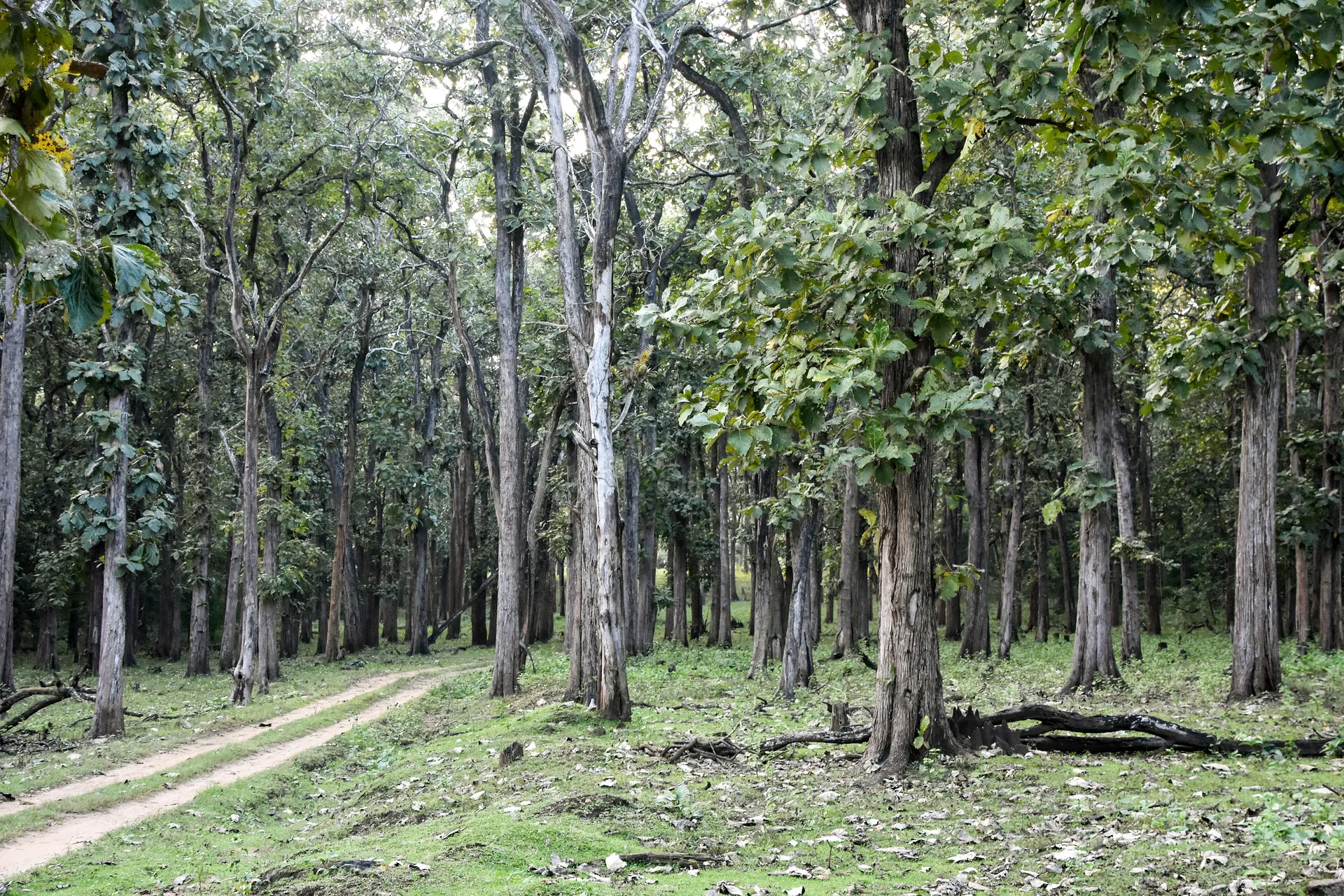
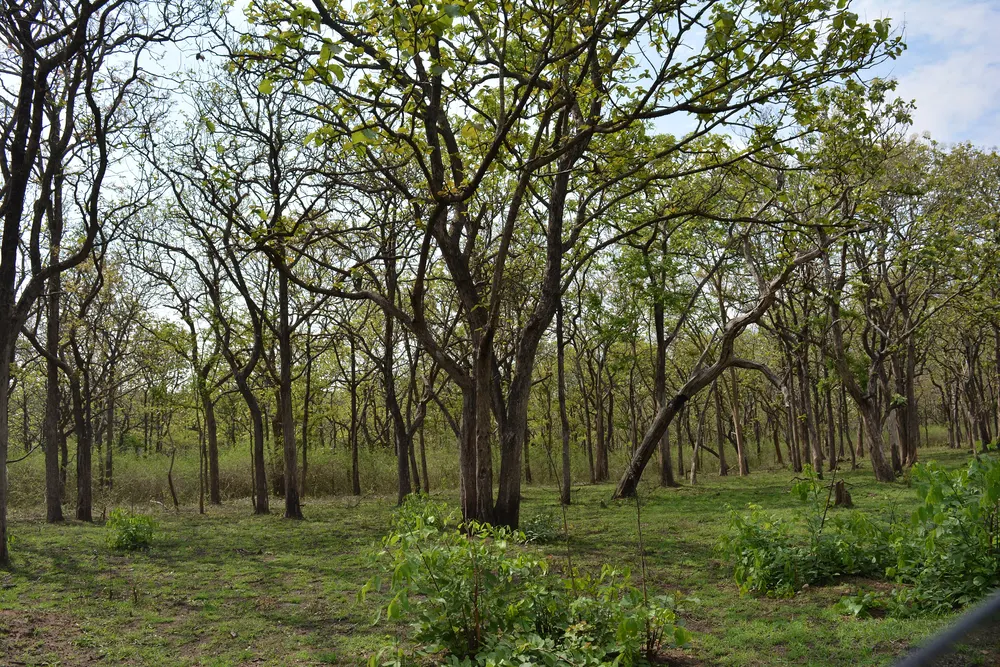
Teak forest on a safari trail in Nagarhole, Bandipur's neighbour to the north-west across the Kabini.
From thorn forest to shola
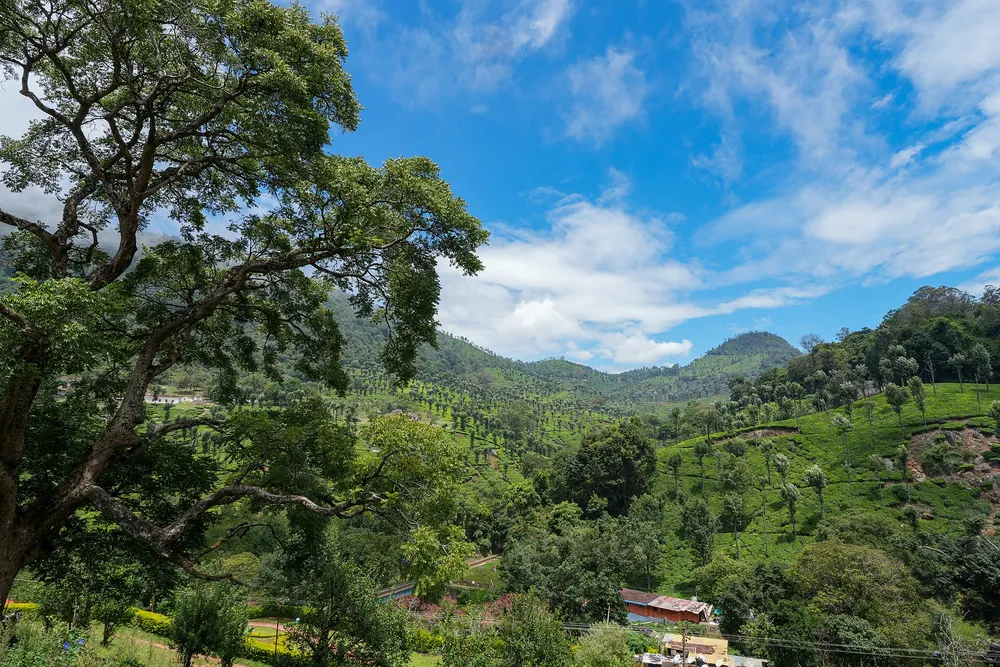
UNESCO's description of the reserve lists almost every forest type of peninsular India: tropical evergreen and semi-evergreen forest on the rain-soaked western slopes, montane shola forest and grassland on the high plateau around Ooty, moist and dry deciduous forest on the eastern side (where Bandipur lies), and thorn forest in the driest valleys. That range, from about 300 m to 2,670 m, is why the reserve holds some 3,500 species of flowering plants, 1,500 of them found only in the Western Ghats, more than 100 mammals and around 550 birds.
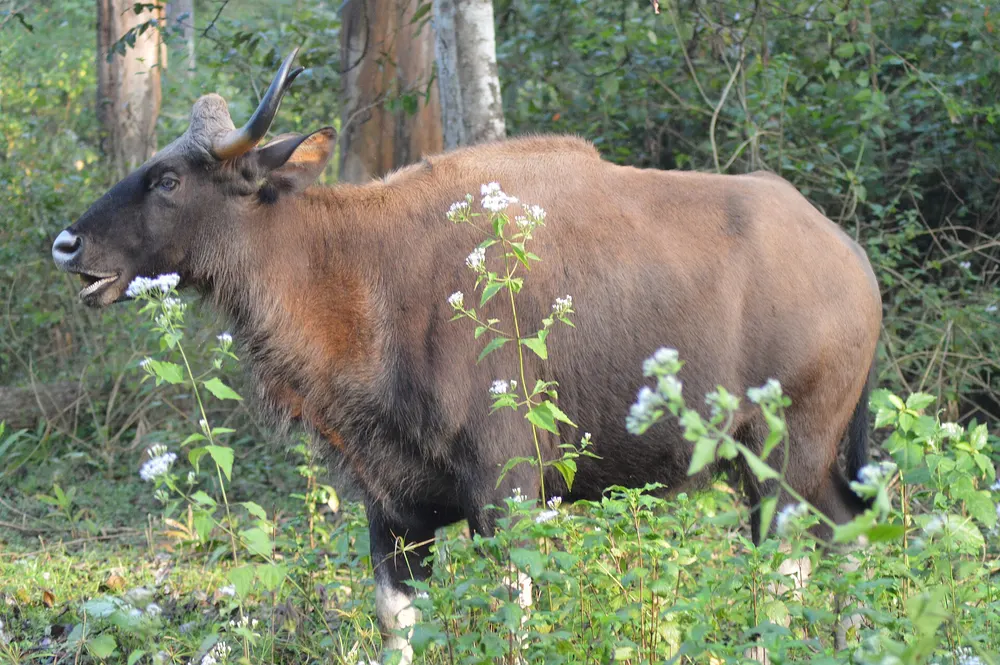
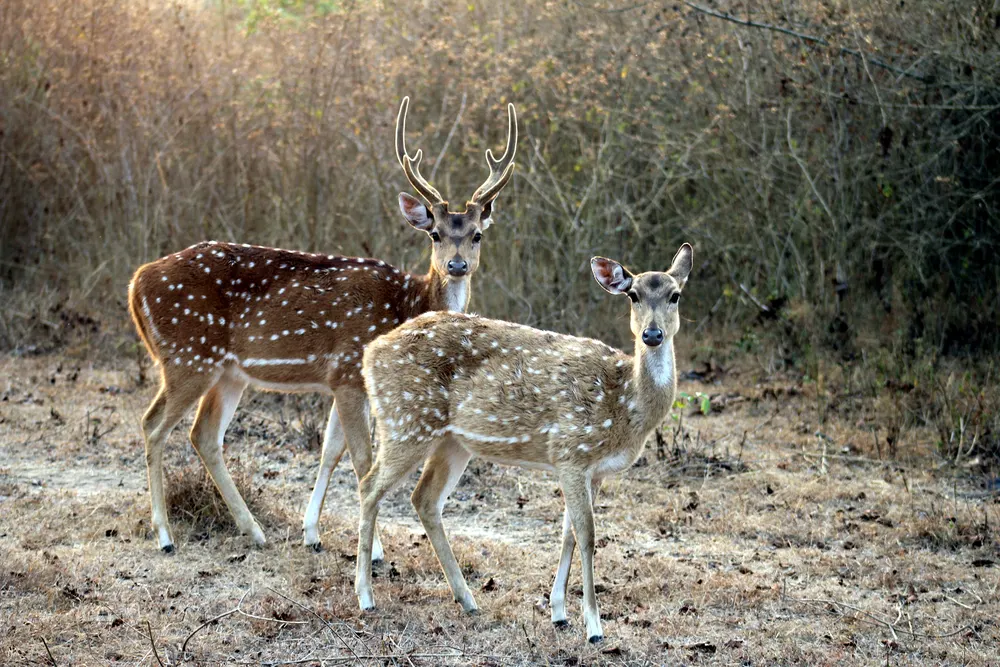
Animals UNESCO singles out for protection include the tiger, Asian elephant, gaur, lion-tailed macaque, chital, sambar and the Nilgiri tahr, a wild mountain goat found only in the Western Ghats. Bandipur has the deciduous-forest share of that list; for tahr and shola you go up to the Nilgiri plateau, and for lion-tailed macaques to the evergreen forests of Silent Valley.
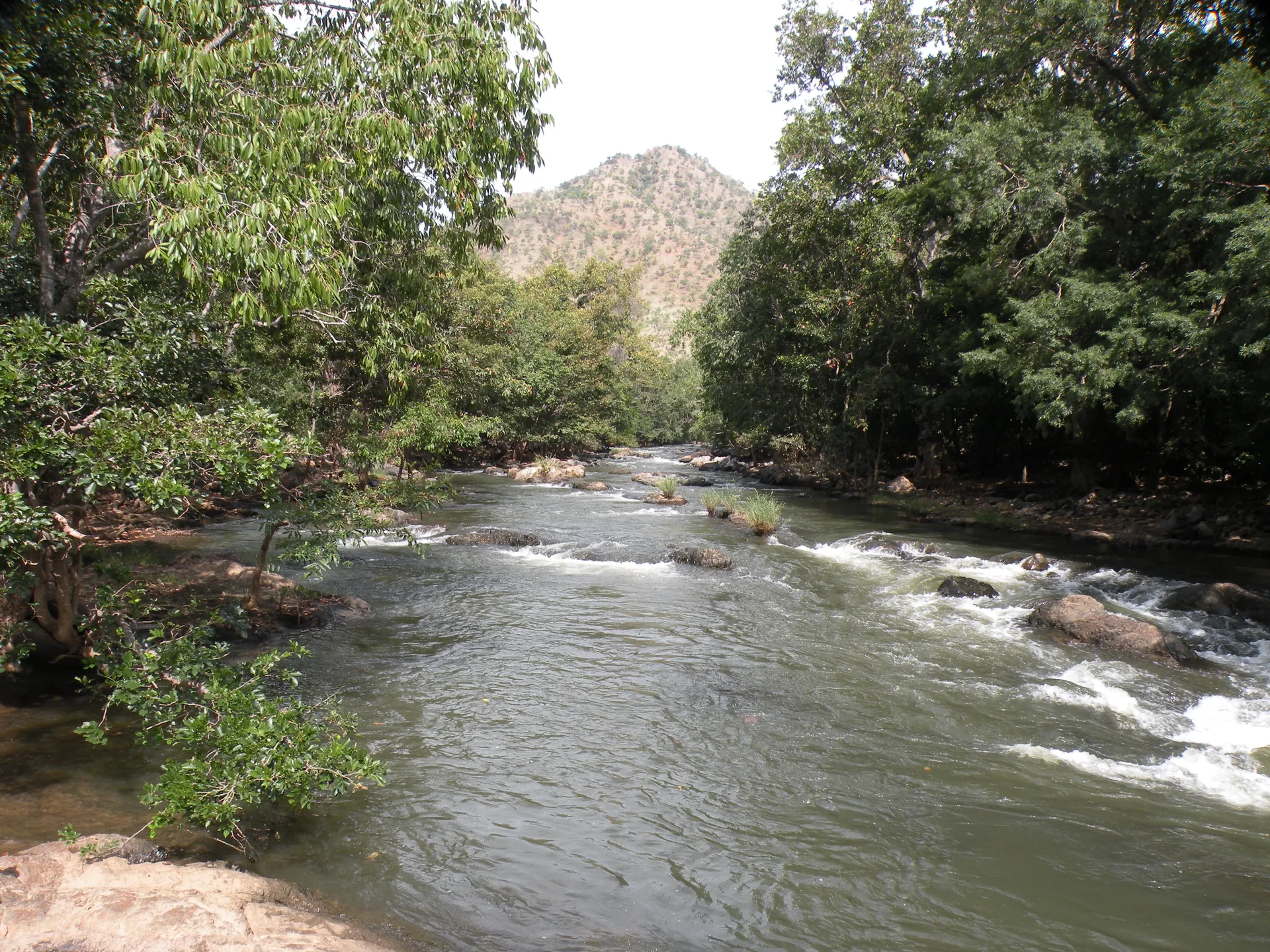
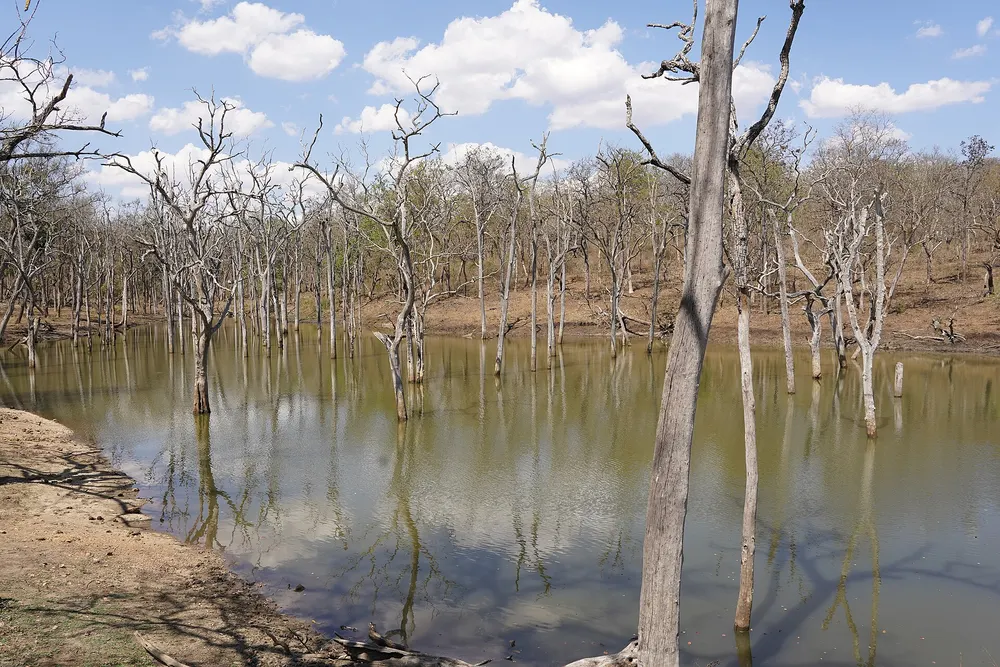
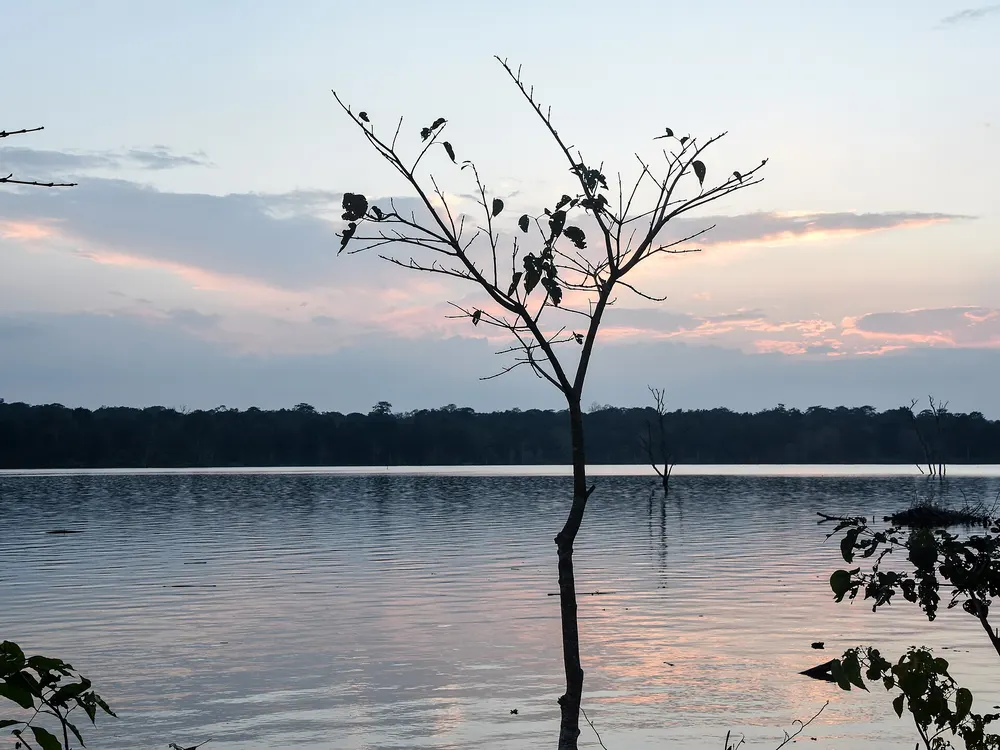
The Moyar, which forms Bandipur's southern boundary with Mudumalai and carries the landscape eastwards towards Sathyamangalam.
Why the connections matter
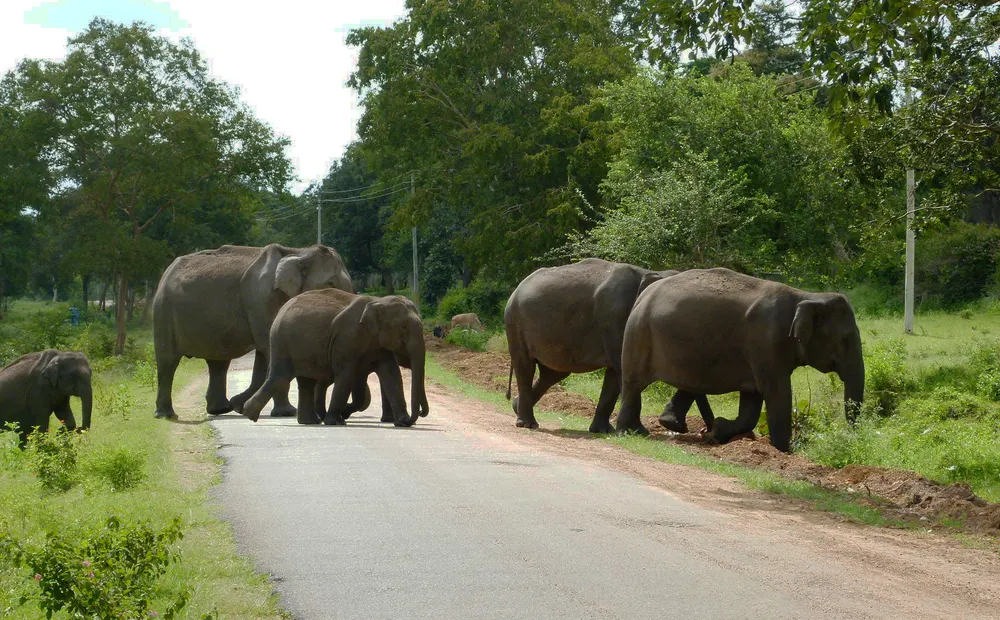
On their own, even large reserves are too small for tigers and elephants in the long run. The value of the Nilgiri landscape is that it is joined up. Bandipur's tiger reserve describes itself as the core of the world's largest contiguous populations of wild tigers and Asian elephants, and the National Tiger Conservation Authority describes Nagarhole as contiguous with Bandipur, Mudumalai, Wayanad and Biligiri Rangaswamy Temple. Tigers born in one reserve set up territories in another; elephant herds walk between states with the seasons.
Those links depend on narrow strips of forest that cross roads, farms and villages: the highways through Bandipur and Mudumalai, the Kabini backwaters, the forest between Wayanad and Bandipur along NH 766, and the Sigur plateau near Masinagudi, which connects the Nilgiri forests to the Eastern Ghats. In October 2020 the Supreme Court upheld the Tamil Nadu government's right to notify the Sigur elephant corridor and ordered resorts and other buildings in it to be cleared; in December 2024 it reaffirmed that judgement. The night traffic ban on the Bandipur highways (see conservation) is another way of keeping these routes open.
People in the biosphere reserve
More than a million people live within the reserve's boundaries, among them many Adivasi (indigenous) communities: around Bandipur the Jenu Kuruba, Betta Kuruba and Soliga, and on the Nilgiri plateau the Toda, Kota, Irula and Kurumba, among others. UNESCO notes their knowledge of health care and nature, and that tourism now provides work for local guides, trekkers and drivers. Their relationship with the conservation system has not been easy; our people and history page looks at it around Bandipur.
Exploring the landscape
You can see a remarkable cross-section of the biosphere reserve in a few days: a safari in Bandipur, the drive down to Mudumalai and Masinagudi, the climb up the Kalhatti ghat to the grasslands and tea of Ooty, and a day in Wayanad or on the Kabini. Our itineraries suggest routes.
Organised options include the Ooty and Bandipur safari day tour from Coimbatore, the Bangalore–Mysore–Kabini–Ooty–Coimbatore multi-day tour, a Malabar wildlife and Karlad lake day trip from Mysore into Wayanad, and, on the Nilgiri plateau, an Ooty nature walk with a Toda naturalist.
Bangalore, Mysore, Kabini, Ooty and Coimbatore multi-day tour
A multi-day South India tour from Bengaluru through Mysuru and Kabini to Ooty, ending in Coimbatore, according to the title: the wildlife forests and the hills in one trip. Check the number of days, the hotels and the safaris included.
Check availabilityBook via GetYourGuide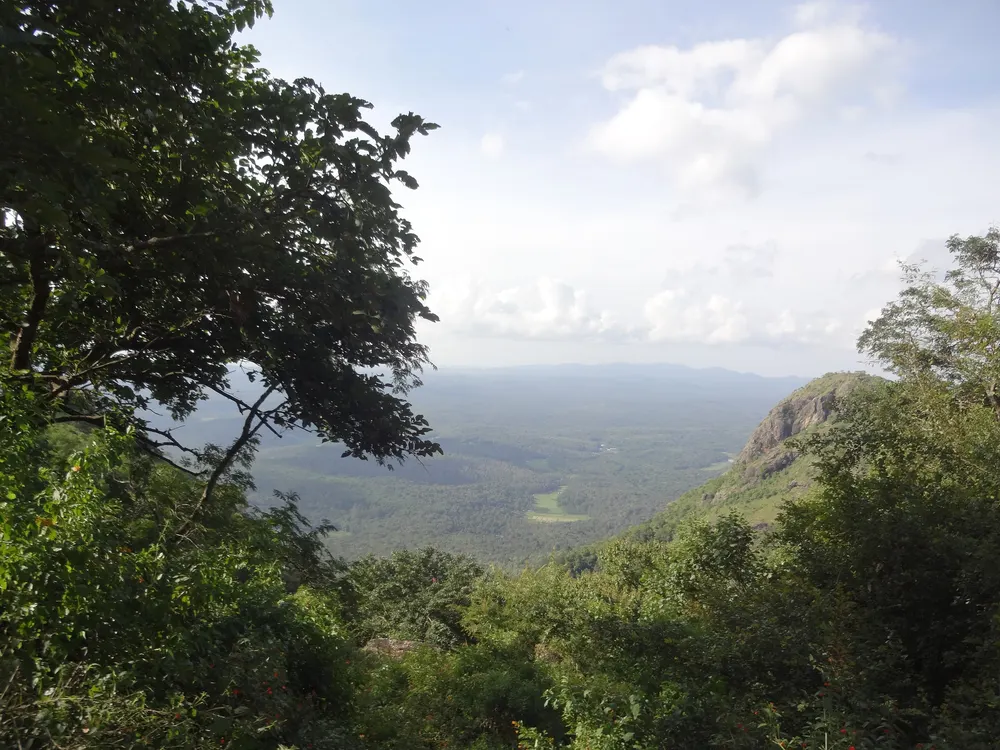
Ooty and Bandipur safari day tour from Coimbatore
One long day from Coimbatore: up to Ooty in the Nilgiris and a safari in the Bandipur forest, according to the title. Check the order of the day, the safari arrangements and the return time; the forest highway closes at 9 pm.
Check availabilityBook via GetYourGuide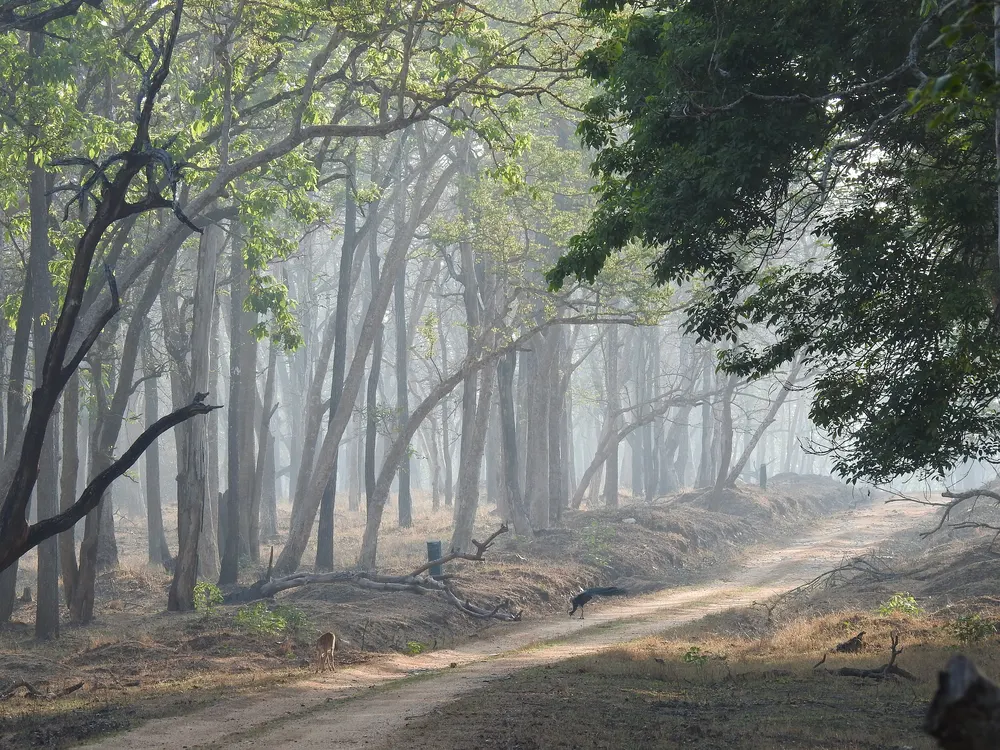
Bangalore to Kabini safari and Mysore heritage: 2-day tour
Two days from Bengaluru combining a safari at Kabini, on the Nagarhole side of the same forest, with Mysuru's sights, as the title states. The overnight gives you an evening and a morning. Check which safari is included and where you stay.
Check availabilityBook via GetYourGuideTour listings are on GetYourGuide. Prices, dates and cancellation terms are shown live on each listing and can change; BandipurNationalPark.com may earn a commission at no extra cost to you.
Frequently asked questions
Is Bandipur part of the Nilgiri Biosphere Reserve?
Yes. Bandipur is one of the core protected areas of the Nilgiri Biosphere Reserve, India's first biosphere reserve (1986), which UNESCO added to its Man and the Biosphere network in 2000.
How big is the Nilgiri Biosphere Reserve?
UNESCO gives its area as 5,520 km² (552,000 hectares), across Karnataka, Kerala and Tamil Nadu.
Which national parks are in the Nilgiri Biosphere Reserve?
Its core includes Bandipur, Nagarhole, Mudumalai, Mukurthi and Silent Valley national parks and the Wayanad Wildlife Sanctuary, among other protected forests.
Is the Nilgiri Biosphere Reserve a World Heritage Site?
No; it is a UNESCO biosphere reserve. The Western Ghats World Heritage Site (2012) is a separate designation covering selected protected areas along the mountain chain.
Sources and official information
Facts were checked against these official and scholarly sources in November 2026. Opening hours, ticket prices, park fees and timetables change, so confirm before you go.
- unesco.org
- news.mongabay.com
- en.vikaspedia.in
- bandipurtr.in
- projecttiger.ntca.gov.in
- projecttiger.ntca.gov.in
- datazone.birdlife.org
- api.sci.gov.in
- downtoearth.org.in
- india.mongabay.com
- whc.unesco.org
BandipurNationalPark.com is an independent guide. It is not the official website of Bandipur National Park or Tiger Reserve and is not affiliated with the Karnataka Forest Department, any government body, tour operator or resort; official safari bookings are made on the government's own portal. Some links are affiliate links: tours go to GetYourGuide and accommodation goes to Booking.com, and we may earn a commission at no extra cost to you.