In short
- Since 2009 the two highways through Bandipur, NH 766 to Kerala and NH 181 to Ooty, have been closed to most traffic from 9 pm to 6 am to protect wildlife. Courts have repeatedly upheld the ban despite strong opposition in Kerala.
- Before the ban, a study recorded at least 215 animals killed by traffic on the two roads between 2004 and 2007.
- In October and November 2025 tigers killed three people in fringe villages within about two weeks; safaris were suspended for over three months and 25 tigers and cubs were captured and moved.
- Elephants raiding crops, livestock losses, lantana and fire are the everyday conflicts; trenches, fences, compensation and new village patrol camps are the main responses.
- Visitors help by respecting the night ban and highway rules, booking only official safaris (part of the income goes to fringe villages) and never feeding animals.
A reserve surrounded by people
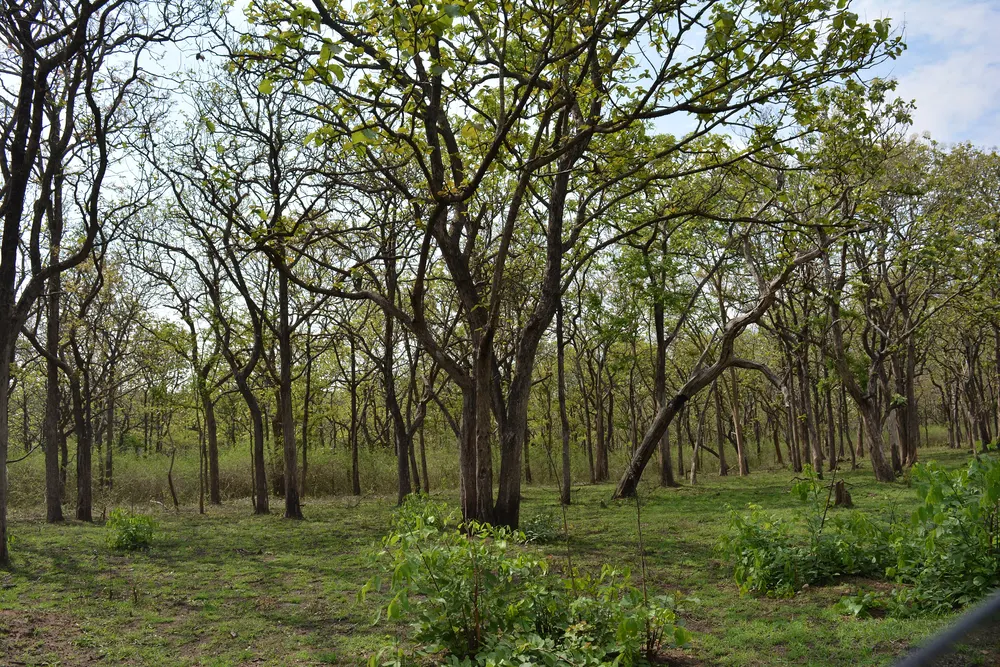
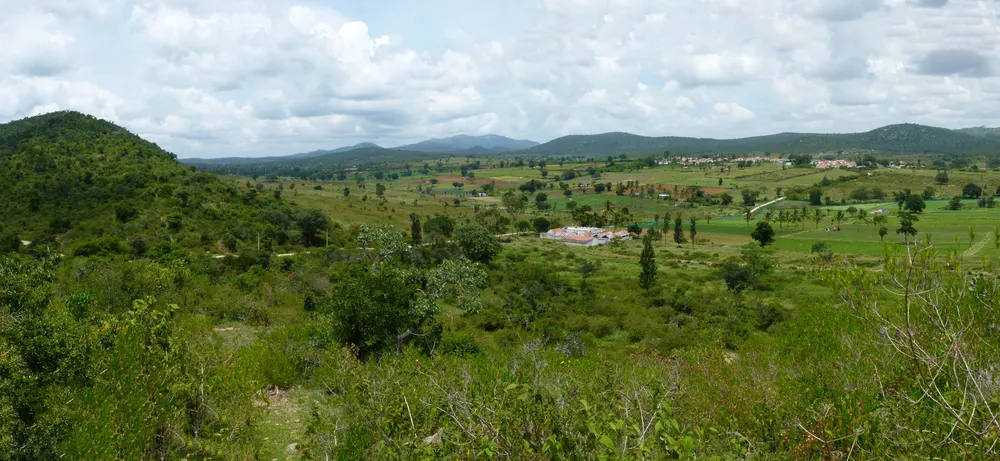
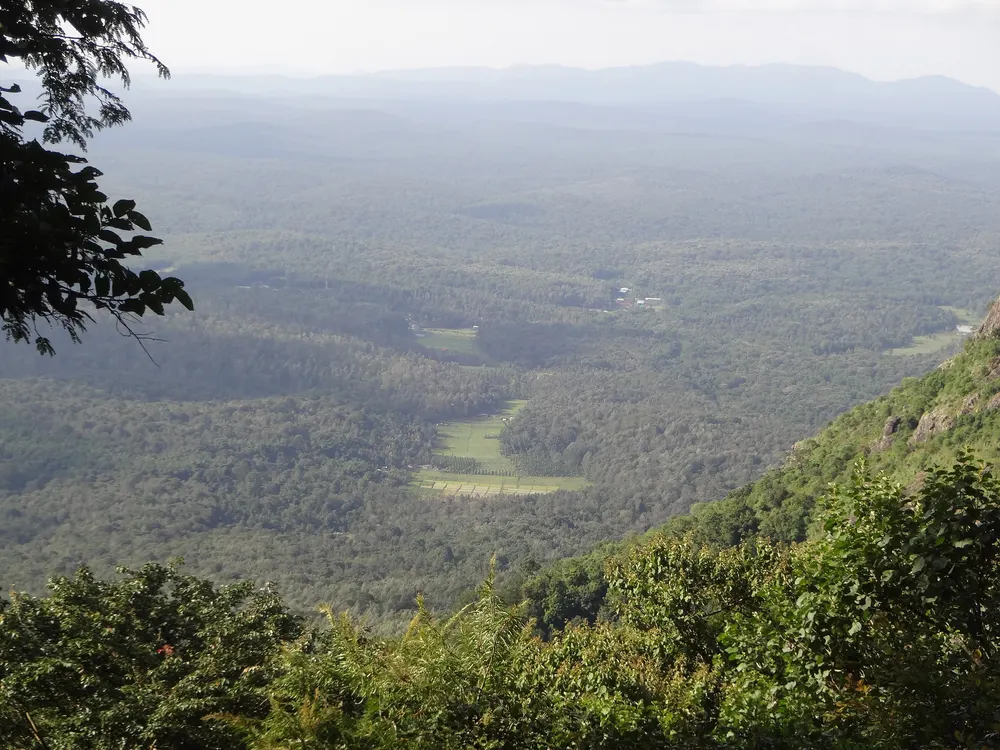
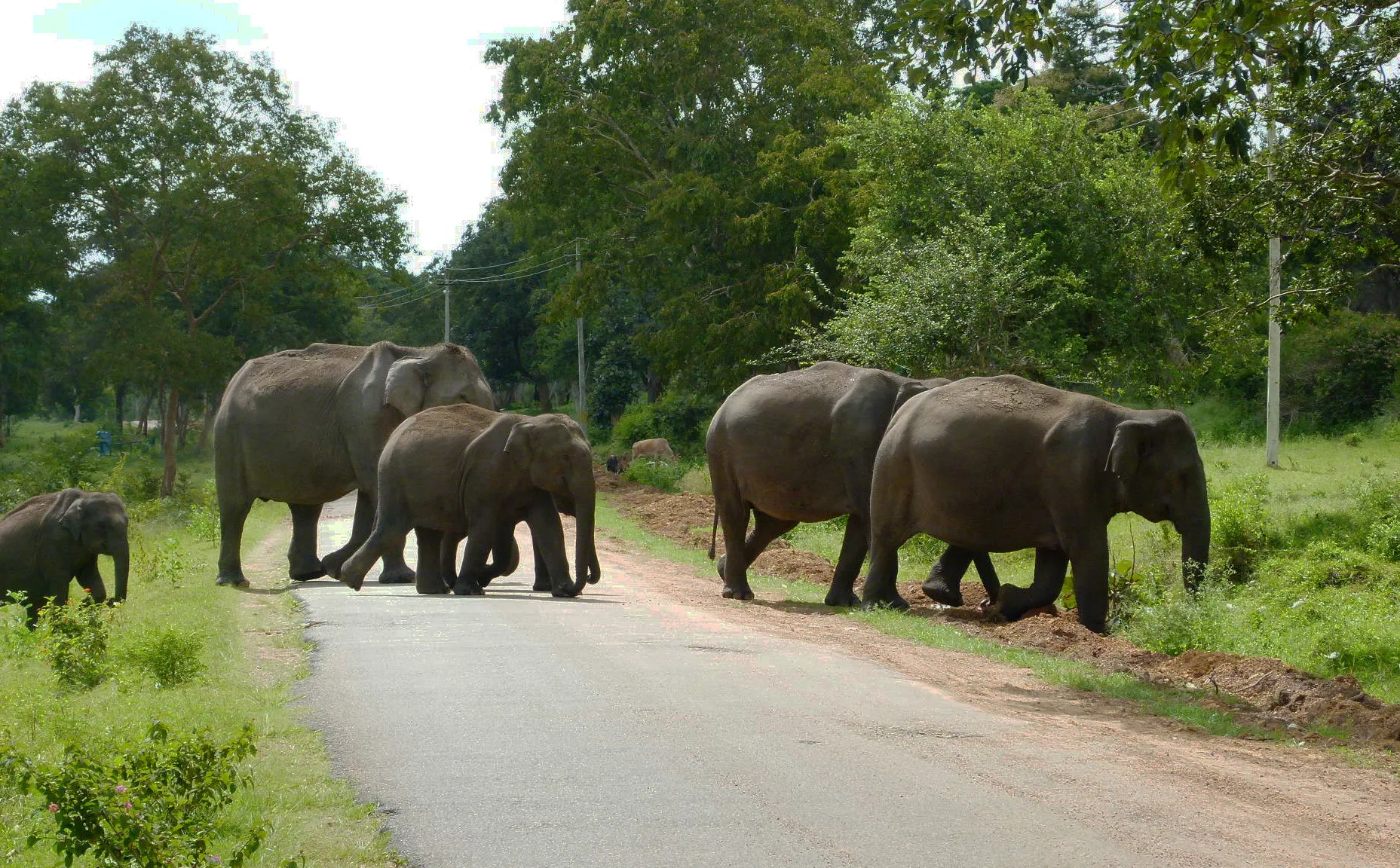
Bandipur's boundary is long and busy. Villages and farms press up against the forest on the north and east, highways cut through it, and the forest itself is full of large animals that do not stop at its edge. A recent state government statement put the length of the Bandipur boundary at 314 km. That is the context for almost every conservation issue in the park: how to keep a reserve full of tigers and elephants while the people around it farm, graze cattle, travel and make a living.
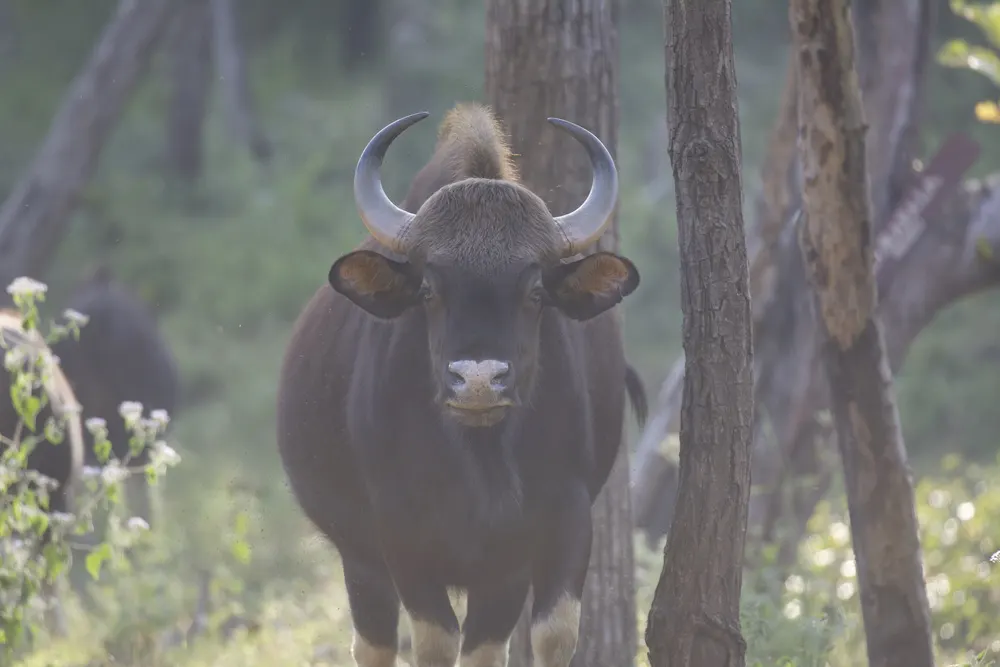
Bandipur has, by national standards, been a conservation success. It has one of India's largest tiger populations and the largest elephant population in Karnataka, and it was rated among the best-managed tiger reserves in India. That success is also why the pressures at its edges are growing.
The night traffic ban
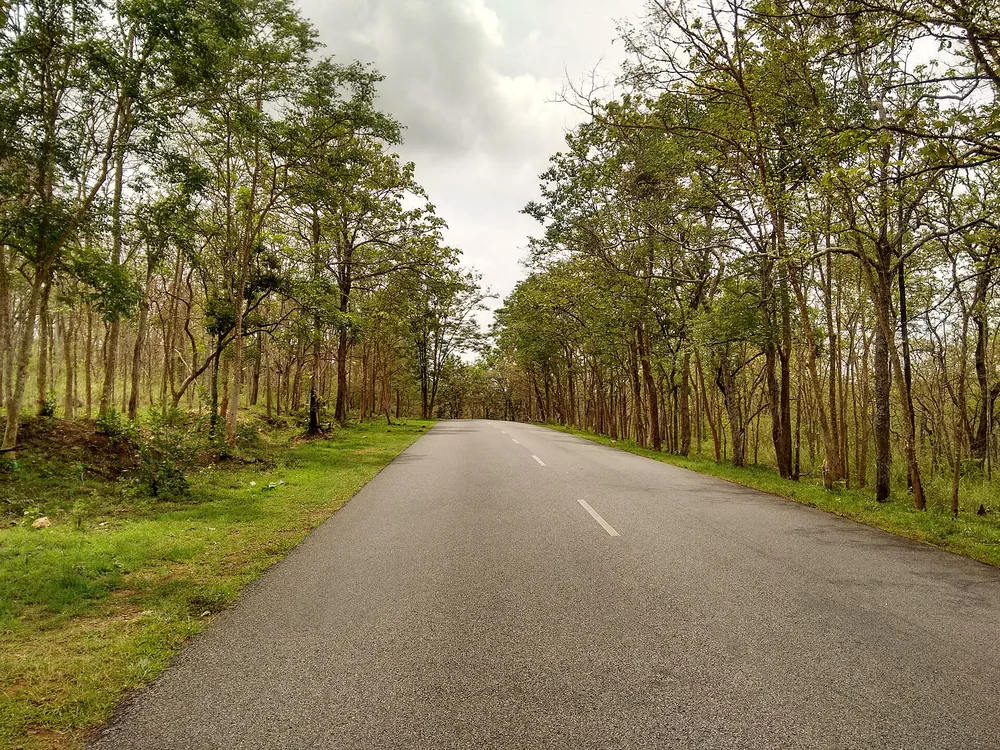
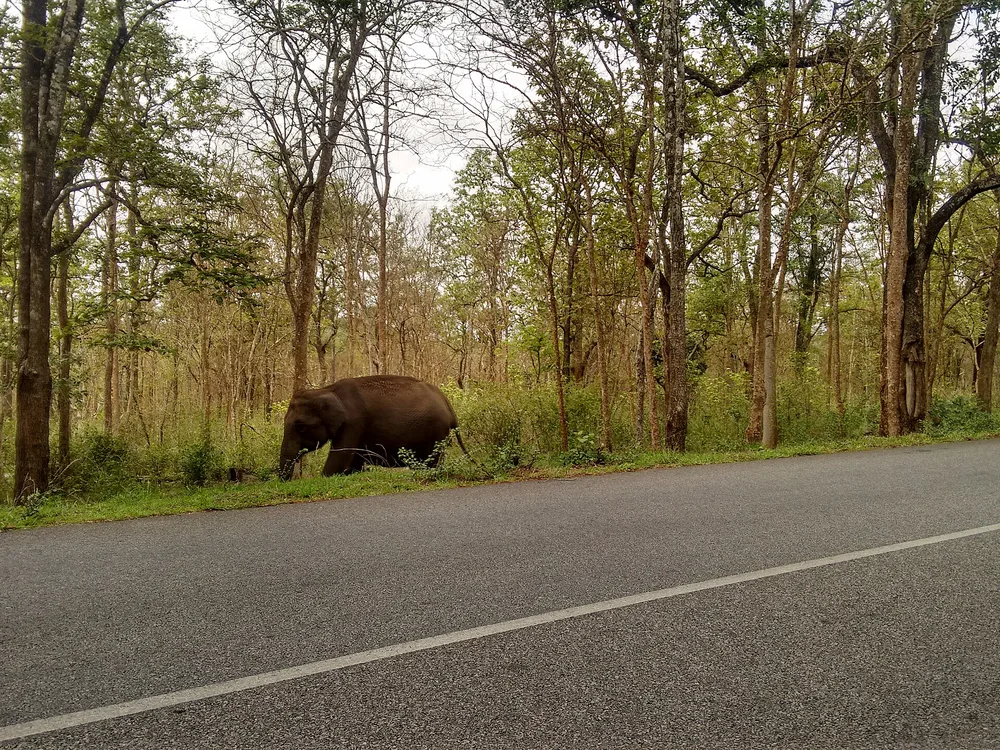
Two national highways cross the reserve. NH 766 (formerly NH 212) runs from Mysuru through Gundlupet and about 20 km of Bandipur's core to Sulthan Bathery and Kozhikode in Kerala. NH 181 (formerly NH 67) runs from Gundlupet through the middle of the park to Theppakadu in Mudumalai and on to Ooty and Gudalur. Before 2009 both carried heavy traffic day and night, and animals were killed regularly: a study by the Wildlife Conservation Foundation recorded at least 215 animals run over between 2004 and 2007, including 89 mammals (among them an elephant and a tiger), 73 birds and 53 snakes.
In 2009 the Chamarajanagar district administration banned night traffic on both roads through the reserve, from 9 pm to 6 am, using its powers under the Motor Vehicles Act. The Karnataka High Court upheld the ban in 2010. Tamil Nadu applies a similar night restriction on the Mudumalai side. A limited number of state transport buses and emergency vehicles have been allowed through at night (16 buses, according to a forest official quoted in 2019); private cars, trucks and tourist vehicles have to wait at the check-posts or take another route.
The ban has been fought over ever since, mainly by Kerala, whose Wayanad district depends on NH 766 for its link to Mysuru and Bengaluru. The night alternative, via Hunsur, Gonikoppal, Kutta and Mananthavady, is about 35 km longer. The Supreme Court set up a committee in January 2018 that found no reason to change the situation, and in August 2019 kept the ban in place and asked the central government to suggest improvements to the alternative route, raising the possibility of closing NH 766 through the core altogether. That prompted mass protests and a hunger strike in Sulthan Bathery. Proposals for elevated roads over the forest have been put forward and opposed. In March 2025 Karnataka withdrew an affidavit, filed by the reserve's director, that had proposed permanently closing NH 766. The case remains unresolved; as of November 2026 the night ban is in force.
- 2004–2007
Roadkill study
At least 215 animals recorded killed on the two highways through the reserve.
- 2009
Night ban
Chamarajanagar district bans night traffic, 9 pm to 6 am, on NH 212 (now NH 766) and NH 67 (now NH 181).
- 2010
High Court
The Karnataka High Court upholds the ban.
- January 2018
Supreme Court committee
A committee of the road ministry, the three states, NTCA and the environment ministry is set up; it recommends no change.
- August 2019
Ban stays
The Supreme Court keeps the ban and asks for options on the alternative route; protests follow in Wayanad.
- March 2025
Affidavit withdrawn
Karnataka withdraws a filing that proposed closing NH 766 permanently.
- November 2026
Still in force
Night closure from 9 pm to 6 am continues; the case is still before the courts.
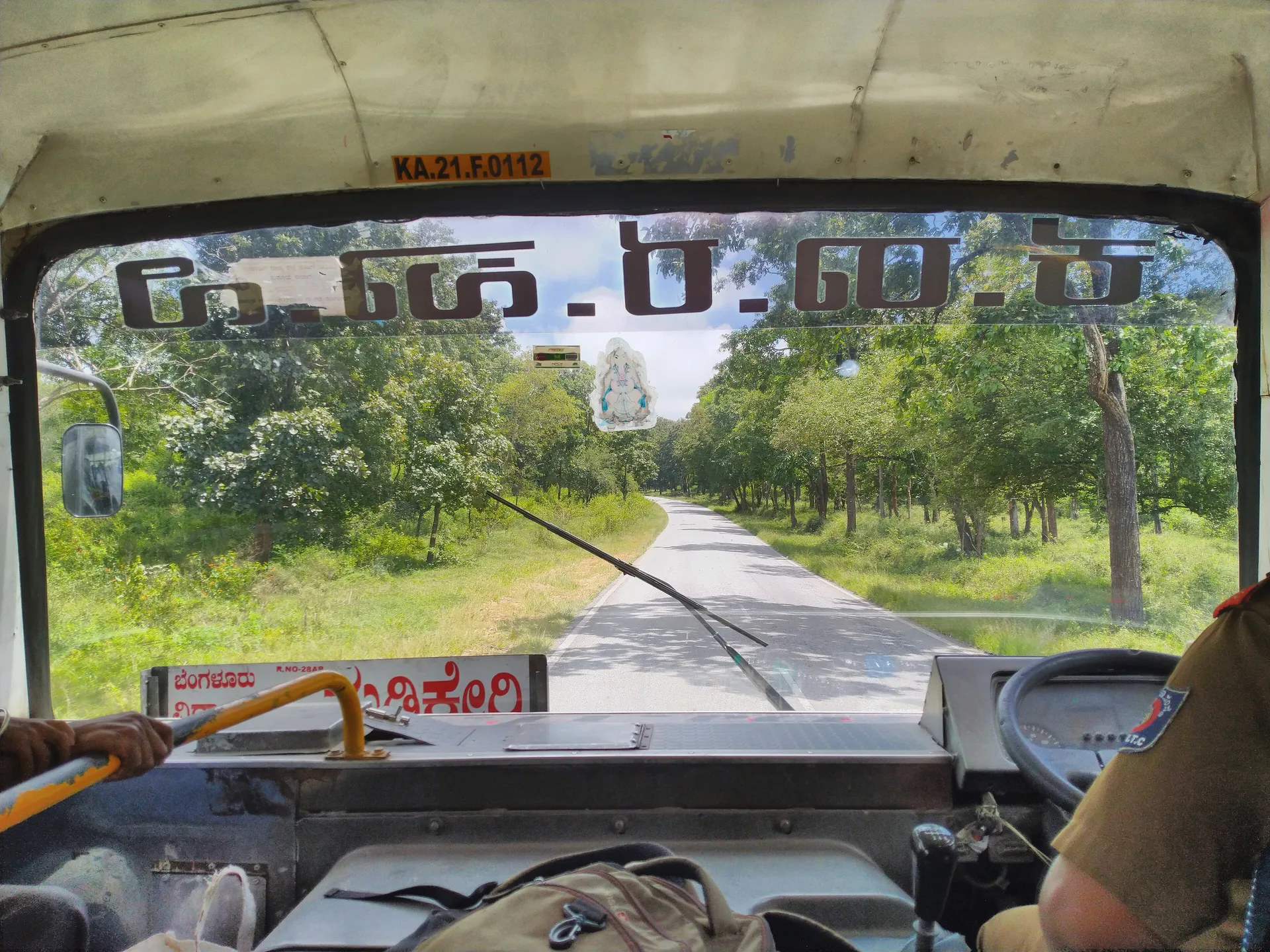
NH 766 through Bandipur from a Karnataka state transport bus. A limited number of buses are allowed through at night.
The 2025 tiger attacks and the safari shutdown
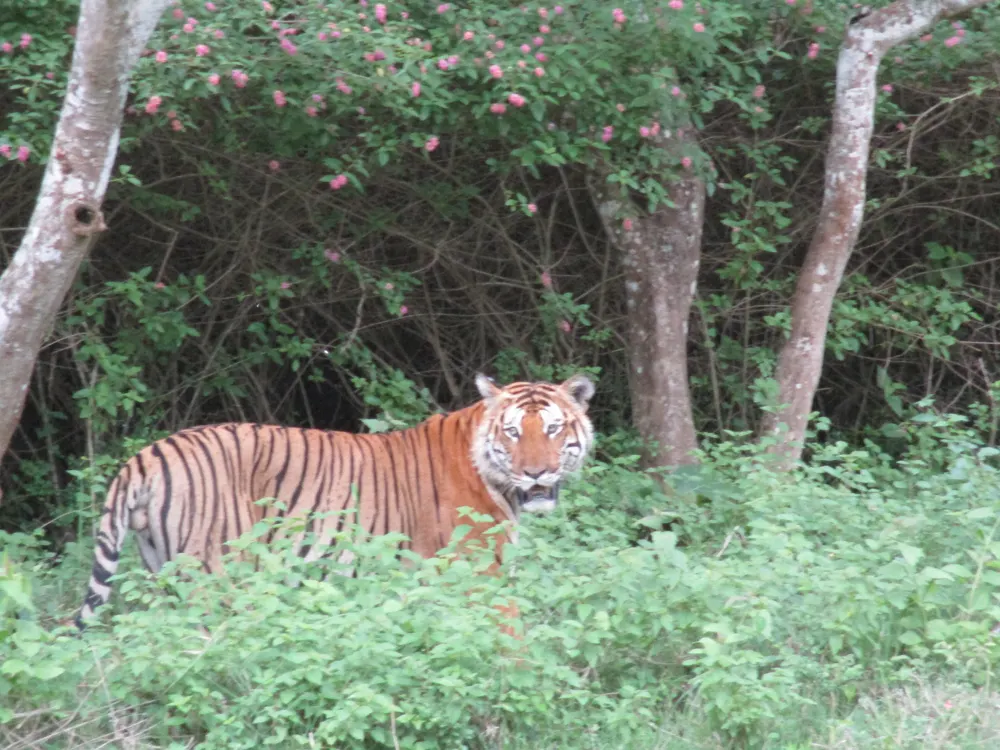
In October and November 2025, in villages of the Hediyala sub-division and elsewhere on the edge of the Bandipur and Nagarhole reserves, tigers killed three people within about 15 days, and a fourth person was left permanently disabled. The victims included farmers working on land beside the forest. Protests followed, with farmers' groups arguing that safaris disturbed the forest and pushed animals out, and that vehicles ran into the night.
On 7 November 2025 the Karnataka government suspended all safaris in Bandipur and Nagarhole and set up a technical committee to examine their impact and the reserves' carrying capacity. The Forest Department captured and relocated 25 tigers and cubs from the conflict areas, and the government announced 25 anti-poaching camps, 14-hour patrols and a command centre along the most conflict-prone stretch of the boundary. For the 100 km stretch of Bandipur boundary classed as highly sensitive, it planned camps every 5 km with local residents employed as 'forest friends' to track animal movements.
Safaris resumed at half capacity around 21 to 22 February 2026, with police at the Melukamanahalli counter, and the state ordered that 35 per cent of safari income go to fringe villages for skill training, children's education and cattle fodder. On 26 June 2026 the government approved full reopening within the carrying capacity set by the committee, and from 1 September 2026 safaris became longer but fewer, with higher fares. Tourism operators had pushed hard for reopening; farmers' groups continued to oppose it. The debate about how much tourism a reserve full of tigers can take is far from over.
Elephants, crops and fences
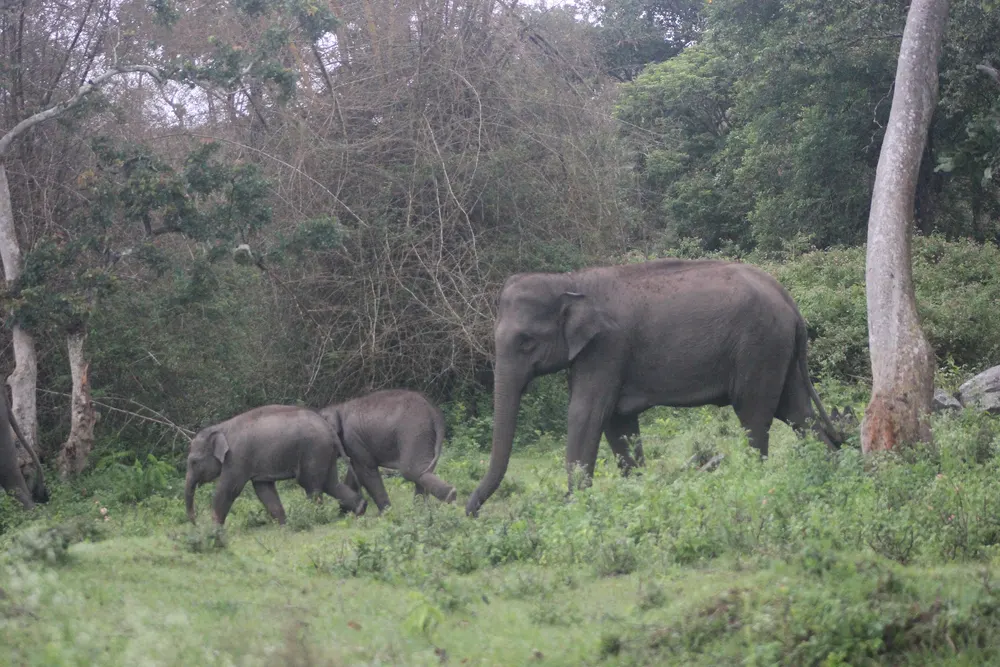
Day to day, the commonest conflict is not tigers but elephants. Crops of ragi, maize, banana and sugarcane on the forest edge draw herds out at night, and a single raid can wipe out a season's income. Wild boar and deer add smaller but constant losses, and leopards and tigers take cattle and goats grazing in the buffer.
Karnataka's main tools are physical barriers, compensation and rapid response. Elephant-proof trenches, solar-powered electric fences and, in many stretches of the state's reserves, barricades built from old railway rails line parts of the boundary; none is perfect, and herds find the gaps. The state pays compensation for crop and livestock losses and for deaths and injuries, and forest staff and watchers chase elephants back into the forest at night. Radio collars on some elephants help track herds that habitually raid.
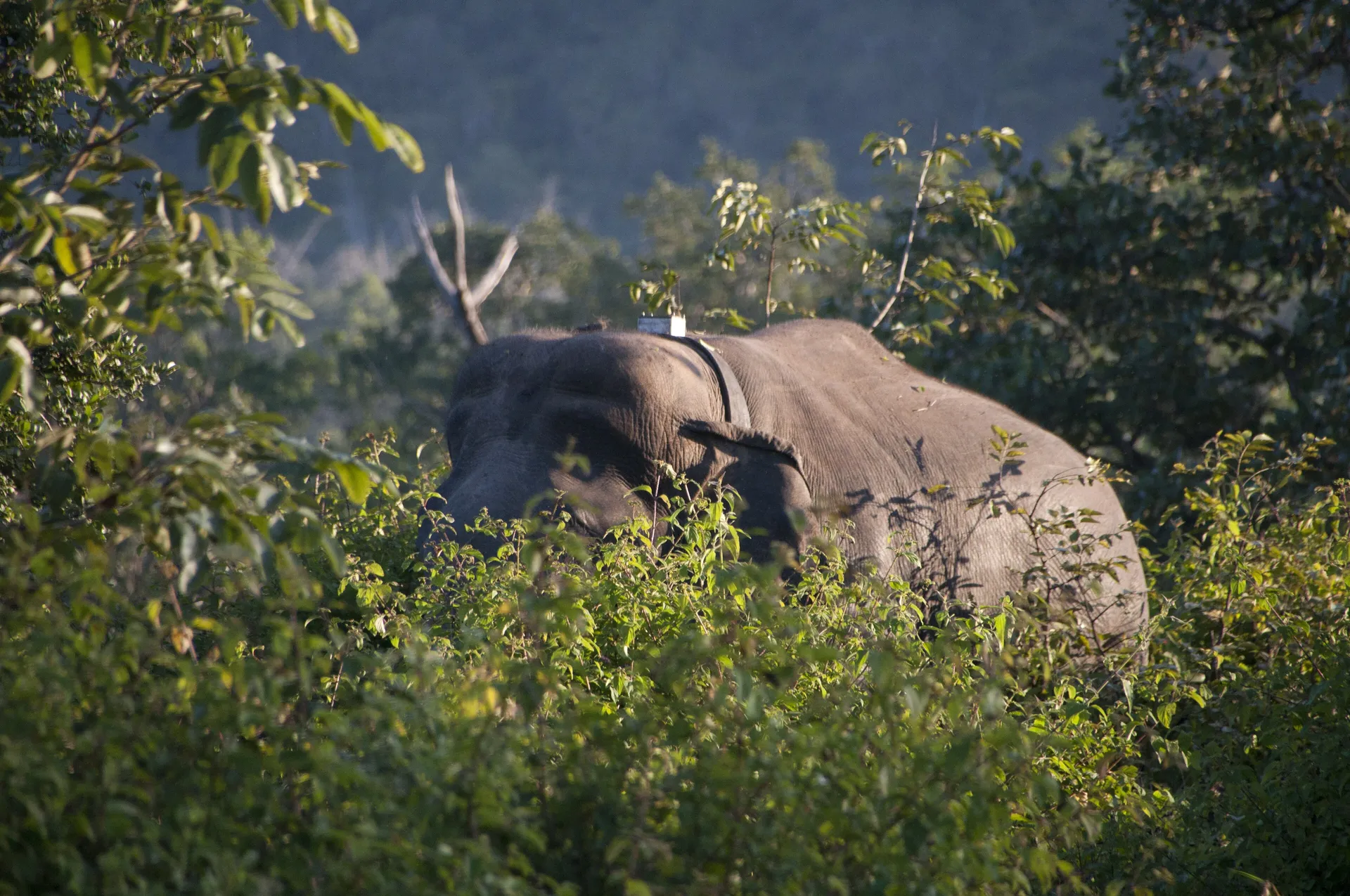
A radio-collared wild elephant in Bandipur. Collars help forest staff follow herds that regularly leave the forest.
Fire, lantana and poaching
The other big threats are covered on our forests and ecology page: lantana, an invasive shrub that now covers much of the reserve and crowds out the grass herbivores need, and fire, almost always started by people, which in February 2019 burned thousands of hectares in a few days.
Poaching is less visible than it was. In the 1980s and 1990s ivory poaching and sandalwood smuggling devastated the forests along the Karnataka–Tamil Nadu border; today the reserve is patrolled from a network of anti-poaching camps staffed by forest guards and camp watchers, and camera traps are used across the core.
People and the forest
Conservation in Bandipur has always involved people being moved or kept out. Adivasi families of the Jenu Kuruba, Betta Kuruba and Soliga communities were moved out of the forest decades ago, and many of their claims under the Forest Rights Act of 2006 have made little progress; officials have cited Bandipur's tiger-reserve status. Some now work as watchers, trackers and resort staff. Our people and history page looks at their story.
The 2026 measures (village patrol camps, a share of safari income for fringe villages) are an attempt to make the reserve's neighbours partners rather than casualties. Whether they work will decide much of Bandipur's future.
What visitors can do
- Respect the highway rules: no stopping, no feeding animals, no getting out, slow down, and plan your drive around the 9 pm closure.
- Book only official safaris on bandipurtr.in or through tours that use them; part of the income goes to fringe villages.
- Never throw cigarettes or rubbish from a vehicle; plastic kills animals and fire destroys forest.
- Choose places to stay that respect the forest edge: no night drives in the buffer, no bonfires near the forest, no animal baiting.
- Report wildlife crime, fires or injured animals to the reserve (contacts on bandipurtr.in).
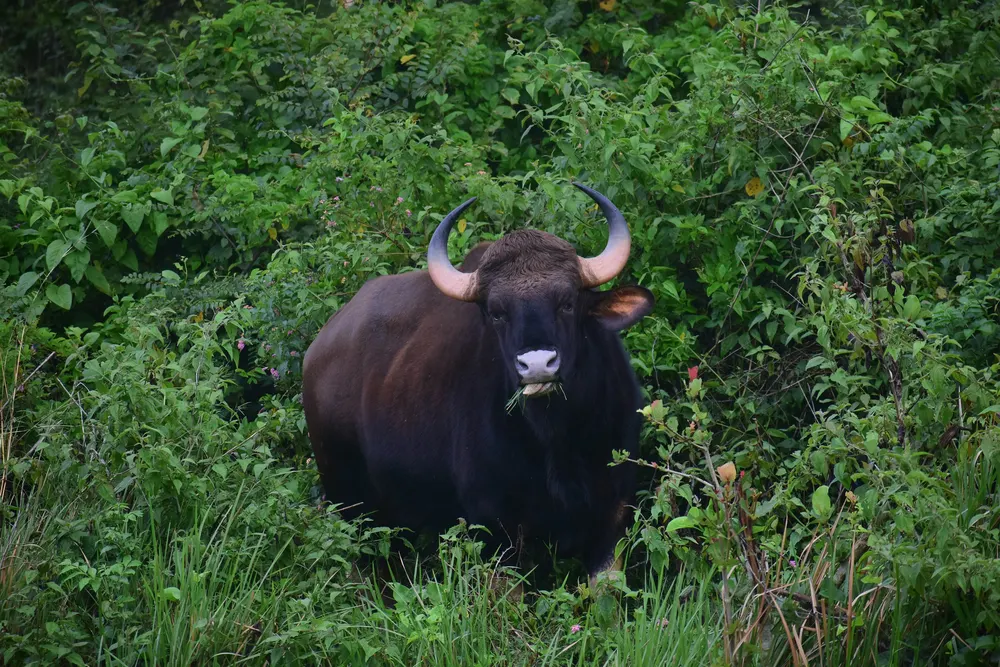
Wildlife private day tour: Mysore to Bandipur National Park
A private day from Mysuru to Bandipur and back, built around wildlife viewing, as the listing title describes. The simplest way to reach the safari counter without your own car. Check whether a Forest Department safari seat is included and the pick-up time.
Check availabilityBook via GetYourGuide
Ooty and Bandipur safari day tour from Coimbatore
One long day from Coimbatore: up to Ooty in the Nilgiris and a safari in the Bandipur forest, according to the title. Check the order of the day, the safari arrangements and the return time; the forest highway closes at 9 pm.
Check availabilityBook via GetYourGuideTour listings are on GetYourGuide. Prices, dates and cancellation terms are shown live on each listing and can change; BandipurNationalPark.com may earn a commission at no extra cost to you.
Frequently asked questions
What are the Bandipur night traffic ban timings?
From 9 pm to 6 am on NH 766 (Gundlupet–Sulthan Bathery) and NH 181 (Gundlupet–Theppakadu–Ooty) through the reserve. A limited number of state transport buses and emergency vehicles are allowed; private vehicles must wait or take another route.
Why is there a night ban on the Bandipur highway?
To stop wildlife being killed by traffic: a study recorded at least 215 animals run over on the two roads between 2004 and 2007. Most animals in the reserve are active at night.
Is the night ban still in force in 2026?
Yes. It has been in place since 2009, upheld by the Karnataka High Court in 2010 and kept by the Supreme Court in 2019; the case is still unresolved, but the closure continues as of November 2026.
Why were safaris in Bandipur stopped in 2025?
After tigers killed three people in fringe villages within about two weeks in October and November 2025. Safaris were suspended on 7 November 2025, resumed at half capacity in February 2026 and were approved for full reopening in June 2026.
What is the alternative route when Bandipur is closed at night?
Between Mysuru and Wayanad, the route via Hunsur, Gonikoppal, Kutta and Mananthavady, about 35 km longer. Between Mysuru and Ooty, any night-time alternative is a very long detour; plan to cross Bandipur and Mudumalai before 9 pm.
Sources and official information
Facts were checked against these official and scholarly sources in November 2026. Opening hours, ticket prices, park fees and timetables change, so confirm before you go.
- india.mongabay.com
- thenewsminute.com
- onmanorama.com
- onmanorama.com
- deccanherald.com
- outlooktraveller.com
- deccanchronicle.com
- ibtimes.co.in
- newkerala.com
- deccanherald.com
- daijiworld.com
- thenewsminute.com
- bandipurtr.in
- en.wikipedia.org
BandipurNationalPark.com is an independent guide. It is not the official website of Bandipur National Park or Tiger Reserve and is not affiliated with the Karnataka Forest Department, any government body, tour operator or resort; official safari bookings are made on the government's own portal. Some links are affiliate links: tours go to GetYourGuide and accommodation goes to Booking.com, and we may earn a commission at no extra cost to you.