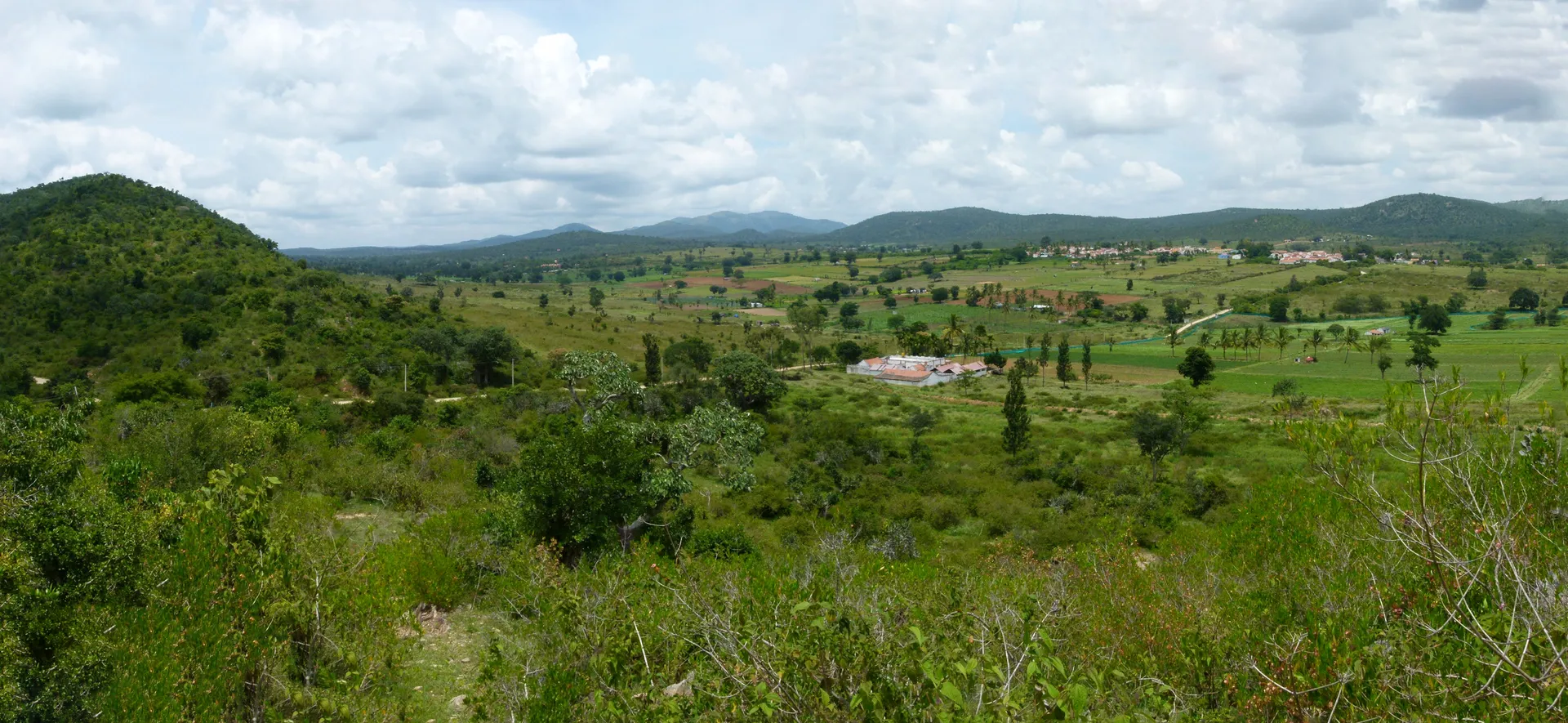
In short
- The forests around Bandipur have long been home to Adivasi (indigenous) communities: the Jenu Kuruba, the Betta Kuruba and the Soliga. Many families were moved out of the forest when the park and tiger reserve were created.
- Under the Mysore kingdom the forests were royal hunting grounds and the scene of large elephant captures; a small sanctuary, the Venugopala Wildlife Park, was created by the Mysore state in 1931 (1941 according to the reserve).
- Bandipur became one of India's first nine tiger reserves in 1973 and a national park in 1974.
- From the 1980s to 2004 the forests along the Karnataka–Tamil Nadu border were the territory of the smuggler and poacher Veerappan; his base lay east of Bandipur, in the Male Mahadeshwara and Sathyamangalam hills.
- Today, forest-rights claims, work for the Forest Department and tourism, and conflict with wildlife shape life in the fringe villages.
The first people of the forest
Long before anyone drew a boundary round Bandipur, its forests were lived in and used. Three Adivasi communities are associated with the reserve and its fringes. Each has its own language, customs and history; the brief notes below are a starting point, not a portrait.
- Jenu Kuruba. Jenu is Kannada for honey, and the name refers to the community's traditional work collecting wild honey; they also gathered other forest produce and practised small-scale cultivation. Most Jenu Kuruba in Karnataka live in Mysuru, Kodagu and Chamarajanagar districts, in and around the Nagarhole and Bandipur forests; a 2015 study counted about 36,000 in the state.
- Betta Kuruba. Betta means hill. The Betta Kuruba are a separate Kuruba community of the forest and hill country, living in settlements on the edges of Bandipur and Nagarhole.
- Soliga. The Soliga are most closely associated with the Biligiri Rangan (BR) Hills and the Male Mahadeshwara Hills to the east, but Soliga families also live on Bandipur's northern edge.
In the Mangala gram panchayat, on the northern boundary of the reserve, more than fifteen villages include many Adivasi settlements where Soliga, Jenu Kuruba and Betta Kuruba families live; a Soliga community leader estimated in 2019 that there were over 800 Adivasi families in the panchayat. Settlements of this kind are often called haadi in the region.
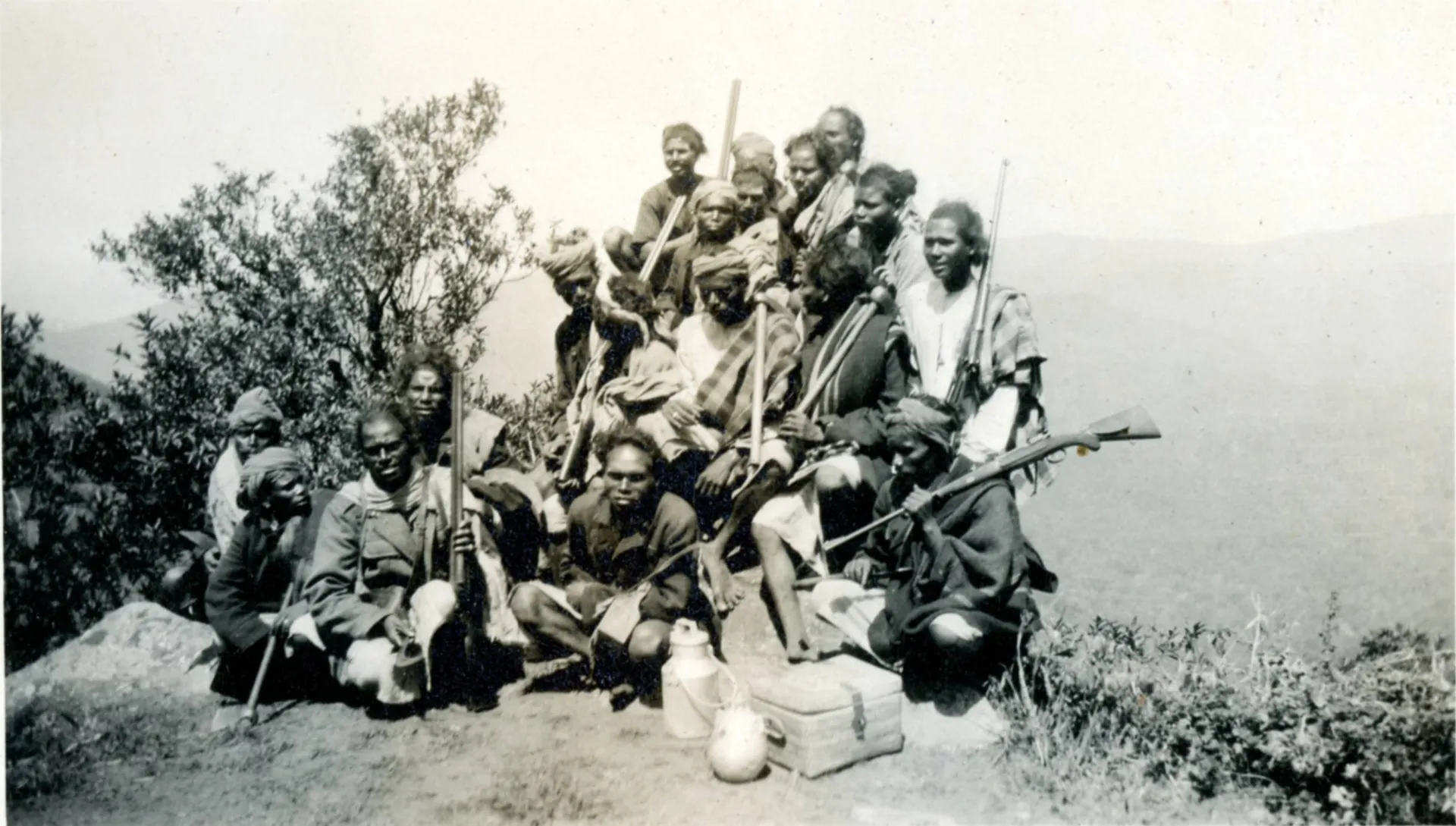
A group of Soliga men at Honnametti estate in the Biligiri Rangan Hills, around 1928. The Soliga live in the hills east of Bandipur and on its northern edge.
Moved out of the forest
As the protected area grew, the people inside it were moved out. Families living in what became Bandipur National Park were relocated to the forest edge some 30 to 40 years before 2019, according to people interviewed by The News Minute, and about 20 years before that report the gathering of forest produce such as tamarind, amla and medicinal herbs was stopped as enforcement tightened. Across the Nagarhole–Bandipur region, evictions of Jenu Kuruba families from the 1970s onwards are well documented.
The Forest Rights Act of 2006 gave forest-dwelling communities a legal route to claim individual and community rights to land and forest produce. In the Bandipur fringe, residents filed claims soon after the Act came into force in 2008; by 2019 they said little had happened, with officials citing the reserve's tiger-reserve status. The Forest Department's position, as stated by officials, has been that it supports genuine rights but fears misuse of land for resorts and the loss of wildlife habitat. In the neighbouring BR Hills, by contrast, Soliga villages have secured individual and community forest rights inside a tiger reserve, though many still lack basic services.
In May 2025, about 50 Jenu Kuruba families returned to a hamlet inside Nagarhole from which their elders had been evicted around four decades earlier, asserting their claim; the Forest Department disputed the hamlet's existence and claims were rejected. The dispute shows how unsettled these questions remain across the landscape.
Work, wildlife and the forest edge today
For many families on the reserve's edge, the forest now provides work rather than food: seasonal jobs with the Forest Department, such as tracking, and jobs in the resorts and lodges that line the boundary. Knowledge of animal signs and movements, learned in the forest, is valued by naturalists and researchers.
The fringe villages also carry the costs of living next to a tiger reserve: elephants in the crops, cattle taken by tigers and leopards, and, in 2025, people killed. The measures announced in 2026, including employment of local residents as 'forest friends' in a chain of camps along the boundary and a share of safari income for fringe villages, are meant to make that relationship fairer. See conservation.
The Mysore kingdom and its forests
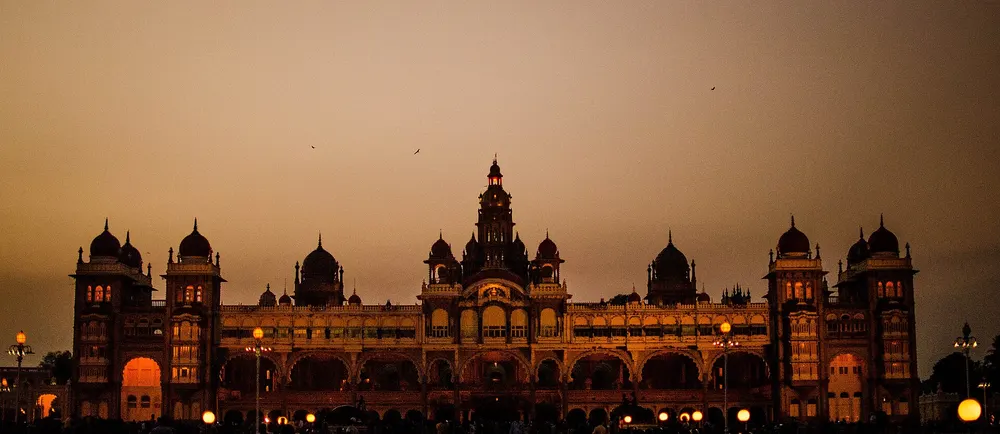
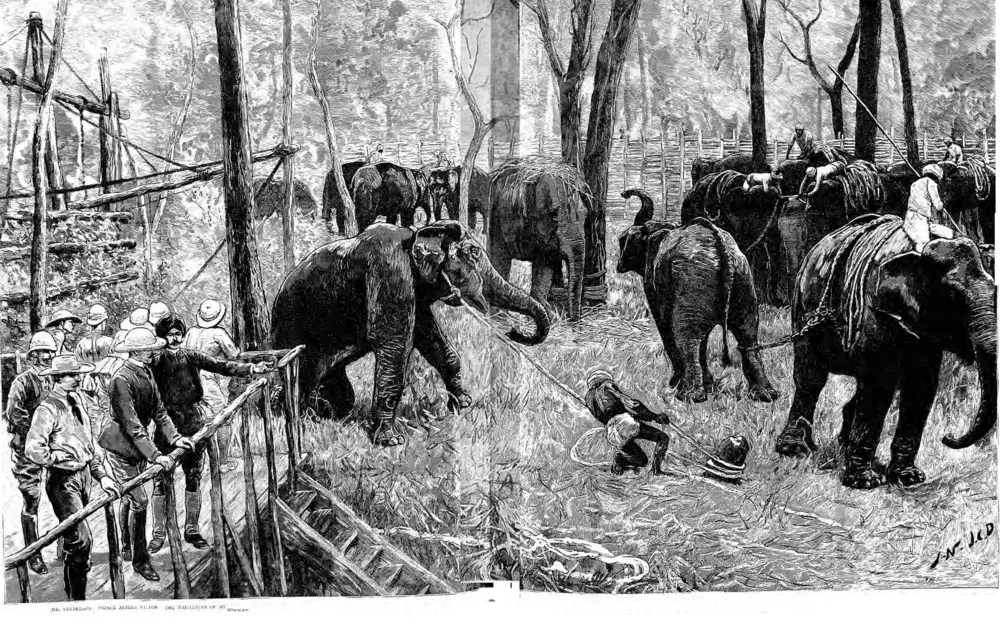
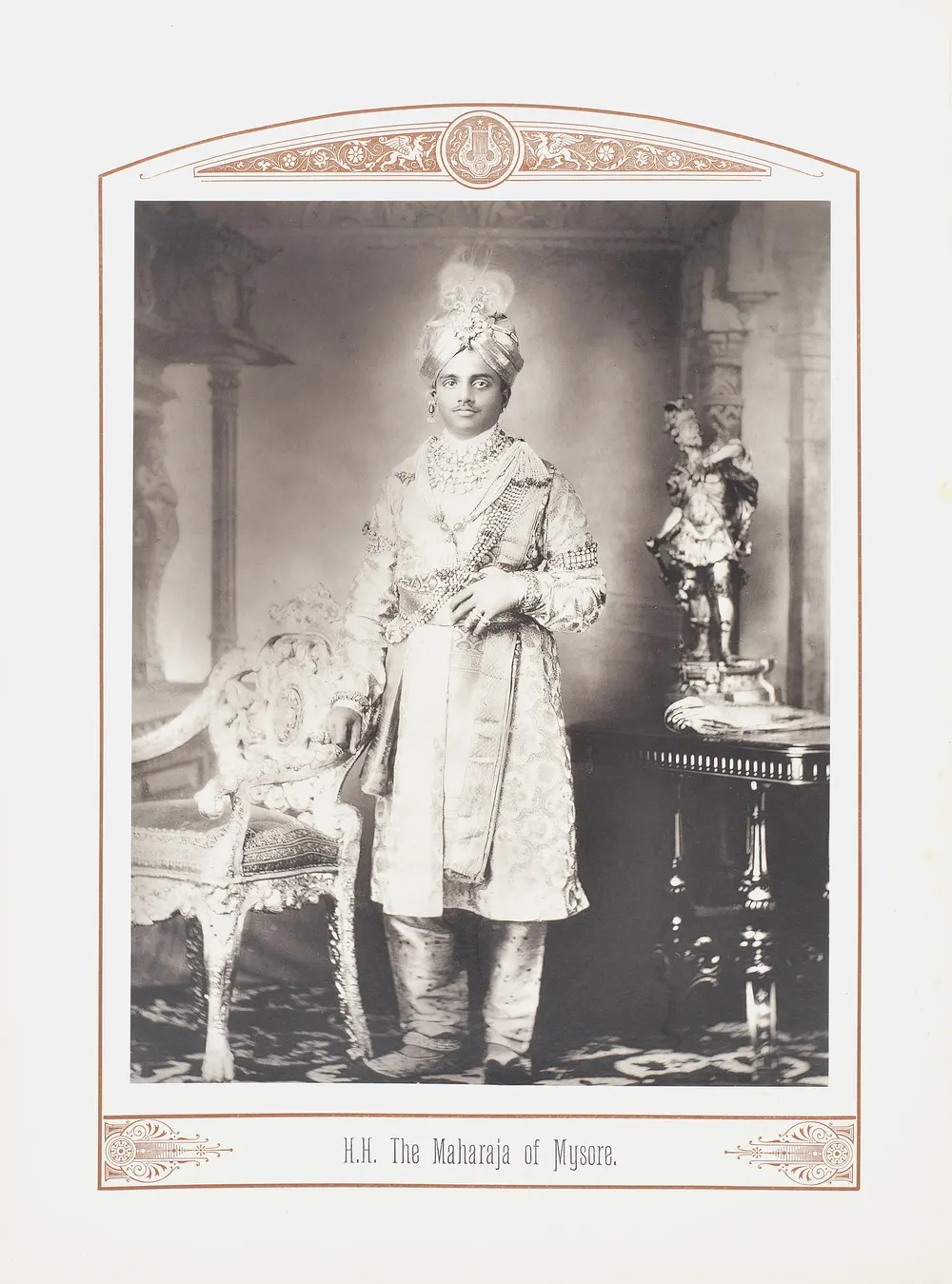
Bandipur lay within the kingdom of Mysore, ruled by the Wodeyar dynasty, and its forests were valued for timber, sandalwood, ivory and hunting. The Mysore court is also remembered for its kheddah operations, large-scale captures in which wild elephant herds were driven into stockades, tamed and put to work in the forests and in ceremony. The British naturalist George P. Sanderson, who worked for the Mysore government and wrote Thirteen Years among the Wild Beasts of India (1878), led captures in the Biligiri Rangan Hills and near Hunsur, and staged one for Prince Albert Victor in 1889–90.
The first formal protection came in the 20th century, when the Mysore state created the Venugopala Wildlife Park of about 90 km² around Gopalaswamy Betta. Most accounts date it to 1931, during the reign of Krishnaraja Wodeyar IV; the reserve's own website gives 1941 and says the park was enlarged to about 800 km² in 1942. After Indian independence the forests passed to the state of Mysore, renamed Karnataka in 1973, and in that same year Bandipur became one of the nine original Project Tiger reserves.
The Veerappan years
From the late 1980s until 2004, the forests along the Karnataka–Tamil Nadu border were associated with one man. Koose Muniswamy Veerappan, born in 1952 at Gopinatham in Karnataka's Chamarajanagar district, became India's most wanted fugitive as a poacher of elephants for ivory and a smuggler of sandalwood. Estimates of the elephants he killed range from about 200 to several hundred, and he was blamed for the deaths of more than a hundred people, many of them police and forest officers; exact figures are disputed.
His base lay east of Bandipur, in the Male Mahadeshwara Hills, Sathyamangalam and the hills around the Kaveri, but the whole region's forests, including Bandipur, Mudumalai and the Nilgiris, lived under the shadow of the ivory trade and the manhunt. Karnataka and Tamil Nadu set up a joint Special Task Force in the early 1990s, and in 2000 he kidnapped the Kannada film star Rajkumar, releasing him after more than three months. He was killed by Tamil Nadu's Special Task Force near Papparapatti in Dharmapuri district on 18 October 2004, in what was named Operation Cocoon.
For Bandipur, the lasting legacy of those years is the loss of many tuskers to poaching and a generation of forest staff who worked under constant threat. Since then, elephant and tiger numbers across the region have risen.
Visiting with respect
- The villages on Bandipur's edge are people's homes, not attractions. Do not wander into settlements or photograph people without asking.
- If a hotel offers a 'tribal village visit', ask who organises it and whether the community chose to host visitors and is paid fairly; if the answers are vague, skip it.
- Buy honey, crafts or produce from community-run outlets where they exist, and pay the asking price.
- Use the names communities use for themselves (Jenu Kuruba, Betta Kuruba, Soliga) rather than generic labels.
On the Nilgiri plateau, the Toda are a separate community with their own long history. If you continue to Ooty, the Ooty nature walk with a Toda naturalist is led, according to its title, by a Toda naturalist; check the listing for what it involves. Our Mysuru page covers the palaces and history of the Wodeyar capital, which a Mysuru cultural tour with a guide visits.
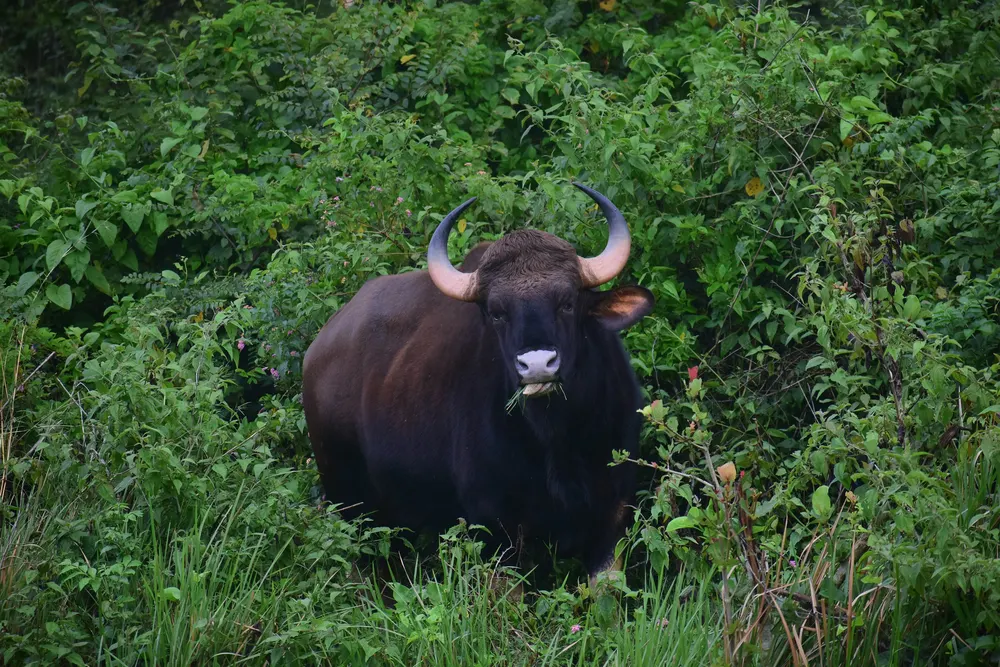
Wildlife private day tour: Mysore to Bandipur National Park
A private day from Mysuru to Bandipur and back, built around wildlife viewing, as the listing title describes. The simplest way to reach the safari counter without your own car. Check whether a Forest Department safari seat is included and the pick-up time.
Check availabilityBook via GetYourGuide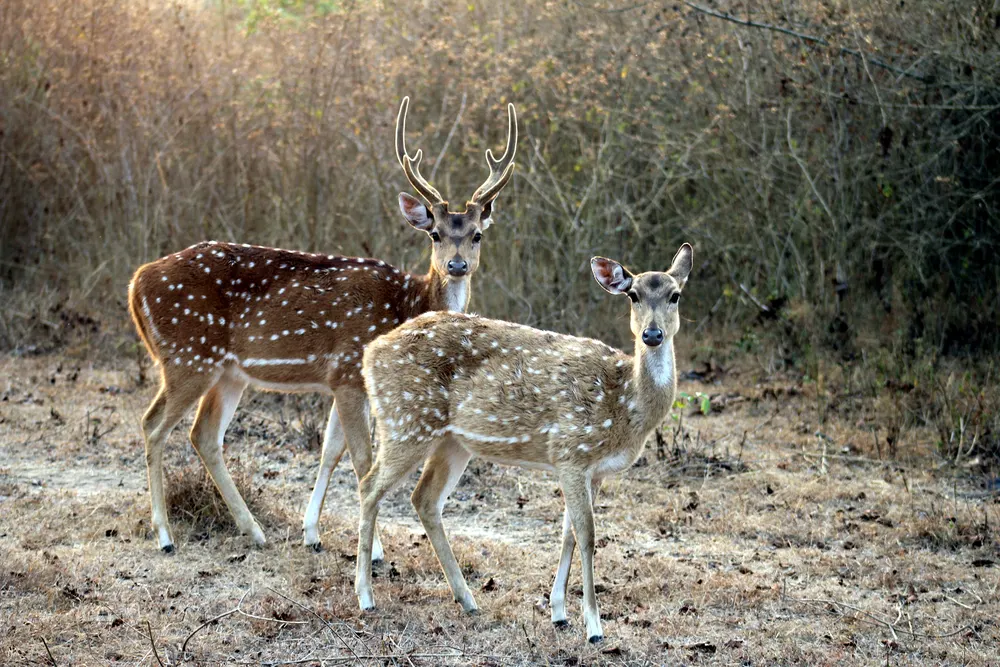
Bangalore, Mysore, Kabini, Ooty and Coimbatore multi-day tour
A multi-day South India tour from Bengaluru through Mysuru and Kabini to Ooty, ending in Coimbatore, according to the title: the wildlife forests and the hills in one trip. Check the number of days, the hotels and the safaris included.
Check availabilityBook via GetYourGuideTour listings are on GetYourGuide. Prices, dates and cancellation terms are shown live on each listing and can change; BandipurNationalPark.com may earn a commission at no extra cost to you.
Frequently asked questions
Which communities live around Bandipur?
Adivasi communities including the Jenu Kuruba, Betta Kuruba and Soliga live in settlements on the edges of the reserve, especially around Mangala on the northern boundary.
When was Bandipur created?
The Mysore state created the Venugopala Wildlife Park of about 90 km² in 1931 according to most accounts (1941 according to the reserve's website). Bandipur became a Project Tiger reserve in 1973 and a national park in 1974.
Was Veerappan active in Bandipur?
Veerappan's base lay east of Bandipur, in the Male Mahadeshwara Hills and Sathyamangalam forests, but the whole region's forests, Bandipur included, were affected by the ivory poaching and sandalwood smuggling of his era. He was killed in October 2004.
Can I visit a tribal village near Bandipur?
Only where a community has chosen to host visitors and benefits from it. Ask your hotel who organises any visit and how the community is paid, and never enter settlements uninvited.
Sources and official information
Facts were checked against these official and scholarly sources in November 2026. Opening hours, ticket prices, park fees and timetables change, so confirm before you go.
- thenewsminute.com
- en.wikipedia.org
- tribe.article-14.com
- deccanherald.com
- bandipurtr.in
- en.wikipedia.org
- en.wikipedia.org
- en.wikipedia.org
- en.wikipedia.org
- downtoearth.org.in
- unesco.org
BandipurNationalPark.com is an independent guide. It is not the official website of Bandipur National Park or Tiger Reserve and is not affiliated with the Karnataka Forest Department, any government body, tour operator or resort; official safari bookings are made on the government's own portal. Some links are affiliate links: tours go to GetYourGuide and accommodation goes to Booking.com, and we may earn a commission at no extra cost to you.