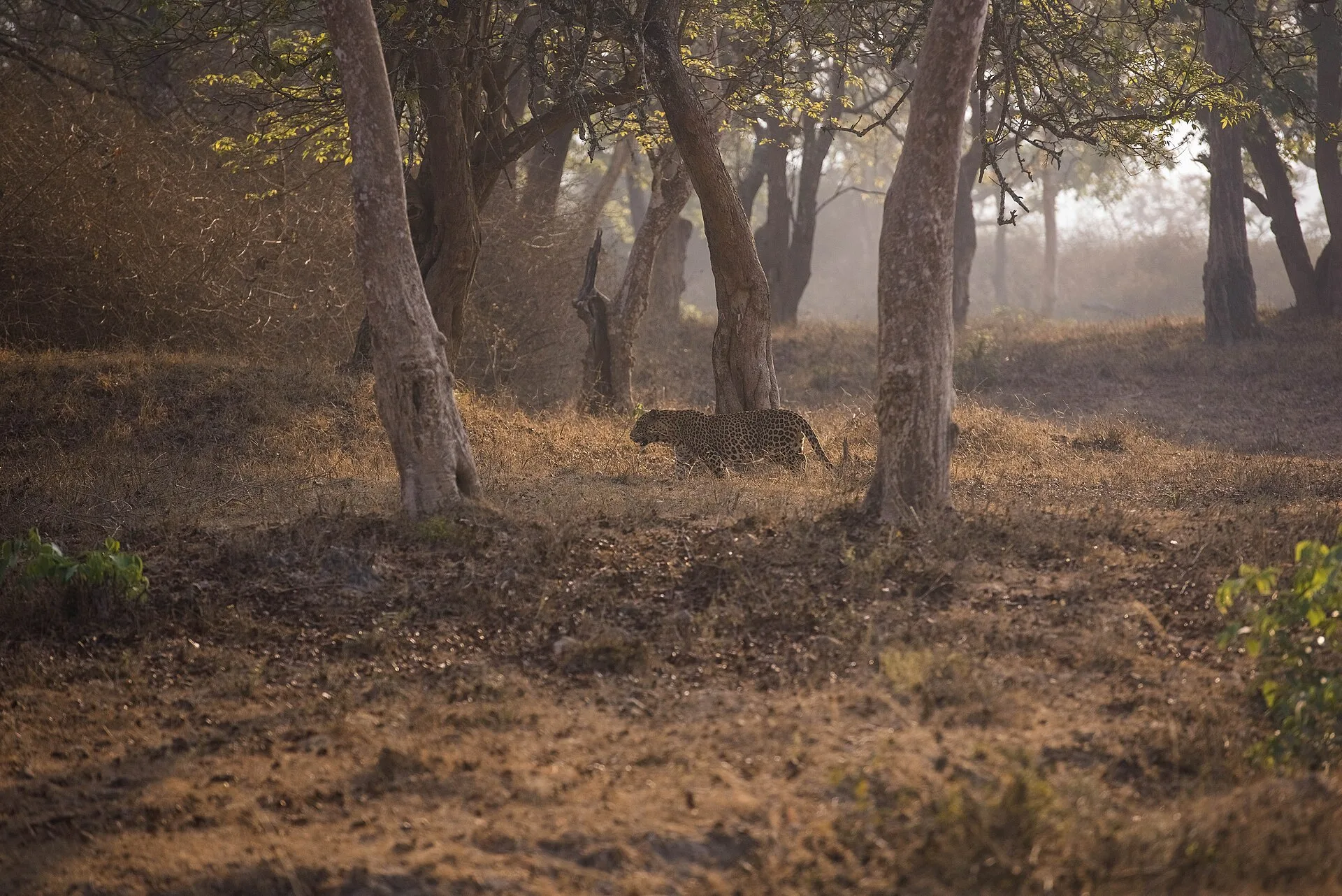
In short
- Phones are banned in the safari tourism zone, including for photos. Bring a camera.
- Lenses up to 200 mm are free; longer lenses carry a fee, reported as ₹1,500 plus 18% GST from September 2026, added when you book.
- Book a camper rather than the bus if photography matters: fewer people and a better angle, though no vehicle is guaranteed.
- March to May gives the most open forest and animals at water; October to February gives green backgrounds and soft light.
- No flash, no calls, no baiting, no drones. The animal comes first.
The rules that shape your photography
Since safaris restarted in February 2026, mobile phones have been prohibited in Bandipur's safari tourism zone, for photography, video and calls alike, and visitors were told to leave them in their own vehicles. Cameras are welcome. The reserve's rules also ban flash and bright lights and ask for silence when the staff request it. Both rules apply to every vehicle, and staff enforce them.
Long lenses are charged separately. According to the September 2026 tariff as reported by Asianet Newsable, cameras with lenses up to 200 mm need no extra ticket, and a lens over 200 mm costs ₹1,500 plus 18% GST per safari; you add it on bandipurtr.in when you book, along with the number of passengers. Check the figure on the booking form. See fees and safari prices.
- Mobile phones
- Not allowed in the safari zone
- Lens up to 200 mm
- No fee
- Lens over 200 mm
- ₹1,500 plus GST per safari (reported, Sep 2026)
- Flash and spotlights
- Not allowed
- Drones
- Not allowed without permission
- Safari length
- About 2.5 to 3 hours since 1 Sep 2026
Lenses and gear
Bandipur's animals are often close to the track but partly screened by bamboo and lantana, so reach and flexibility matter more than ultimate sharpness. A 100–400 mm or 150–600 mm zoom on a crop or full-frame body covers almost everything, from elephants beside the vehicle to a leopard on a distant rock; remember that anything over 200 mm is charged. A second body or a short zoom is useful when elephants come close. Birders will want the longest lens they can hand-hold.
- Support: there is no room for tripods on a safari vehicle. A small bean bag or a monopod used inside the vehicle helps; ask the staff before resting anything on the frame.
- Dust and rain: in the dry season fine dust gets everywhere; in the monsoon carry a rain cover and a towel. Change lenses inside a bag.
- Batteries and cards: charge everything the night before; a long safari in the cool morning drains batteries faster than you expect.
- Binoculars: many of the best moments are for watching, not shooting.
Bus or camper?
The Forest Department runs larger buses and smaller camper vehicles on the same tracks. Buses carry more people, and you may not get a seat on the side the animal appears; campers carry fewer people, so a clear view is easier, and cost more. For photography the camper is the better bet, but seats are limited and the reserve can assign a different vehicle type if operations require. Book early, and book several safaris rather than one. The safari guide compares them.
If you want to concentrate on images, consider adding Kabini on the Nagarhole side, whose open backwater edges in the dry season are famous among wildlife photographers (see Kabini and Nagarhole).
Light, season and time of day
Bandipur lies at about 11.7° N, so the sun rises and sets quickly and the golden light is short. Sunrise ranges from about 6:00 am in May and June to about 6:45 am in January, and sunset from about 5:55 pm in November to about 6:50 pm in July (local time; monthly figures on best time to visit). Morning safaris start in soft light that hardens within an hour or two; afternoon safaris end in the best light of the day.
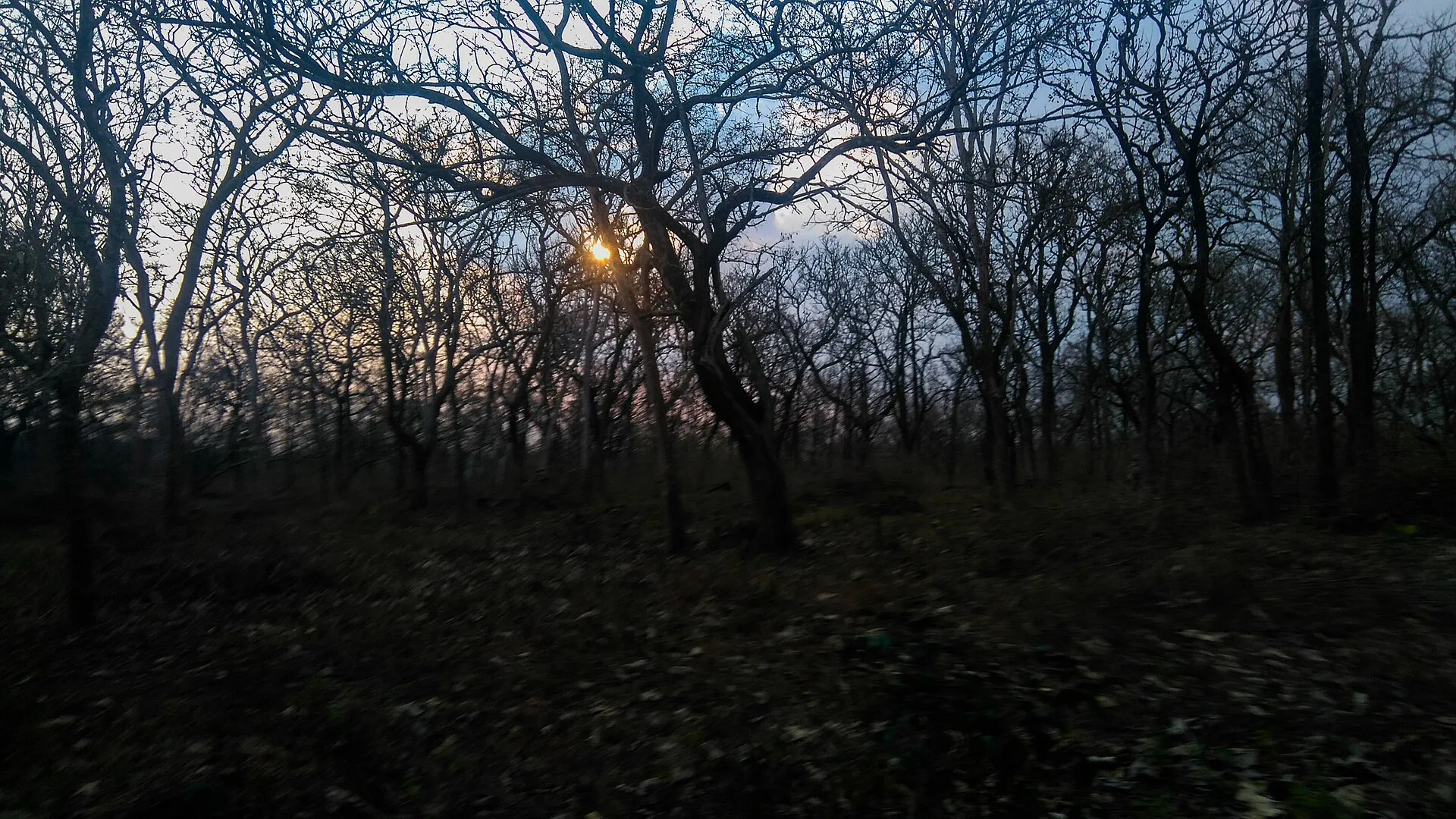
- March to May: the open, leafless forest gives the clearest views and the most animals at water; harsh midday light, dust and heat haze. Work early and late.
- June to September: green backgrounds, dramatic clouds and wet animals, but dense cover and rain. Fast lenses and high ISO help.
- October to February: the most comfortable season, with green-to-gold forest, morning mist and active birds; animals are more spread out.
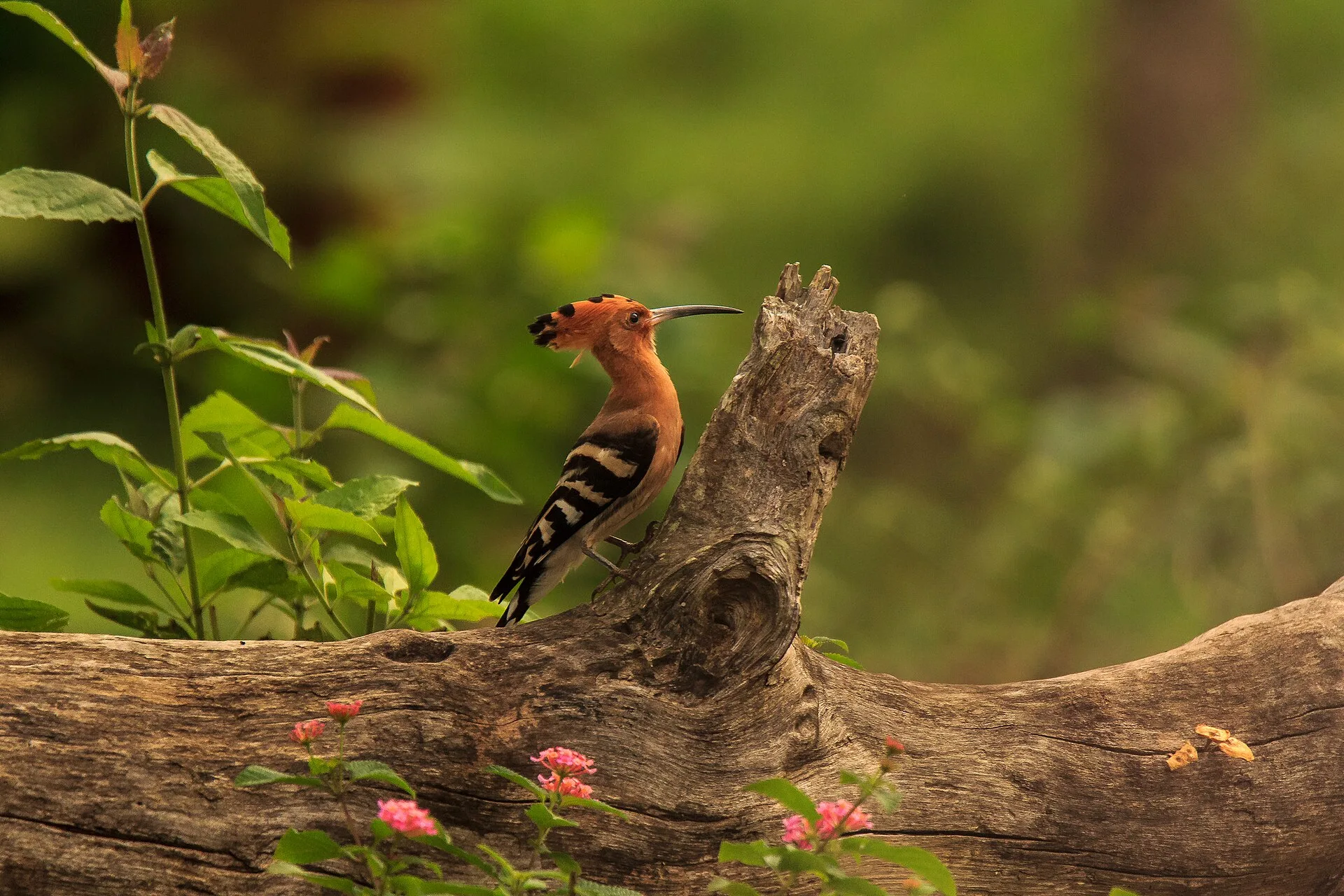
A hoopoe on a log during a June safari, just after the first rains turned the forest green.
Birds and small things
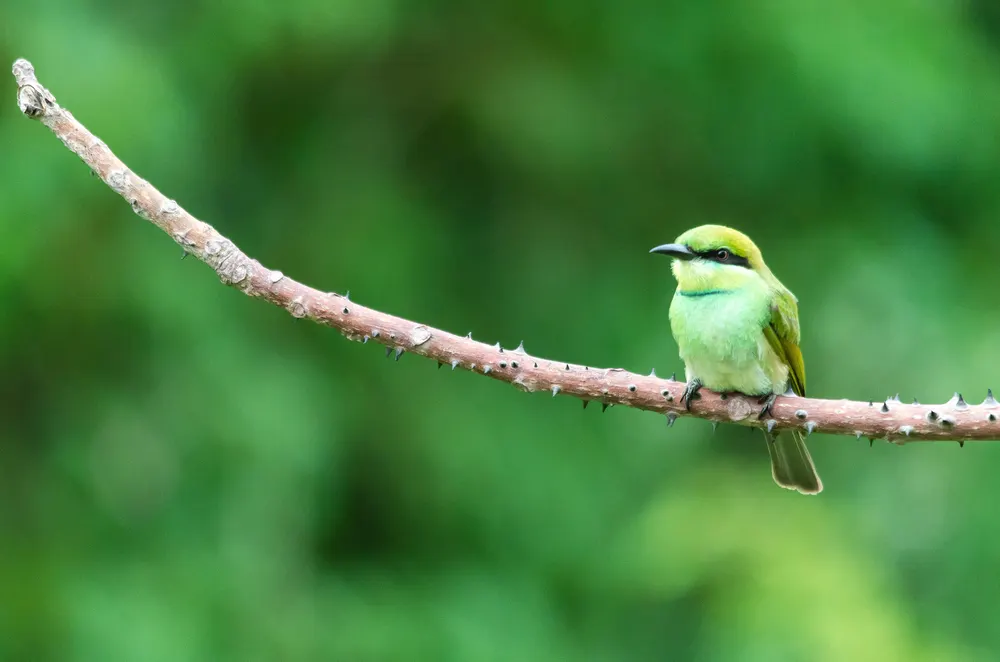
With about 290 bird species recorded, Bandipur rewards anyone who looks beyond the big mammals. Bee-eaters, hoopoes, peafowl, grey junglefowl, crested serpent eagles and hawk-eagles are among the birds seen from safari vehicles, and the gardens of the fringe resorts are good for birds in the early morning before the safari. Our birds page lists the key species and seasons.
Ethics behind the lens
- Never bait or call animals, and do not ask the driver to make noises or play recordings.
- Do not pressure the driver to get closer, leave the track or block an animal's path. The best images come from a still, quiet vehicle.
- No photography from the highway. Stopping and getting out on NH 181 and NH 766 is prohibited and dangerous, however close the elephant.
- No drones over the reserve or the forest highways.
- Ask before photographing people, especially in the forest villages; see people and history.
- Be careful with location details of sensitive species, such as nests or dens, when you share pictures online.
For a photography-focused day without the driving, a private wildlife day tour from Mysore to Bandipur gives you transport and timing; for two safaris in a row, the two-day Kabini safari from Bengaluru covers an evening and a morning.
Frequently asked questions
Can I take photos with my phone on a Bandipur safari?
No. Mobile phones are prohibited in the safari tourism zone, including for photos. Bring a camera.
Is there a camera fee in Bandipur?
Not for lenses up to 200 mm. Lenses over 200 mm were reported at ₹1,500 plus 18% GST per safari from September 2026.
What is the best lens for Bandipur?
A 100–400 mm or 150–600 mm zoom covers most situations; remember lenses over 200 mm carry a fee.
Bus or camper for photography?
A camper, if you can get a seat: fewer people, so a clear view is easier. Book several safaris to improve your chances.
Sources and official information
Facts were checked against these official and scholarly sources in November 2026. Opening hours, ticket prices, park fees and timetables change, so confirm before you go.
- bandipurtr.in
- bandipurtr.in
- newsable.asianetnews.com
- daijiworld.com
- outlooktraveller.com
- bandipurtr.in
- gml.noaa.gov
BandipurNationalPark.com is an independent guide. It is not the official website of Bandipur National Park or Tiger Reserve and is not affiliated with the Karnataka Forest Department, any government body, tour operator or resort; official safari bookings are made on the government's own portal. Some links are affiliate links: tours go to GetYourGuide and accommodation goes to Booking.com, and we may earn a commission at no extra cost to you.